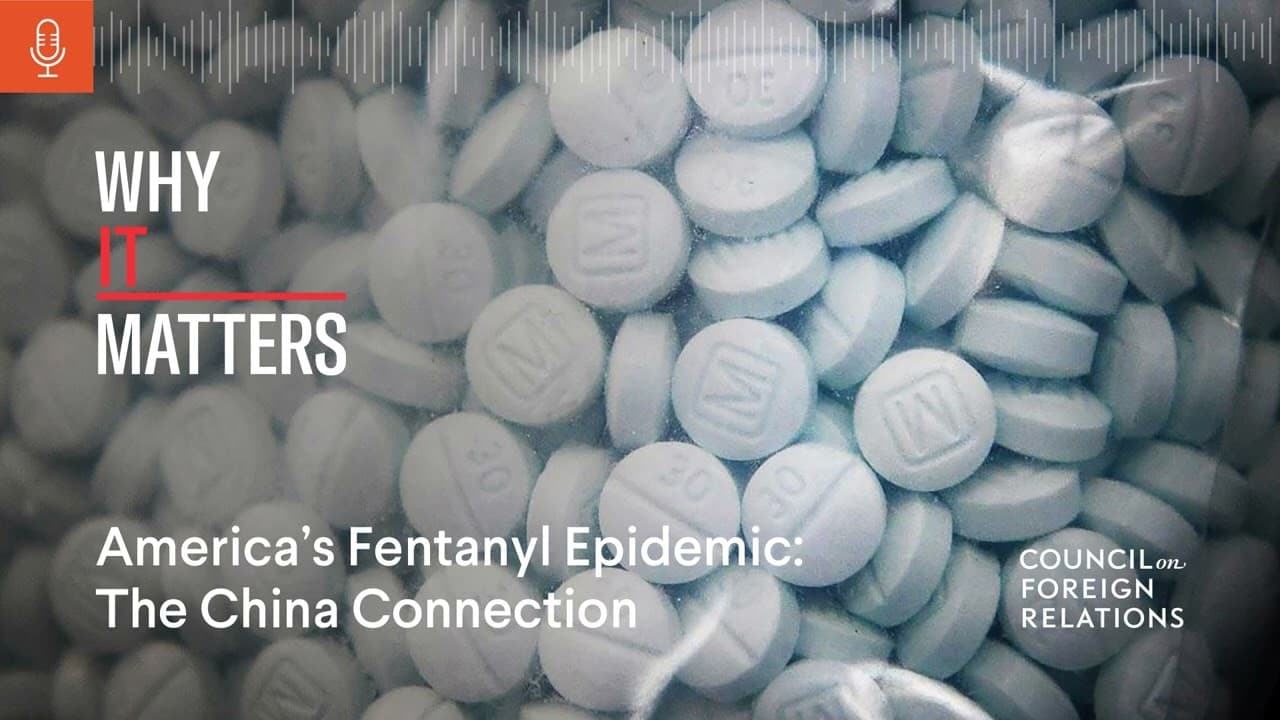
What Is China's Connection to America's Fentanyl Epidemic?
TL;DR
China supplies ingredients for fentanyl, impacting U.S. opioid crisis.
Transcript
ABC News: From coast to coast in every corner of the U.S. deaths from fentanyl overdoses are soaring. CBS News: The fentanyl epidemic in the United States killed more than 72,000...72,000 people in 2022. USA Today: Most people who take fentanyl don’t even know they’re taking it. You can’t see it, taste it, or smell it. Associated Press: And we know... Read More
Key Insights
- Fentanyl is a potent synthetic opioid causing a significant number of overdose deaths in the U.S., with over 100,000 drug-related fatalities in 2022.
- China is the primary supplier of fentanyl precursors, while Mexican cartels assemble and smuggle the drug into the U.S.
- Fentanyl is highly addictive and potent, making it easy to smuggle in small quantities and mix with other drugs, escalating its impact.
- U.S.-China relations are strained, complicating cooperation on controlling fentanyl production and trafficking.
- China implemented a ban on fentanyl production in 2019, but enforcement and export regulation remain limited.
- The U.S. has initiated legal actions against Chinese companies involved in fentanyl trade, but cooperation from China is minimal.
- The U.S. is alone in facing a fentanyl crisis of this scale, making international cooperation challenging.
- Opportunities for U.S.-China cooperation on fentanyl could improve diplomatic relations, but geopolitical tensions persist.
Install to Summarize YouTube Videos and Get Transcripts
Explore YouTube Video Summarizer or Get YouTube Transcript Extractor
Questions & Answers
Q: How does fentanyl differ from other opioids?
Fentanyl is a synthetic opioid that is significantly more potent than other opioids like morphine. It can produce an intense high with small amounts, making it highly addictive. Its potency also makes it dangerous, as even a small overdose can lead to fatal respiratory failure. This has contributed to its widespread misuse and high overdose rates.
Q: What role does China play in the fentanyl crisis?
China is a major supplier of the chemical precursors needed to manufacture fentanyl. These precursors are often shipped to Mexico, where they are processed into fentanyl by cartels before being smuggled into the United States. Despite some regulatory measures, China's enforcement on the export of these chemicals remains inadequate, contributing to the ongoing crisis in the U.S.
Q: Why is fentanyl so difficult to control?
Fentanyl is challenging to control due to its high potency and the small quantities needed to produce significant effects. This makes it easy to smuggle and mix with other drugs, increasing its reach. Additionally, the production relies on common chemical precursors, making it difficult to regulate without international cooperation, which is hampered by geopolitical tensions.
Q: What are the economic impacts of the fentanyl crisis?
The fentanyl crisis imposes a substantial economic burden on the U.S., with opioid overdoses inflicting approximately $1 trillion in economic damage annually. This includes costs related to healthcare, lost productivity, and law enforcement. The crisis strains public resources and impacts communities nationwide, exacerbating social and economic challenges.
Q: How has the U.S. government responded to the fentanyl crisis?
The U.S. government has taken several actions, including legal measures against Chinese companies involved in the fentanyl trade and initiatives to strengthen counter-narcotic strategies. Efforts include forming international coalitions to address synthetic drug threats and increasing law enforcement activities at the U.S.-Mexico border to intercept smuggling operations.
Q: What are the challenges in U.S.-China cooperation on fentanyl?
Challenges in U.S.-China cooperation on fentanyl include strained diplomatic relations and differing priorities. China views fentanyl as primarily a U.S. problem, reducing its incentive to enforce strict regulations. Additionally, geopolitical tensions and trade disputes complicate collaborative efforts, making it difficult to establish effective joint strategies.
Q: Could fentanyl cooperation improve U.S.-China relations?
Fentanyl cooperation has the potential to improve U.S.-China relations by providing a common ground for collaboration. Addressing the crisis could lead to better diplomatic ties and open avenues for cooperation in other areas. However, achieving this requires overcoming significant geopolitical hurdles and aligning mutual interests, which remains challenging.
Q: Is the fentanyl crisis unique to the United States?
The fentanyl crisis is particularly acute in the United States, with no other country experiencing the issue at the same scale. While synthetic opioid use is rising in other nations, the U.S. faces a unique challenge due to the combination of high demand, widespread availability, and potent supply chains that exacerbate the epidemic domestically.
Summary & Key Takeaways
-
The U.S. faces a severe fentanyl crisis, with China supplying the precursors and Mexican cartels smuggling it across the border. Despite some regulatory efforts, cooperation between the U.S. and China remains limited due to strained relations.
-
Fentanyl, a synthetic opioid, is highly potent and addictive, contributing to a significant portion of the over 100,000 drug-related deaths in the U.S. in 2022. Its ease of production and smuggling exacerbates the crisis.
-
China's role in the fentanyl crisis is significant, supplying the precursors needed for production. However, geopolitical tensions hinder collaboration with the U.S., affecting efforts to curb the opioid epidemic.
Read in Other Languages (beta)
Share This Summary 📚
Summarize YouTube Videos and Get Video Transcripts with 1-Click
Try YouTube Summary with ChatGPT & Claude or YouTube Transcript Generator
Explore More Summaries from Council on Foreign Relations 📚


Summarize YouTube Videos and Get Video Transcripts with 1-Click
Try YouTube Summary with ChatGPT & Claude or YouTube Transcript Generator