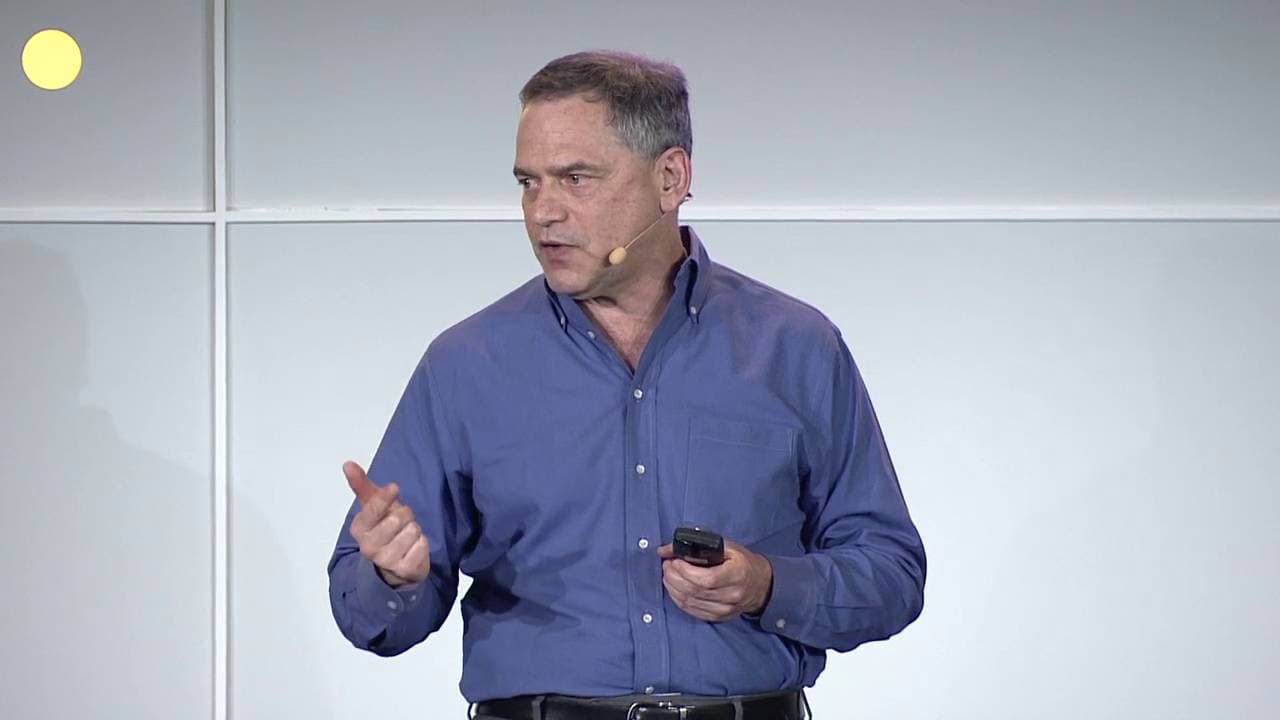
Harlan Krumholz, Yale University - Stanford Medicine Big Data | Precision Health 2016
TL;DR
Empowering patients and facilitating data sharing are necessary steps towards achieving a learning healthcare system.
Transcript
you know not too long ago I started thinking that that I'd been thinking in a wrong way about a lot of research and talking in a wrong way about our data in fact I was saying words like our data and I was encountering people who were talking about their data and they that was health systems or payers talking about their data or a whole range of peo... Read More
Key Insights
- 💁 Medicine should be approached as an information profession, emphasizing the need for data synthesis and delivery.
- 😃 Real-time research and dynamic decision support are essential for leveraging the potential of big data in healthcare.
- 😨 Fragmented and disconnected healthcare data hinder progress in research and patient care.
- 🗯️ Data should be treated as a common good and individuals should have the right to access and control their own health data.
- 🥺 Empowering patients and facilitating data sharing can lead to more personalized care and a learning healthcare system.
- 💢 Regulatory changes, along with technical advancements, can pave the way for a new era in healthcare.
- 🫡 Patients should be partners in research, with control over their data, and researchers should honor and respect their contributions.
Install to Summarize YouTube Videos and Get Transcripts
Explore YouTube Video Summarizer or Get YouTube Transcript Extractor
Questions & Answers
Q: Why is the current medical research enterprise lagging behind in meeting information needs?
The current system lacks the tools, perspective, and training to gather and deliver data effectively, resulting in imprecise estimates and limited perspectives on patient experiences.
Q: What is the main obstacle to utilizing the potential of big data in healthcare?
Business models treat data as proprietary assets, hindering data connectivity and preventing the coalescence of healthcare data from different sources.
Q: How does the age of data presented in journal articles impact medical research?
Journal articles often present data that is several years old, making it challenging to keep pace with the rapidly changing field of medicine.
Q: What are the properties of data needed for a learning healthcare system?
Longitudinal, comprehensive, timely, and affordable data that can be linked and understood in meaningful ways are necessary for an effective learning healthcare system.
Summary & Key Takeaways
-
The current medical research enterprise fails to meet the information needs of patients, clinicians, administrators, and policymakers, highlighting the need for change.
-
Medicine should be treated as an information science, with a focus on synthesizing and delivering data in real-time for better decision-making.
-
Fragmented and disconnected healthcare data, due to proprietary interests, prevent the effective utilization of big data for research and improved patient care.
Read in Other Languages (beta)
Share This Summary 📚
Summarize YouTube Videos and Get Video Transcripts with 1-Click
Try YouTube Summary with ChatGPT & Claude or YouTube Transcript Generator
Explore More Summaries from Stanford 📚





Summarize YouTube Videos and Get Video Transcripts with 1-Click
Try YouTube Summary with ChatGPT & Claude or YouTube Transcript Generator