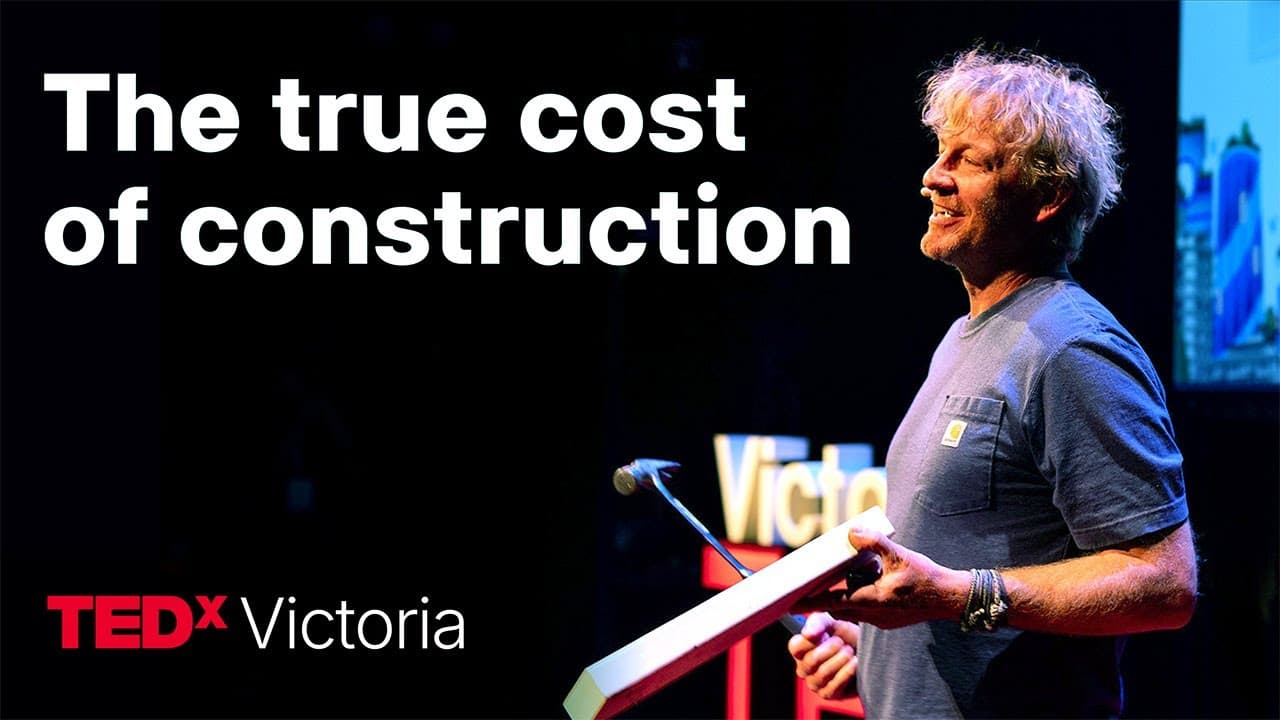
The hidden cost of construction | Micheal Green | TEDxVictoria
TL;DR
Construction noise has serious health impacts and high societal costs not accounted for in building projects.
Transcript
[Applause] this is what happens when you're the last speaker of the day you got to wake the crowd up um that's me trying to mimic the sound of construction so I'm going to ask you to show hands here um how many of you have been woken up to the sound of construction show your hands how how many of you have had a hard time falling asleep because of t... Read More
Key Insights
- 🥺 Construction noise has measurable health implications, increasing stress and potentially leading to severe conditions like dementia.
- 🖤 The construction industry’s productivity is declining due to a lack of innovative practices, significantly impacting environmental sustainability.
- 🇨🇷 Most existing cost evaluations in construction ignore true costs, which include environmental damage and social impacts.
- 🏗️ Implementing a carbon cost for buildings would clarify their true economic impact and promote sustainable construction choices.
- 🫢 Building with wood can greatly reduce greenhouse gas emissions compared to traditional materials, aiding climate change mitigation.
- 🧑🏭 Societal and environmental factors are often neglected in housing planning, resulting in costly consequences for communities.
- 🥹 AI technologies hold the potential to revolutionize how we measure and assign costs in construction, fostering necessary innovations.
Install to Summarize YouTube Videos and Get Transcripts
Explore YouTube Video Summarizer or Get YouTube Transcript Extractor
Questions & Answers
Q: What are the health impacts of construction noise?
Construction noise significantly affects mental health, contributing to stress and anxiety, which are linked to serious conditions like dementia. A World Health Organization report estimates that 1.6 million daily life years are lost in Europe due to such noise, showing a direct link between environmental factors and health outcomes.
Q: How does the traditional construction industry approach innovation?
The construction industry has been slow to innovate, operating on outdated methods that have not changed significantly in the last century. This reticence arises from a lack of incentive to address the negative costs associated with construction, resulting in negative impacts on communities and the environment.
Q: What is meant by "true cost" in construction?
"True cost" encompasses not just project and operational expenses but also environmental, societal, and health impacts linked to building activities. By promoting a comprehensive understanding of costs, the concept urges the industry to refine practices and consider broader implications of construction decisions.
Q: Why should carbon costs be factored into building expenses?
Assigning carbon costs to buildings ensures accountability for their environmental impact. As buildings contribute to nearly 42% of global greenhouse gas emissions, incorporating this cost could incentivize lower carbon building practices and drive innovations that mitigate environmental damage.
Q: What role does AI play in addressing construction costs?
AI can help analyze vast amounts of data from various sectors, facilitating the measurement of the true costs of construction. By making these costs transparent, it can incentivize innovators to adopt sustainable building practices that relieve societal burdens and promote environmental stewardship.
Q: How does building with wood impact carbon emissions?
Constructing buildings with wood can significantly lower carbon emissions compared to traditional materials like concrete and steel. The speaker’s firm demonstrated that a tall wood building produced 88% less carbon dioxide than one made from concrete, highlighting wood’s role in sustainable construction practices.
Q: What is the significance of the "cost of dignity" in housing?
The cost of dignity refers to the negative social impacts associated with low-cost housing, including decreased community belonging and reduced mental well-being. These factors ultimately lead to higher societal costs and affect productivity and quality of life, demonstrating why quality building matters.
Q: How have community responses influenced innovative construction?
The case of a building near a recording studio demonstrates that community concerns can drive innovative solutions, such as meeting specific sound level requirements. This collaboration can foster a construction culture that values community well-being and environmental factors, leading to better architectural practices.
Summary & Key Takeaways
-
Construction noise is a global issue that affects mental health, productivity, and decreases life expectancy, leading to significant healthcare costs.
-
The traditional construction industry lacks innovation, sticking to outdated methods, which exacerbates negative impacts on communities and the environment.
-
The concept of "true cost" advocates for incorporating environmental, societal, and performance costs into building projects to drive innovation and better design practices.
Read in Other Languages (beta)
Share This Summary 📚
Summarize YouTube Videos and Get Video Transcripts with 1-Click
Try YouTube Summary with ChatGPT & Claude or YouTube Transcript Generator
Explore More Summaries from TEDx Talks 📚




Summarize YouTube Videos and Get Video Transcripts with 1-Click
Try YouTube Summary with ChatGPT & Claude or YouTube Transcript Generator