Could America Finally Win the War On Drugs?
TL;DR
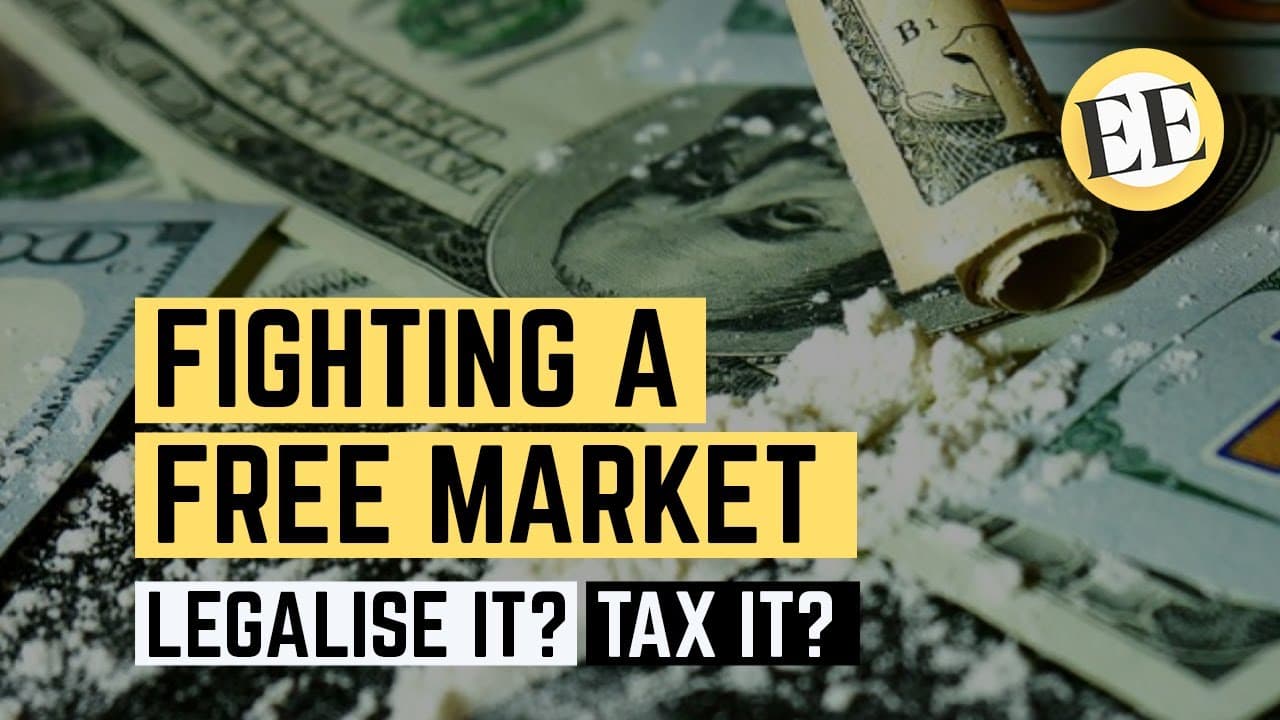
Oregon's drug decriminalization may shift the failed war on drugs.
Transcript
The war on drugs was declared in 1971 by president Richard Nixon in a press conference that went on to outline a plan to fight the trade of controlled substances across the world. Drugs were declared national enemy number 1. Since then over 1 trillion dollars have been spent on fighting this battle and by all metrics, it has been money poorly s... Read More
Key Insights
- The war on drugs, initiated in 1971, has cost over a trillion dollars with limited success, as drug-related deaths and crimes have only increased.
- The traditional approach of attacking supply has been ineffective due to the inelastic demand for addictive drugs, leading to increased prices and crime.
- Oregon's recent vote to decriminalize all drugs represents a potential shift towards addressing the issue through economic strategies rather than enforcement.
- Decriminalization could reduce the financial burden of the drug war by reallocating resources towards treatment and education, rather than incarceration.
- Historical examples, such as Portugal, show that decriminalization can lead to decreased drug-related deaths and more effective management of drug addiction.
- The demand-driven approach may prevent the escalation of organized crime, as reduced drug prices could decrease the financial incentives for illegal distribution.
- The war on drugs has been largely ineffective due to its focus on supply-side economics, ignoring the persistent demand for drugs.
- A shift in focus to reducing demand through education and treatment could lead to more sustainable solutions and economic benefits.
Install to Summarize YouTube Videos and Get Transcripts
Explore YouTube Video Summarizer or Get YouTube Transcript Extractor
Questions & Answers
Q: What was the original goal of the war on drugs?
The original goal of the war on drugs, declared by President Nixon in 1971, was to combat the trade and use of controlled substances, which were deemed a national enemy. The plan involved significant investment in law enforcement and military efforts to reduce the supply of drugs and curb drug-related crimes and deaths.
Q: Why has the war on drugs been largely ineffective?
The war on drugs has been largely ineffective because it focused on reducing the supply of drugs rather than addressing the persistent demand. The inelastic demand for addictive substances means that users continue to purchase drugs despite increased prices, leading to higher crime rates and little reduction in drug use or availability.
Q: What recent change did Oregon make regarding drug policy?
Oregon recently voted to decriminalize all drugs, including hard substances. This decision represents a potential shift away from traditional enforcement methods towards a strategy focused on reducing demand through treatment and education, rather than criminal penalties for possession.
Q: How might decriminalization affect drug-related crime?
Decriminalization could potentially reduce drug-related crime by lowering the financial incentives for illegal distribution. With reduced prices due to increased supply, the profits for organized crime could decrease, leading to less motivation for criminal activities associated with drug trafficking.
Q: What are the potential economic benefits of decriminalizing drugs?
Decriminalizing drugs could lead to significant economic benefits by reducing the costs associated with law enforcement, incarceration, and prosecution of drug-related offenses. Resources could be reallocated towards treatment and education, potentially resulting in better public health outcomes and reduced societal costs related to drug addiction.
Q: How does the demand for drugs impact the effectiveness of the war on drugs?
The demand for drugs, particularly addictive substances, is relatively inelastic, meaning that users will continue to purchase drugs regardless of price increases. This inelasticity undermines efforts to reduce drug use through supply-side interventions, as higher prices do not significantly decrease demand, leading to persistent drug-related issues.
Q: What lessons can be learned from Portugal's drug policy?
Portugal's experience with drug decriminalization shows that shifting focus from criminal penalties to treatment and education can lead to a decrease in drug-related deaths and more effective management of addiction. This approach has proven to be economically advantageous, reducing the costs associated with enforcement and incarceration.
Q: What is the rationale behind focusing on demand-side solutions?
Focusing on demand-side solutions is based on the idea that reducing the desire for drugs through education and treatment can be more effective and sustainable than attempting to restrict supply. By addressing the root causes of addiction and providing support for recovery, demand-side strategies aim to decrease overall drug use and its associated harms.
Summary & Key Takeaways
-
The war on drugs, declared by Nixon in 1971, has cost over a trillion dollars with little success, as drug-related deaths and crimes have risen. Oregon's recent vote to decriminalize all drugs may signal a shift towards addressing the issue through economic strategies.
-
Traditional supply-side attacks have been ineffective due to the inelastic demand for addictive drugs, leading to increased prices and crime. A demand-side approach, focusing on education and treatment, may offer a more sustainable solution.
-
Historical examples, such as Portugal, demonstrate that decriminalization can lead to decreased drug-related deaths and more effective management of addiction. Oregon's move could reduce the financial burden of the drug war by reallocating resources towards treatment and education.
Read in Other Languages (beta)
Share This Summary 📚
Summarize YouTube Videos and Get Video Transcripts with 1-Click
Try YouTube Summary with ChatGPT & Claude or YouTube Transcript Generator
Explore More Summaries from Economics Explained 📚


Summarize YouTube Videos and Get Video Transcripts with 1-Click
Try YouTube Summary with ChatGPT & Claude or YouTube Transcript Generator