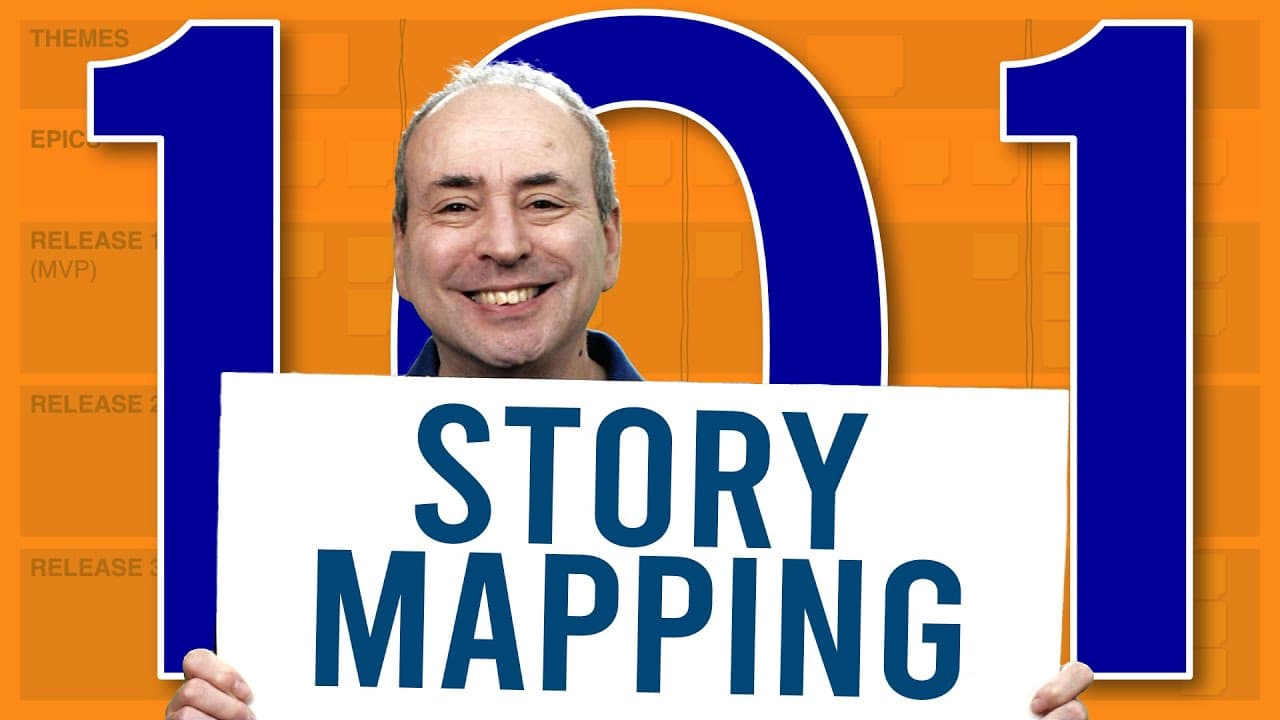
User Story Mapping 101 - How to Create a USER STORY MAP
TL;DR
User story mapping is a visual method used in agile software development to organize user stories into a logical sequence, prioritize features, and improve communication and alignment among team members and stakeholders.
Transcript
in this video I want to answer the question what is a user story map and how do we create one story map allows users developers and other stakeholders to visualize a whole product and its development process it breaks down the work that we require to create the whole product into individual chunks called user stories or to put it another way it org... Read More
Key Insights
- 👥 User story mapping is a visual method in agile software development that helps teams organize user stories into a logical sequence and prioritize features.
- 👤 User story maps provide a complete understanding of the whole user experience, aid in communication and alignment, and serve as a tool for prioritization and status reporting.
- 👤 User story maps help identify dependencies among user stories and assist in risk management.
- 👥 The process of creating a user story map involves gathering a team, establishing the product, defining the product outline, developing capabilities, prioritizing user stories, scrutinizing the work, planning releases and sprints, and publishing the map.
- 😃 User story maps should be clear, unambiguous, and available to everyone, while balancing the amount of detail to avoid hiding the big picture.
- 🍁 Engaging users and customers, keeping the style simple and language plain, breaking maps into smaller chunks, and maintaining the map as a living document are important considerations.
- 👤 User story maps originated from Jeff Patton's article and evolved into a detailed concept explained in his book "User Story Mapping."
Install to Summarize YouTube Videos and Get Transcripts
Explore YouTube Video Summarizer or Get YouTube Transcript Extractor
Questions & Answers
Q: What is user story mapping and how does it relate to agile software development?
User story mapping is a visual method used in agile software development to create a model of a product or service in terms of its functionality. It helps organize user stories into a logical sequence, prioritize features, and improve communication and alignment among team members and stakeholders.
Q: How do user story maps help prioritize features and functionality?
User story maps allow teams to describe all of a product's potential capabilities without losing sight of the big picture. By arranging user stories in a sequence of epics and prioritizing them based on factors such as value, complexity, and development methods, teams can prioritize the fundamental functionality and build them first.
Q: What are the benefits of using user story maps?
User story maps provide clear communication and alignment among team members and stakeholders, serve as a visual aid for thinking, planning, problem-solving, and decision-making, offer a simple visual representation of status or progress, support the creation and grooming of the product backlog, and help identify dependencies and manage risks.
Q: Where did the concept of user story maps originate from?
The idea for user story maps originated with Jeff Patton, who wrote an article in 2005 called "It's All in How You Slice It." He continued developing the concept and illustrated it in detail on his blog in 2008. In 2014, he co-authored the book "User Story Mapping: Discover the Whole Story, Build the Right Product" with Peter Economy.
Summary & Key Takeaways
-
User story mapping breaks down the work required to create a product or service into individual chunks called user stories, organizing them into a visual representation of the user journey through the product.
-
User story maps help prioritize features and functionality, provide a clear visual representation of progress, aid in thinking and decision making, and support the creation and grooming of the product backlog.
-
The steps to create a user story map involve establishing the product, defining the product outline, developing capabilities under each epic, prioritizing user stories, scrutinizing the work, planning releases and sprints, and publishing the user story map.
Read in Other Languages (beta)
Share This Summary 📚
Summarize YouTube Videos and Get Video Transcripts with 1-Click
Try YouTube Summary with ChatGPT & Claude or YouTube Transcript Generator
Explore More Summaries from Online PM Courses - Mike Clayton 📚



Summarize YouTube Videos and Get Video Transcripts with 1-Click
Try YouTube Summary with ChatGPT & Claude or YouTube Transcript Generator