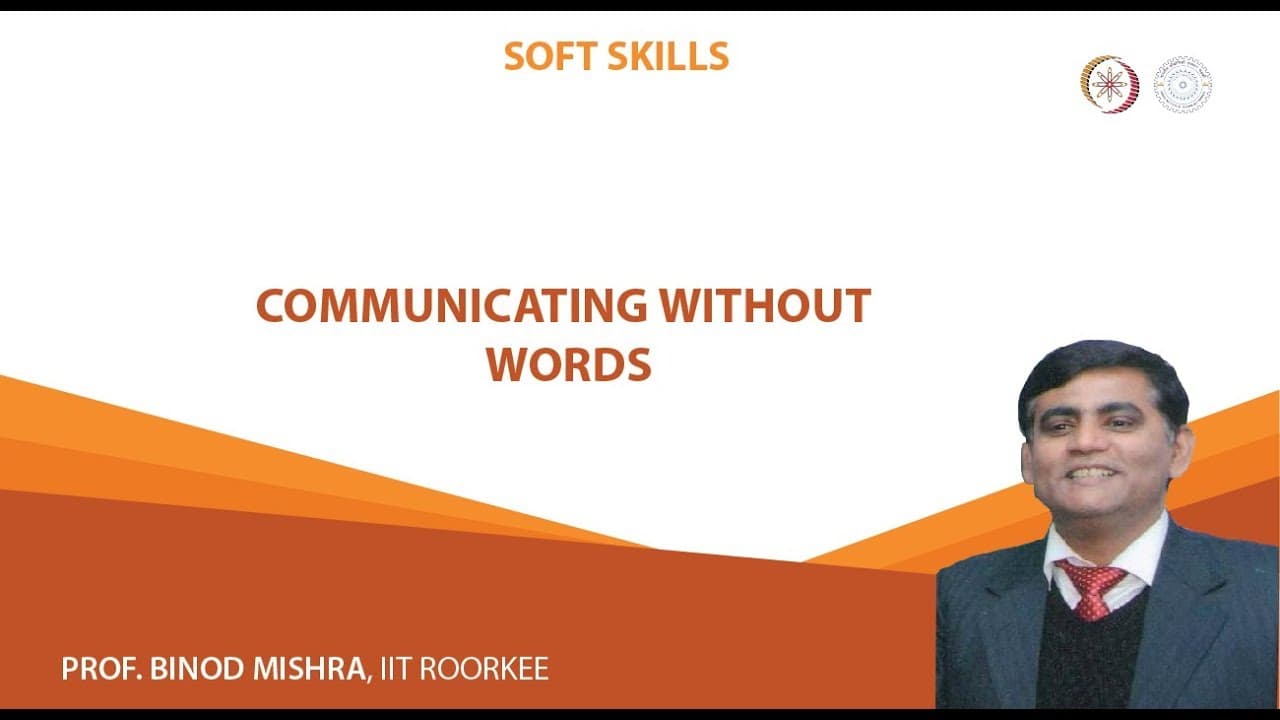
Communicating Without Words
TL;DR
Nonverbal cues are crucial in effective communication.
Transcript
hello ah we are ah having the lectures on soft skills and in the course named soft skills presently we are dealing with communication skills till now we have talked a lot about the various forms of communication and then how we can make a communication effective today we are going to talk about whether we communicate only with words since most of u... Read More
Key Insights
- Nonverbal communication constitutes a significant portion of our interactions, with estimates suggesting that 65% of communication is nonverbal.
- Nonverbal cues include body language, facial expressions, eye contact, gestures, and posture, all of which convey emotions and intentions.
- Cultural differences play a crucial role in interpreting nonverbal communication, as gestures and eye contact can have varying meanings across cultures.
- Personal appearance and grooming impact first impressions and can influence the perception of credibility and authority in communication.
- Nonverbal communication is often spontaneous and unintentional, reflecting genuine emotions such as happiness, anger, and sadness.
- In professional settings, understanding and interpreting nonverbal cues can enhance business dealings and interpersonal relationships.
- Gestures can complement verbal communication by emphasizing points, enumerating ideas, or symbolizing concepts.
- Effective communication requires awareness of nonverbal signals to ensure the intended message is conveyed accurately and received positively.
Install to Summarize YouTube Videos and Get Transcripts
Explore YouTube Video Summarizer or Get YouTube Transcript Extractor
Questions & Answers
Q: What is the significance of nonverbal communication in interactions?
Nonverbal communication is significant because it constitutes a large portion of our interactions, with estimates suggesting that up to 65% of communication is nonverbal. It includes body language, facial expressions, eye contact, gestures, and posture, all of which convey emotions and intentions. Understanding these cues is crucial for effective communication, as they often reveal more than words alone.
Q: How do cultural differences affect nonverbal communication?
Cultural differences greatly affect the interpretation of nonverbal communication. Gestures, eye contact, and personal space can have varying meanings across cultures, leading to misunderstandings if not recognized. For example, a gesture that is positive in one culture might be negative in another. Being aware of these differences is essential for effective cross-cultural communication.
Q: Why is personal appearance important in communication?
Personal appearance is important in communication because it influences first impressions, which can affect perceptions of credibility and authority. The way one dresses and presents themselves can convey professionalism and confidence, impacting how others receive and interpret the message. In professional settings, appropriate grooming and attire are crucial for establishing a positive impression.
Q: What role do gestures play in communication?
Gestures play a complementary role in communication by emphasizing points, enumerating ideas, or symbolizing concepts. They can enhance verbal communication by providing visual reinforcement of the message. However, gestures must be used appropriately, as excessive or repetitive gestures can be distracting. Understanding the cultural context of gestures is also important to avoid misinterpretation.
Q: How does nonverbal communication reflect genuine emotions?
Nonverbal communication often reflects genuine emotions because it is typically spontaneous and unintentional. Facial expressions, body language, and vocal tone can reveal feelings such as happiness, anger, or sadness, even when words do not. This authenticity can enhance the credibility of the message and help others understand the speaker's true intentions and emotions.
Q: What challenges arise from interpreting nonverbal cues?
Interpreting nonverbal cues can be challenging due to cultural differences and individual variability. The same gesture or expression can have different meanings in different cultures, leading to potential misunderstandings. Additionally, personal habits and characteristics can influence nonverbal behavior, requiring careful observation and context consideration to accurately interpret the intended message.
Q: How can nonverbal communication enhance professional interactions?
Nonverbal communication can enhance professional interactions by providing additional context and clarity to verbal messages. Understanding and correctly interpreting nonverbal cues can improve rapport, trust, and cooperation among colleagues. In business dealings, being aware of nonverbal signals can aid in negotiation, conflict resolution, and relationship building, ultimately leading to more successful outcomes.
Q: What is the relationship between verbal and nonverbal communication?
The relationship between verbal and nonverbal communication is complementary. While verbal communication conveys the content of the message, nonverbal communication provides context, emphasis, and emotional tone. Together, they create a complete communication experience. Nonverbal cues can reinforce or contradict verbal messages, making it essential to align both forms to ensure the intended message is accurately conveyed and received.
Summary & Key Takeaways
-
Nonverbal communication plays a crucial role in our interactions, often conveying more than words alone. It includes body language, facial expressions, and gestures, which can reveal emotions and intentions. Understanding these cues is essential for effective communication, especially in professional settings, where they can impact business dealings and relationships.
-
Cultural differences significantly influence the interpretation of nonverbal communication. Gestures and eye contact can have different meanings across cultures, making it important to be mindful of these variations. Personal appearance also affects first impressions, influencing perceptions of credibility and authority.
-
Nonverbal communication is typically spontaneous and reflects genuine emotions. In professional environments, interpreting nonverbal cues can enhance understanding and improve interactions. Gestures can complement verbal communication by emphasizing points or symbolizing concepts, aiding in the effective delivery of messages.
Read in Other Languages (beta)
Share This Summary 📚
Summarize YouTube Videos and Get Video Transcripts with 1-Click
Try YouTube Summary with ChatGPT & Claude or YouTube Transcript Generator
Explore More Summaries from Soft Skills 📚





Summarize YouTube Videos and Get Video Transcripts with 1-Click
Try YouTube Summary with ChatGPT & Claude or YouTube Transcript Generator