Inside Russia's Secret Service
TL;DR
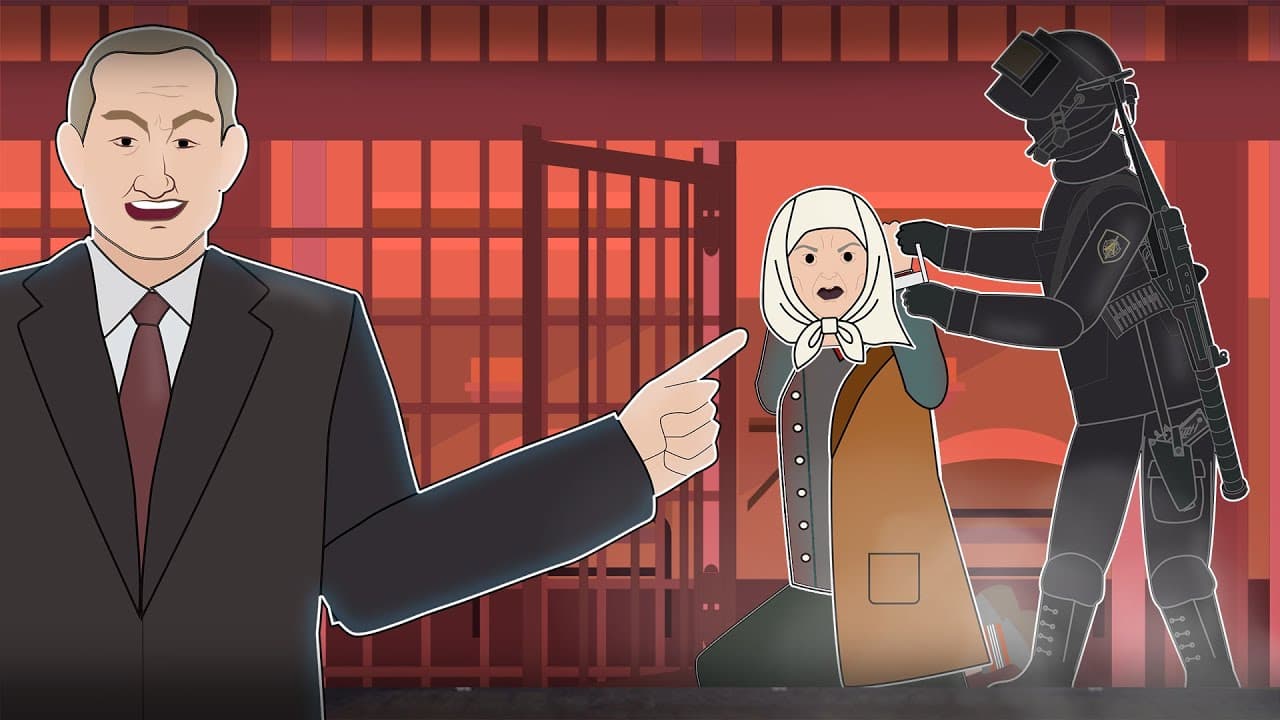
The KGB was the chief government intelligence and Security Agency of the Soviet Union, serving as both an intelligence agency and secret police. It was eventually dissolved, and its successor, the FSB, continues to play a significant role in Russian society.
Transcript
foreign the KGB who they were and what they did the KGB was the chief government intelligence and Security Agency of the Soviet Union from 1954 until its collapse in 1991. Soviet Union was made up of 15 republics Russia Armenia Azerbaijan belarusia Estonia Georgia kyrgyzia Latvia Lithuania Moldavia Tajikistan turkmenia Ukraine Kazakhstan and Uzbeki... Read More
Key Insights
- 🤝 The KGB served as both an intelligence agency and a secret police force, maintaining control over Soviet citizens and dealing with dissent.
- 💁 The KGB had a vast network of spies operating internationally, gathering information and influencing other countries' political landscapes.
- 🎮 The KGB played a significant role in suppressing uprisings and protests, working alongside the Red Army to maintain the Soviet Union's control.
- 🖐️ The FSB, the successor to the KGB, continues to play a major role in Russia, focusing on intelligence gathering, internal policing, and counter-terrorism operations.
- ❓ The FSB's emphasis on intelligence gathering is a priority for the current Russian government, reflecting their concerns about foreign espionage.
- ❓ The FSB has been involved in controversial actions, such as the assassination of Alexander Litvinenko and the handling of hostage situations.
- 🪘 State policing has a long history in Russia, with various organizations fulfilling similar roles before the establishment of the KGB.
Install to Summarize YouTube Videos and Get Transcripts
Explore YouTube Video Summarizer or Get YouTube Transcript Extractor
Questions & Answers
Q: What was the role of the KGB during the Cold War?
The KGB played a crucial role in gathering intelligence from other countries, sabotaging revolutions, and monitoring Soviet citizens for dissent against the government.
Q: How did the KGB compare to other secret police organizations, such as the Gestapo?
While the KGB and the Gestapo shared similarities in suppressing political dissidents, the KGB operated on a larger scale and had a far-reaching international network of spies.
Q: How did the KGB maintain control over its agents?
The KGB had an extensive network of informants and internal surveillance, allowing them to monitor and control their agents to ensure loyalty and silence.
Q: What led to the dissolution of the Soviet Union and the KGB?
The Soviet Union collapsed in 1991 due to a combination of factors, including political reforms, economic issues, and the desire for independence among the member states.
Summary & Key Takeaways
-
The KGB was the intelligence agency and secret police of the Soviet Union, monitoring and controlling citizens to maintain Soviet ideals and deal with political dissidents.
-
The KGB operated both domestically and internationally, with thousands of spies working in various countries during the Cold War.
-
The KGB was involved in suppressing uprisings, such as the Hungarian Revolution and Prague Spring, working alongside the Red Army to quell protests and maintain control.
Read in Other Languages (beta)
Share This Summary 📚
Summarize YouTube Videos and Get Video Transcripts with 1-Click
Try YouTube Summary with ChatGPT & Claude or YouTube Transcript Generator
Explore More Summaries from Simple History 📚

Summarize YouTube Videos and Get Video Transcripts with 1-Click
Try YouTube Summary with ChatGPT & Claude or YouTube Transcript Generator