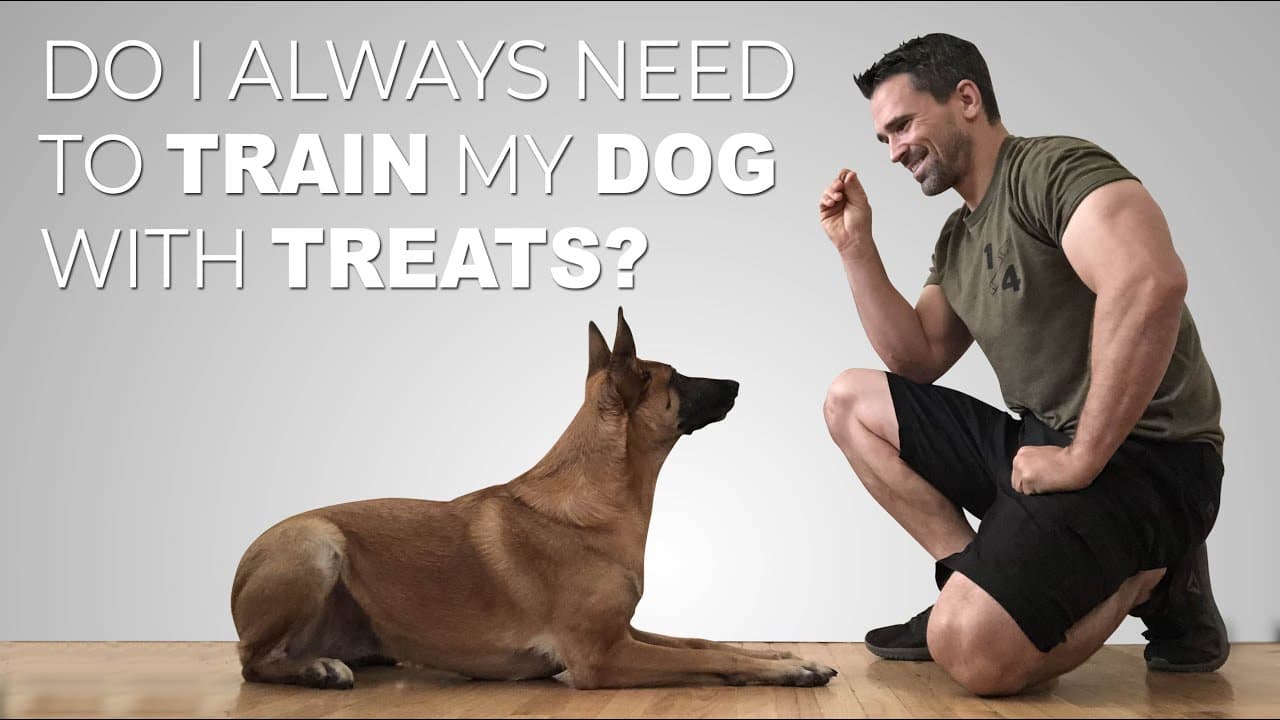
Do I always need to train my dog with treats? Episode 5
TL;DR
Dog training relies on motivation using rewards and corrections.
Transcript
understanding motivation everything that our dogs do is based on motivation they're either motivated to access something pleasant or they're motivated to prevent something unpleasant and the nice thing is we get to determine what motivating factors can get our dogs to do the behaviors that we like so we have food as a primary reinforcement we talke... Read More
Key Insights
- Dogs are motivated by rewards or the avoidance of unpleasant situations, similar to human motivations in work and behavior.
- Different dogs have varying levels of motivation for rewards and corrections, influencing their response to training.
- Food, toys, and affection are primary reinforcements, but their effectiveness varies based on the dog's preferences and motivation levels.
- The concept of perseverance is crucial; some breeds, like Malinois, continue working without immediate rewards, while others need frequent reinforcement.
- Training should start with consistent rewards for every behavior, gradually transitioning to sporadic rewards to maintain motivation.
- Verbal praise can complement or replace physical rewards over time, helping dogs understand they are performing desired behaviors.
- Understanding a dog's motivation helps in effectively spacing out rewards, similar to transitioning from a vending machine model to a slot machine model.
- Training content is available from basic to advanced levels, helping dog owners enhance their training techniques progressively.
Install to Summarize YouTube Videos and Get Transcripts
Explore YouTube Video Summarizer or Get YouTube Transcript Extractor
Questions & Answers
Q: Why is motivation crucial in dog training?
Motivation is crucial in dog training because it determines how a dog responds to commands and training cues. Dogs are motivated either by the desire to gain something pleasant, like food or affection, or to avoid something unpleasant. Understanding what motivates a particular dog helps trainers effectively use rewards and corrections to teach desired behaviors.
Q: How does perseverance affect a dog's training?
Perseverance affects a dog's training by influencing how long a dog will continue to work towards a reward without immediate gratification. Dogs with high perseverance, such as Malinois, are more likely to persist in training tasks even without constant rewards. Conversely, dogs with lower perseverance may require more frequent reinforcement to maintain motivation and engagement in training activities.
Q: What is the difference between continual reinforcement and spaced-out rewards?
Continual reinforcement involves rewarding a dog every time it performs a desired behavior, which is essential in the initial stages of training to establish the behavior. Spaced-out rewards, on the other hand, are given less frequently once the dog consistently performs the behavior. This transition helps maintain motivation without relying on constant rewards, similar to moving from a vending machine model to a slot machine model.
Q: Why is verbal praise important in dog training?
Verbal praise is important in dog training because it provides dogs with immediate feedback, reinforcing that they are performing the correct behavior even when physical rewards are not given. This helps maintain motivation and encourages dogs to continue responding to commands, as they understand that their actions are pleasing to their trainers, facilitating a smoother transition to less frequent physical rewards.
Q: How can trainers determine a dog's motivation level?
Trainers can determine a dog's motivation level by observing the dog's response to different types of rewards and corrections. Factors such as the dog's enthusiasm for food, toys, or affection, and its willingness to work for these rewards, provide insights into its motivation. Additionally, understanding the dog's breed characteristics and individual personality can help tailor the training approach to suit its motivation levels.
Q: What role do primary reinforcements play in training?
Primary reinforcements, such as food, toys, and affection, play a crucial role in training by serving as incentives for dogs to perform desired behaviors. These reinforcements are used to establish and reinforce behaviors, leveraging the dog's natural preferences and motivations. The effectiveness of each reinforcement depends on the individual dog's likes and motivation levels, requiring trainers to adjust their approach accordingly.
Q: How does the analogy of a speeding ticket relate to dog training?
The analogy of a speeding ticket relates to dog training by illustrating how the severity of corrections can influence behavior. Just as a minor speeding fine may not deter speeding, insufficient corrections may not change a dog's behavior. Conversely, overly harsh corrections can lead to avoidance behaviors. Effective training involves finding a balanced level of correction that encourages behavior change without causing avoidance.
Q: What is the significance of transitioning from a vending machine model to a slot machine model in training?
Transitioning from a vending machine model to a slot machine model in training is significant because it helps maintain a dog's motivation without relying on constant reinforcement. Initially, dogs are rewarded for every correct action to establish behavior. Over time, rewards are given sporadically, similar to a slot machine, encouraging dogs to continue performing behaviors in anticipation of occasional rewards, thus sustaining long-term engagement and obedience.
Summary & Key Takeaways
-
Dog training is based on understanding the motivation behind a dog's actions, which can be driven by the desire for rewards or the avoidance of unpleasant experiences. Trainers can use food, toys, and affection as positive reinforcements, but the effectiveness depends on each dog's unique preferences and motivation levels.
-
Consistency in rewarding desired behaviors is critical in the initial stages of training, akin to a vending machine model where every correct action is rewarded. Over time, trainers can transition to a slot machine model, where rewards are given sporadically, maintaining the dog's motivation without constant reinforcement.
-
Verbal praise can serve as an effective tool alongside or in place of physical rewards, helping dogs understand they are performing the correct behaviors. This gradual transition in reward frequency and type helps in building a reliable training routine, ensuring sustained motivation and obedience in dogs.
Read in Other Languages (beta)
Share This Summary 📚
Summarize YouTube Videos and Get Video Transcripts with 1-Click
Try YouTube Summary with ChatGPT & Claude or YouTube Transcript Generator
Explore More Summaries from Nate Schoemer 📚


Summarize YouTube Videos and Get Video Transcripts with 1-Click
Try YouTube Summary with ChatGPT & Claude or YouTube Transcript Generator