Uncertainty and the translator's personality

TL;DR
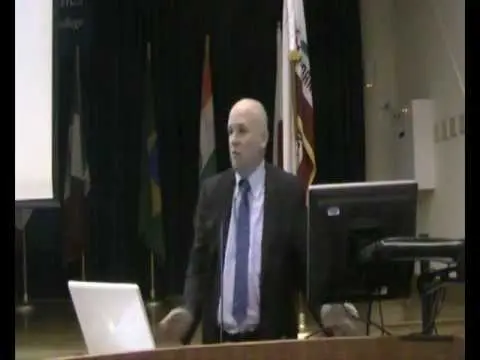
The speaker discusses the concept of uncertainty and indeterminacy in translation decision-making and its relation to translators' personality traits.
Transcript
uh the in the this evening I want to pick up a few points that have been mentioned in the previous talks but I want to focus on them under the ages of uncertainty which I will also call in determinism all right uncertainty it's just the fact that when we make decisions as translators there are no rules I suggest to guide us and that we get very goo... Read More
Key Insights
- 🦮 Uncertainty and indeterminacy are inherent in translation decision-making, as there are no fixed rules to guide translators.
- 💄 Translators must develop the skill of making quick decisions while considering multiple possible solutions.
- ❓ Theoretical frameworks, such as the uncertainty paradigm, propose alternative solutions to the concept of equivalence in translation.
- 💄 Translators' personality traits, particularly their tolerance for ambiguity and openness to experience, can influence their decision-making process.
- ✳️ Professional translators often adopt strategies to manage risk, such as high effort for high-risk problems and fast decision-making for low-risk problems.
Install to Summarize YouTube Videos and Get Transcripts
Explore YouTube Video Summarizer or Get YouTube Transcript Extractor
Questions & Answers
Q: What is the significance of uncertainty and indeterminacy in translation decision-making?
Uncertainty and indeterminacy highlight the absence of set rules to guide translators in making decisions, making it a challenging process where multiple solutions exist.
Q: How do translators deal with uncertainty and indeterminacy?
Translators must develop the skill of making decisions quickly, confidently, and ethically in the face of uncertainty. They often engage in theorization and consider the potential outcomes of their decisions.
Q: How does the concept of equivalence relate to uncertainty and indeterminacy?
Equivalence, as a concept in translation, did not originally account for uncertainty or indeterminacy. The uncertainty paradigm proposes that there is no fixed rule for determining equivalence, and translators must navigate this ambiguity in their decision-making process.
Q: How do translators' personality traits influence their decision-making process?
Translators with a higher tolerance for ambiguity and openness to experience are more likely to navigate uncertainty effectively. However, with increasing experience, translators may become less open to new approaches and more risk-averse.
Summary & Key Takeaways
-
The speaker discusses uncertainty and indeterminacy in translation decision-making, emphasizing that there are no set rules to guide translators in making decisions.
-
The speaker explores the concept of translators' personality traits and how they relate to the decision-making process in translation.
-
The speaker highlights the different theories and paradigms proposed to address the issue of equivalence in translation and the role of theorization in translation decisions.
Read in Other Languages (beta)
Share This Summary 📚
Summarize YouTube Videos and Get Video Transcripts with 1-Click
Try YouTube Summary with ChatGPT & Claude or YouTube Transcript Generator
Explore More Summaries from Anthony Pym 📚


Summarize YouTube Videos and Get Video Transcripts with 1-Click
Try YouTube Summary with ChatGPT & Claude or YouTube Transcript Generator