Carbon cycle | Ecology | Khan Academy
TL;DR
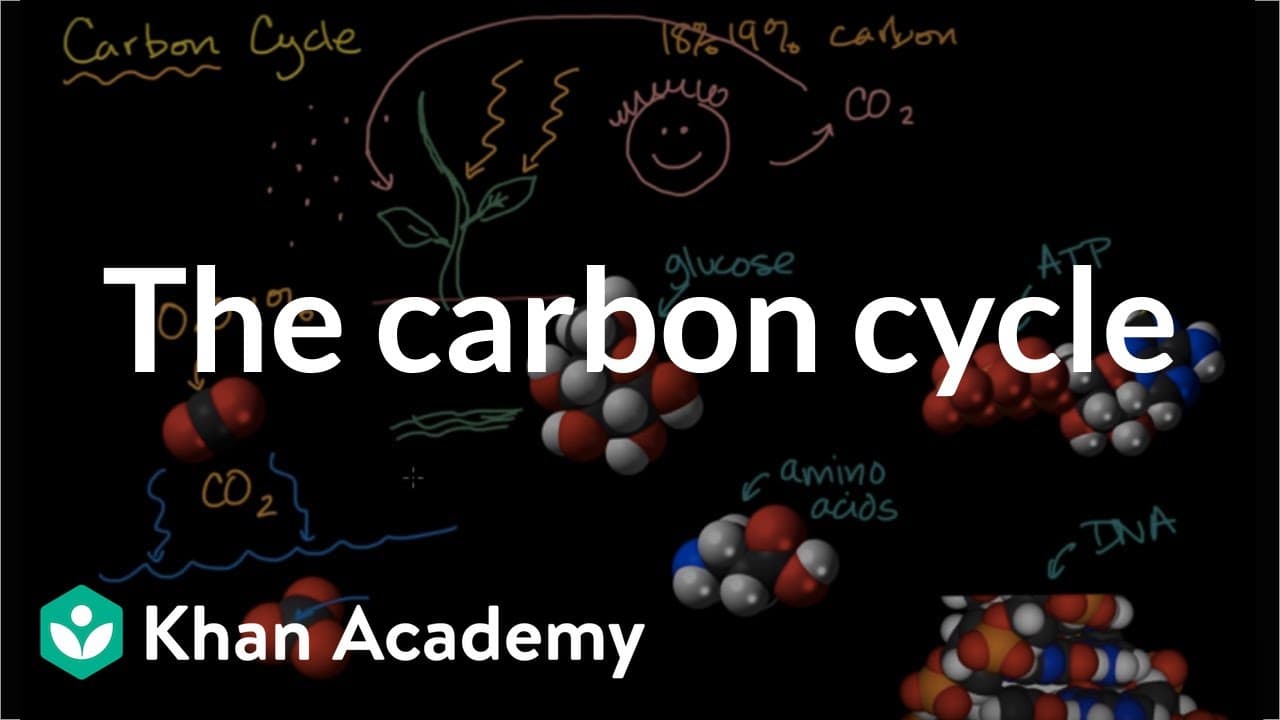
This content explains how carbon cycles through the biosphere and its significance in the form of important molecules such as glucose, ATP, amino acids, and DNA.
Transcript
- [Instructor] I wanna talk a little bit about carbon and how it cycles through our biosphere. And we touch on this in other videos. But when we talk about elements like carbon, they don't just appear and disappear all of a sudden in our biosphere. For the most part, they have been here since the beginning. But they just get recycled from one form ... Read More
Key Insights
- 💁 Carbon is an essential element in the biosphere and is recycled from one form to another.
- 🫀 Important molecules like glucose, ATP, amino acids, and DNA are composed of carbon atoms.
- 🏍️ The carbon cycle involves processes like photosynthesis, respiration, and the decomposition of organic matter.
- 🤩 Carbon dioxide, although a small percentage in the atmosphere, plays a key role in regulating Earth's climate.
- 💁 The ocean also absorbs carbon dioxide, leading to the formation of carbonate ions and the creation of limestone.
- 🌐 Fossil fuels store carbon-based energy and release carbon dioxide when burned, contributing to global climate change.
- 🌱 Autotrophs like plants fix carbon through photosynthesis, while heterotrophs obtain carbon by consuming other organisms.
Install to Summarize YouTube Videos and Get Transcripts
Explore YouTube Video Summarizer or Get YouTube Transcript Extractor
Questions & Answers
Q: Why is carbon important in the biosphere?
Carbon is crucial for biological systems as it forms the backbone of important molecules like glucose, ATP, amino acids, and DNA. It plays a vital role in providing energy and structure to living organisms.
Q: How does carbon cycle through the biosphere?
Carbon cycles through the biosphere through various processes. Plants fix carbon from atmospheric carbon dioxide through photosynthesis, while animals obtain carbon by consuming plants or other animals. The carbon is released back into the atmosphere when these organic compounds are metabolized.
Q: What are the major components of the atmosphere?
The major components of the atmosphere are nitrogen (78%), oxygen (21%), and carbon dioxide (0.04%). Carbon dioxide, although present in a small percentage, plays a significant role in biological systems and its concentration affects global warming.
Q: How are fossil fuels formed?
Fossil fuels are formed from the organic matter of plants and animals that have been buried and compressed over millions of years. With enough pressure and time, this organic matter turns into fossil fuels such as oil and gas.
Summary & Key Takeaways
-
Carbon is a vital element in the biosphere and cycles through different forms, from atmospheric carbon dioxide to important molecules in plants and animals.
-
Photosynthetic autotrophs like plants fix carbon through the process of photosynthesis, using light energy to convert carbon dioxide into organic molecules.
-
Animals, including humans, obtain carbon by consuming plants or other animals, and the carbon is released back into the atmosphere when these organic compounds are metabolized.
Read in Other Languages (beta)
Share This Summary 📚
Summarize YouTube Videos and Get Video Transcripts with 1-Click
Try YouTube Summary with ChatGPT & Claude or YouTube Transcript Generator
Explore More Summaries from Khan Academy 📚





Summarize YouTube Videos and Get Video Transcripts with 1-Click
Try YouTube Summary with ChatGPT & Claude or YouTube Transcript Generator