What Is Sound and How Does It Affect Music?
TL;DR
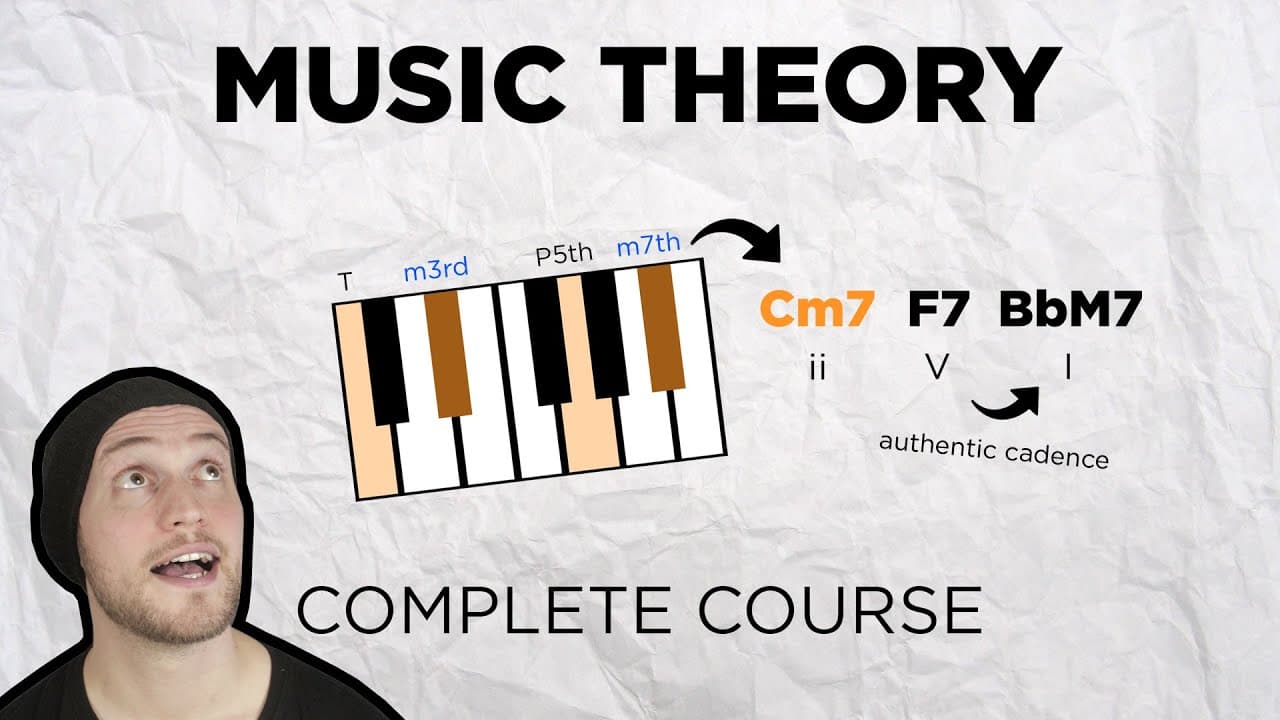
Sound is a vibration of air pressure that propagates through the compression and rarefaction of air particles. Consonance and dissonance in music arise from the simple or complex frequency ratios between sounds, respectively, while the harmonic series illustrates the relationships between these frequencies, influencing musical scales and harmony.
Transcript
hi there have you ever wondered why some sounds goes well together and some other knots why some sounds can merge beautifully and become sentence and some others can be less pleasing to the ear and be descendant there are different ways to explain that but we have to go back to what sound is in its nature what is sound sound is a variation of press... Read More
Key Insights
- 👱 Sound is a variation of pressure that moves through the air via vibrations.
- 🥳 Consonant sounds have simpler frequency ratios, while dissonant sounds have more complex ratios.
- 🖐️ The harmonic series is a series of frequencies that are multiples of a fundamental frequency, and it plays a role in determining consonance and purity of sounds.
- 👂 Overtones are multiples of the fundamental frequency and contribute to the musical notes we hear, while inharmonic overtones affect the tone of the sound.
- 🎵 Scales and musical notes are created based on the consonant frequencies present in the harmonic series.
- 💨 The Napolitan sixth chord is a substitution for the chord of the fifth degree in an authentic cadence, where the replaced chord is a tritone away from the original chord.
Install to Summarize YouTube Videos and Get Transcripts
Explore YouTube Video Summarizer or Get YouTube Transcript Extractor
Questions & Answers
Q: What is sound and how does it propagate?
Sound is a variation of pressure that moves through the air via vibrations. When particles in the air vibrate, they create compression and rarefaction, leading to sound propagation.
Q: What determines whether two sounds are consonant or dissonant?
The ratio of the frequencies of two sounds determines their consonance or dissonance. Simple frequency ratios, such as 2:1 or 3:1, create more consonant sounds, while complex ratios create dissonant sounds.
Q: What is the harmonic series?
The harmonic series is a series of frequencies that are multiples of a fundamental frequency. Simple ratios in the harmonic series create consonant sounds.
Q: How do overtones and inharmonic overtones affect sound?
Overtones are multiples of the fundamental frequency and contribute to the musical notes we hear. Inharmonic overtones, which are not part of the harmonic series, affect the tone of the sound. Different overtones resonate at different levels, creating different tones and timbres.
Q: How are scales and musical notes created based on consonant frequencies?
Scales and musical notes are created based on the consonant frequencies present in the harmonic series. By selecting specific ratios between frequencies, such as 2:1 for an octave, musicians can create scales and play actual music.
Key Insights:
- Sound is a variation of pressure that moves through the air via vibrations.
- Consonant sounds have simpler frequency ratios, while dissonant sounds have more complex ratios.
- The harmonic series is a series of frequencies that are multiples of a fundamental frequency, and it plays a role in determining consonance and purity of sounds.
- Overtones are multiples of the fundamental frequency and contribute to the musical notes we hear, while inharmonic overtones affect the tone of the sound.
- Scales and musical notes are created based on the consonant frequencies present in the harmonic series.
- The Napolitan sixth chord is a substitution for the chord of the fifth degree in an authentic cadence, where the replaced chord is a tritone away from the original chord.
- Understanding sound and harmonic series can provide insights into music theory and composition.
Summary & Key Takeaways
-
Sound is a variation of pressure that moves through the air via vibrations.
-
Consonant sounds have simple frequency ratios, while dissonant sounds have more complex ratios.
-
The harmonic series explains the relationship between frequencies and consonance in sounds.
Read in Other Languages (beta)
Share This Summary 📚
Summarize YouTube Videos and Get Video Transcripts with 1-Click
Try YouTube Summary with ChatGPT & Claude or YouTube Transcript Generator
Explore More Summaries from Woochia - Charly Sauret 📚


Summarize YouTube Videos and Get Video Transcripts with 1-Click
Try YouTube Summary with ChatGPT & Claude or YouTube Transcript Generator