The Power and Pitfalls of Economic Sanctions in Foreign Policy
TL;DR
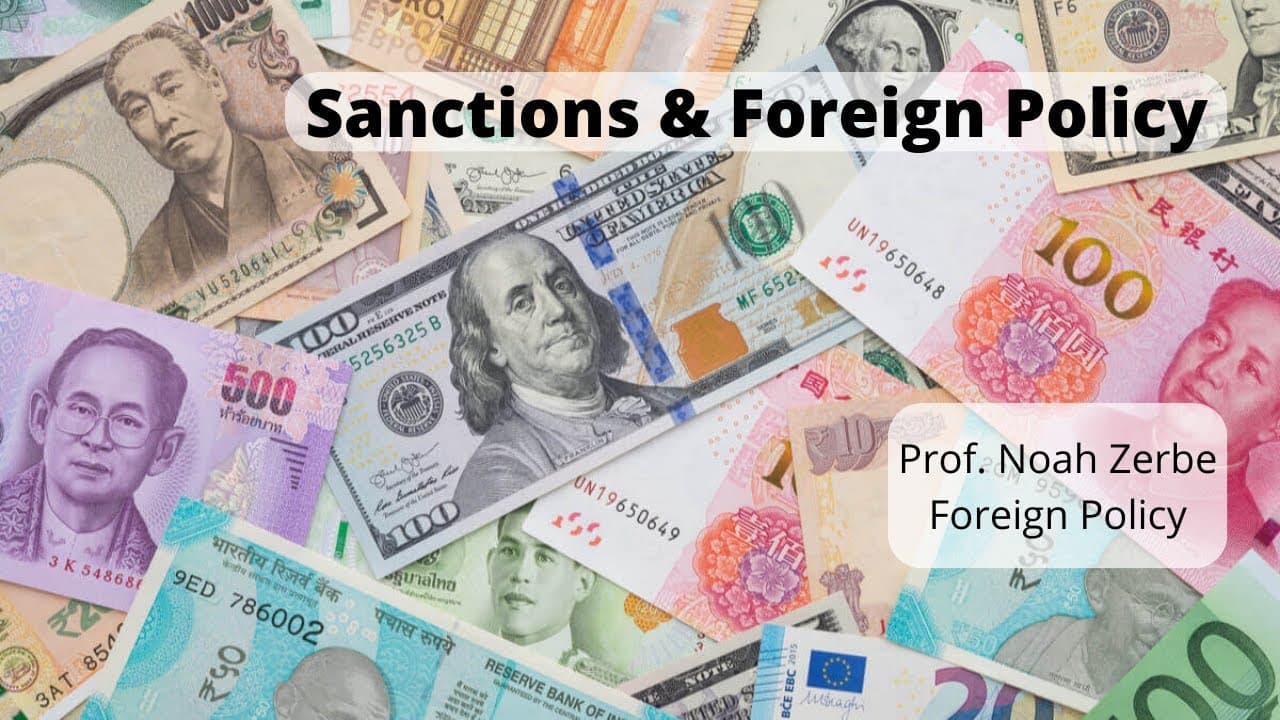
Economic sanctions are penalties imposed by states or institutions to change behavior or deter actions, but their effectiveness depends on factors such as clear objectives, international support, and enforcement.
Transcript
hey everyone welcome back this is one of a series of short videos addressing questions in foreign economic policy in this video we're going to look at the use of sanctions as a tool of foreign policy in general economic sanctions are commercial or financial penalties applied by States or institutions against States groups or individuals which attem... Read More
Key Insights
- 🌍 Economic sanctions are a popular tool in foreign policy due to their ability to send a message, influence behavior, and enforce international norms and standards.
- 🎯 The success of sanctions depends on factors such as clear objectives, targeted measures, resilience of the targeted country, international support, compliance, enforcement, political will, and duration.
- ❎ Unintended consequences of sanctions include negative humanitarian impacts, strengthening of authoritarian regimes, and strain on regional stability and diplomatic relations.
- 😒 Selective use of sanctions and lack of clear exit strategies or off-ramps can hinder their effectiveness and perpetuate hostility.
- ❓ Critics argue that sanctions can be hypocritical, fail to achieve desired outcomes, and contribute to economic warfare.
Install to Summarize YouTube Videos and Get Transcripts
Explore YouTube Video Summarizer or Get YouTube Transcript Extractor
Questions & Answers
Q: What are economic sanctions and how are they used in foreign policy?
Economic sanctions are penalties applied by states or institutions to coerce or deter certain behavior. They can be used to target countries, individuals, or groups. Sanctions serve as a tool to signal disapproval, influence behavior, create leverage, and impose consequences.
Q: What factors impact the effectiveness of economic sanctions?
The effectiveness of sanctions depends on several factors. Clearly defined and well-targeted objectives, support from a broad coalition, compliance and enforcement, resilience of the targeted country or sector, economic power of the imposing country, and ongoing diplomatic engagement all contribute to their effectiveness.
Q: What are some unintended consequences of economic sanctions?
Economic sanctions can have negative humanitarian impacts, leading to shortages of essential goods and affecting vulnerable populations. They can inadvertently strengthen authoritarian regimes, create illicit networks, and strain regional stability. Sanctions can also result in economic costs for the imposing country and strain diplomatic relations.
Q: What are secondary sanctions?
Secondary sanctions are imposed on third-party states or entities for violating primary sanctions. They restrict access to the imposing country's markets or financial systems, compelling them to choose between trading with the targeted country or the imposing country. These sanctions are controversial and can strain relationships with trading partners.
Summary & Key Takeaways
-
Economic sanctions are used to compel or deter specific actions by countries and individuals through disrupting economic exchanges.
-
The United States is responsible for the majority of global sanctions and has imposed sanctions on various countries, including Cuba, Iran, North Korea, Syria, Russia, and Venezuela.
-
Sanctions can have different goals, such as regime change, protesting human rights violations, limiting nuclear weapons programs, and punishing actions deemed unacceptable.
Read in Other Languages (beta)
Share This Summary 📚
Summarize YouTube Videos and Get Video Transcripts with 1-Click
Try YouTube Summary with ChatGPT & Claude or YouTube Transcript Generator
Explore More Summaries from Noah Zerbe 📚


Summarize YouTube Videos and Get Video Transcripts with 1-Click
Try YouTube Summary with ChatGPT & Claude or YouTube Transcript Generator