Media Bias and Global Suppression: A New Era of Control?
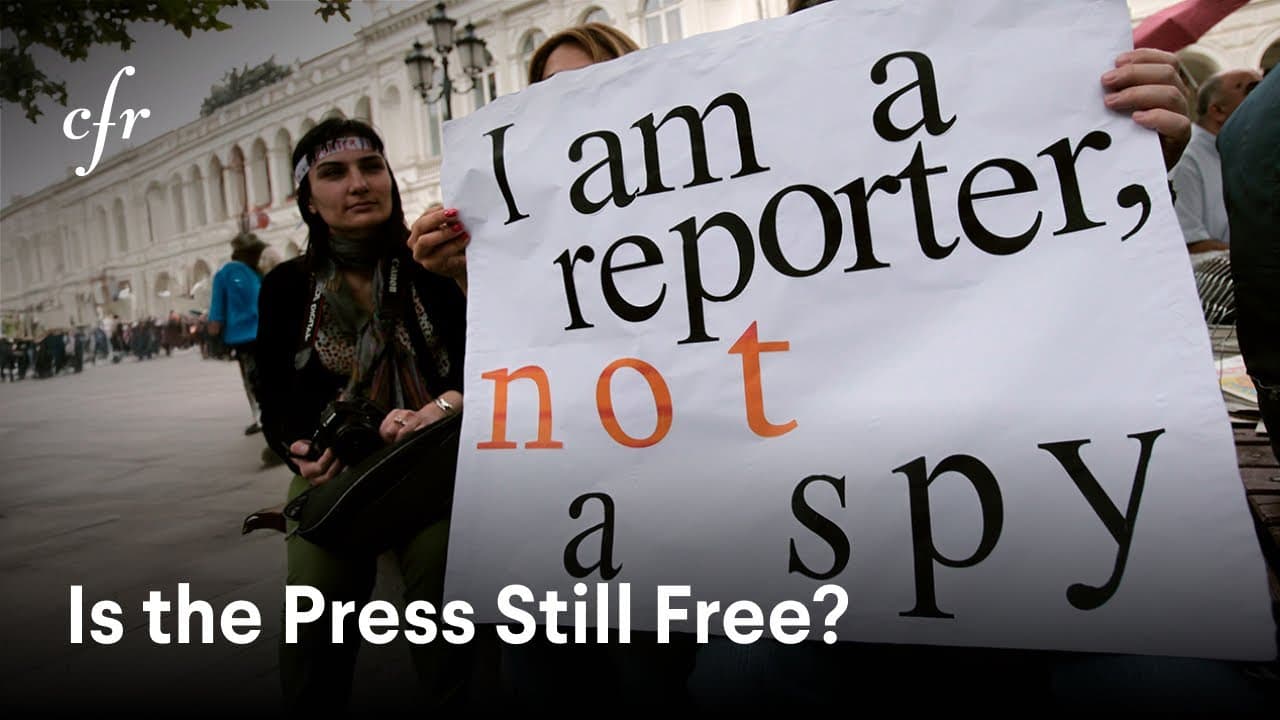
TL;DR
Discussion on global press freedom challenges and media's evolving landscape.
Transcript
Good afternoon, everyone. AUDIENCE MEMBERS: Good afternoon. STENGEL: What a fantastic crowd, and what an important discussion today: “Challenges to Global Press Freedom.” And there are a lot of them. Appropriately, the conversation today is on the record. And we have a fantastic panel of people who can represent every point of view about this, a... Read More
Key Insights
- Press freedom is under threat globally and domestically, with increasing authoritarianism and government intimidation against journalists.
- The United States, once a beacon of press freedom, is experiencing significant challenges, including physical threats and legal actions against journalists.
- The economic model for journalism is failing, leading to news deserts and diminished local news coverage, impacting the quality of democracy.
- The rise of social media and non-journalistic sources has eroded the power and trust in traditional media, allowing authoritarian regimes to bypass traditional news outlets.
- Conservatives have long felt excluded from mainstream media, leading to the rise of alternative platforms and voices that challenge traditional media narratives.
- Technological advances, particularly AI, are reshaping journalism. The industry must adapt to these changes to remain relevant and effective.
- Global press freedom is impacted by the U.S.'s stance on journalism, with other countries taking cues from its treatment of the media.
- The role of media owners and advertisers is crucial in maintaining journalistic integrity, with financial pressures often compromising editorial independence.
Install to Summarize YouTube Videos and Get Transcripts
Explore YouTube Video Summarizer or Get YouTube Transcript Extractor
Questions & Answers
Q: What are the main challenges to global press freedom?
The main challenges include authoritarianism, government intimidation, economic struggles leading to news deserts, and the erosion of trust due to the rise of non-journalistic sources. These factors collectively undermine the ability of journalists to operate freely and effectively, both globally and domestically.
Q: How has the U.S.'s role in press freedom changed?
The U.S., once a leader in press freedom, is now facing similar challenges as authoritarian regimes, with increased physical threats, legal actions, and rhetorical attacks against journalists. This shift impacts global perceptions and practices, as other countries take cues from the U.S.'s treatment of the media.
Q: What impact has technology had on journalism?
Technology, particularly the rise of social media and AI, has significantly altered the journalism landscape. It has democratized information dissemination, eroded traditional media's authority, and posed new challenges for maintaining journalistic standards. The industry must adapt to these changes to remain relevant.
Q: Why do conservatives feel excluded from mainstream media?
Conservatives have historically felt excluded due to perceived liberal bias in mainstream media. This has led to the creation of alternative platforms and voices that challenge traditional narratives and cater to conservative audiences, reshaping the media landscape over the decades.
Q: What role do media owners and advertisers play in journalism?
Media owners and advertisers significantly influence journalistic integrity. Financial pressures can compromise editorial independence, as seen in settlements and content decisions driven by business interests rather than journalistic values. Maintaining a balance between financial viability and integrity is crucial.
Q: How does global press freedom impact democracy?
Press freedom is essential for democracy, enabling informed citizenry and accountability. Challenges to press freedom, such as censorship and economic struggles, weaken democratic institutions and practices, as seen in the U.S. and other countries facing similar issues.
Q: What strategies can journalism employ to adapt to current challenges?
Journalism must embrace technological advancements and societal changes, exploring new models that meet contemporary needs. This includes leveraging AI responsibly, increasing transparency, and building trust with diverse audiences while maintaining journalistic standards and integrity.
Q: How do global perspectives inform U.S. journalism practices?
Learning from international experiences, especially in countries with long-standing press freedom challenges, can provide valuable insights into risk assessment, resilience, and innovation. Global perspectives highlight the need for solidarity and adaptive strategies in facing common threats to journalism.
Summary & Key Takeaways
-
The panel discusses the global challenges to press freedom, highlighting the threats from authoritarian regimes and the diminishing power of traditional media due to economic and technological changes. They emphasize the need for journalism to adapt to new societal and technological realities to remain relevant.
-
Panelists explore the historical context of media bias, particularly how conservatives have perceived exclusion from mainstream media. They discuss how technology and social media have changed the landscape, allowing for more diverse voices but also leading to the erosion of traditional media's authority.
-
The discussion underscores the importance of press freedom for democracy, noting how the U.S.'s current challenges impact global perceptions and practices. The panel calls for a reevaluation of journalism's role and strategies in addressing these evolving challenges.
Read in Other Languages (beta)
Share This Summary 📚
Summarize YouTube Videos and Get Video Transcripts with 1-Click
Try YouTube Summary with ChatGPT & Claude or YouTube Transcript Generator
Explore More Summaries from Council on Foreign Relations 📚


Summarize YouTube Videos and Get Video Transcripts with 1-Click
Try YouTube Summary with ChatGPT & Claude or YouTube Transcript Generator