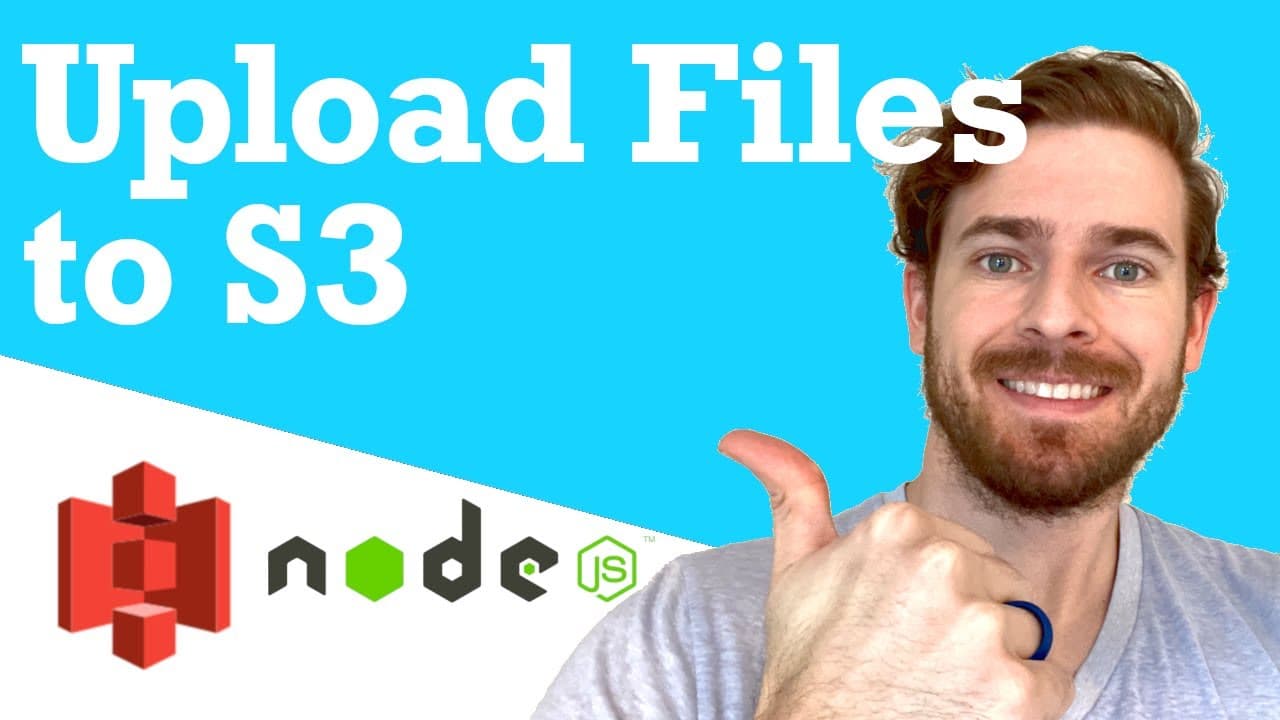
How to upload files to S3 using Node
TL;DR
This tutorial teaches how to upload files to an S3 bucket using Node.js.
Transcript
hey everyone welcome back to another web dev junkie video i hope you guys are having a great day in this tutorial i'm going to show you how to upload a file to an s3 bucket using node.js so if you're a complete beginner or a beginner at amazon and node i'm going to try to go at a slower pace to kind of walk you through how to do this and set up a b... Read More
Key Insights
- 😶🌫️ Amazon S3 is an essential tool for scalable file storage, allowing users to upload and manage data seamlessly in the cloud.
- 🪣 Creating a unique S3 bucket name is critical, as it must not conflict with existing bucket names across all AWS accounts.
- 😒 The tutorial emphasizes the use of the AWS SDK within Node.js, showcasing how to interact with AWS resources programmatically.
- 🔒 Proper setup of IAM roles and policies is vital for secure access to AWS resources and minimizing security risks associated with excessive permissions.
- 👨💻 Using async/await or promises in JavaScript is recommended for managing asynchronous operations such as file uploads, enhancing code readability.
- ℹ️ Environmental variables are a best practice for securely managing sensitive credentials in programming, avoiding hardcoding sensitive information into source code.
- 😒 The tutorial showcases the importance of deleting AWS resources after use to maintain security and avoid unintended charges on one's account.
Install to Summarize YouTube Videos and Get Transcripts
Explore YouTube Video Summarizer or Get YouTube Transcript Extractor
Questions & Answers
Q: What is Amazon S3 and how is it used in this tutorial?
Amazon S3 (Simple Storage Service) is a scalable storage solution provided by AWS that allows users to store and retrieve any amount of data. In this tutorial, S3 is used to create a bucket where files can be uploaded programmatically using Node.js. The tutorial walks through the steps of setting up a bucket and uploading a file, demonstrating the vital role of S3 in cloud storage.
Q: What steps are necessary to create a bucket in Amazon S3?
To create a bucket in Amazon S3, first log into the Amazon dashboard and navigate to the S3 service. Click on the 'Create Bucket' button, enter a unique bucket name, choose a region (such as US East 1), and optionally adjust the permissions as needed. The default settings are often sufficient for learning purposes, but adjustments can be made for public access or specific use cases.
Q: How do you set permissions for uploading files to an S3 bucket?
Permissions are managed through the IAM (Identity and Access Management) service in AWS. To upload files, create a new IAM user with programmatic access and attach necessary policies, ideally limiting permissions to only what is needed. In this tutorial, an administrative policy was attached for simplicity but should be restricted in real applications for security reasons.
Q: What is the process for uploading a file using Node.js?
The process begins with creating a Node.js project and installing the AWS SDK as a dependency. In the script, the AWS SDK is imported, an S3 object is instantiated, and the putObject method is called with the required parameters, including the bucket name and the key for the file. Finally, promises or async/await patterns can be used to manage the asynchronous upload operation.
Q: What are environment variables and how are they used in this tutorial?
Environment variables are key-value pairs stored in your operating system that provide configuration settings to applications. In this tutorial, environment variables are used to store AWS credentials (access and secret keys), allowing the Node.js application to authenticate permissions securely while interacting with AWS services.
Q: How did the tutorial ensure that security practices were followed after uploading files?
After demonstrating the upload process, the tutorial emphasizes the importance of cleaning up resources by deleting the IAM user created for teaching purposes. This helps to prevent unauthorized access, thereby reinforcing security practices by ensuring no credentials remain post-tutorial.
Summary & Key Takeaways
-
The tutorial begins by explaining what Amazon S3 is and how to create a bucket using the Amazon dashboard, emphasizing the need for unique bucket names.
-
It covers setting up a Node.js project, installing the AWS SDK, and writing the necessary code to upload files, including creating a script to put an object in the S3 bucket.
-
Finally, it discusses configuring permissions using the IAM service, highlights the importance of security practices, and shows how to verify successful uploads.
Read in Other Languages (beta)
Share This Summary 📚
Summarize YouTube Videos and Get Video Transcripts with 1-Click
Try YouTube Summary with ChatGPT & Claude or YouTube Transcript Generator
Explore More Summaries from Web Dev Cody 📚

Summarize YouTube Videos and Get Video Transcripts with 1-Click
Try YouTube Summary with ChatGPT & Claude or YouTube Transcript Generator