How to Break Free from Muscle Building Plateaus

TL;DR
To avoid muscle building plateaus, focus on maximizing your body's adaptive response rather than just working out hard and getting sore. Training should be designed to enhance adaptation, not just recovery. Frequent, moderate workouts can be more effective than infrequent, intense sessions.
Transcript
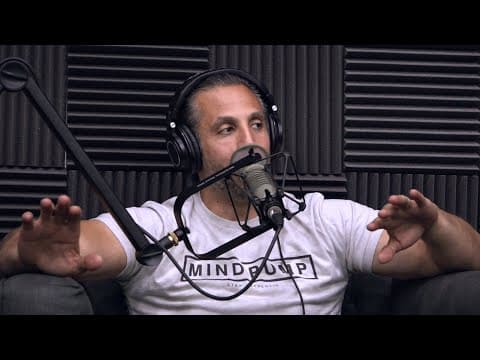
if you want to pump your body and expand your mind there's only one place to go mind with your hosts Sal de Stefano Adam Schaefer and Justin Andrews in this episode of the mind pump just like an old mom I'd pump show like an oldie it is we we didn't have lassic style we didn't have direction when we opened up this episode but it turned into a great... Read More
Key Insights
- The breakdown recovery trap is when you work out hard, get sore, recover, but don't see muscle growth.
- Muscle adaptation is different from recovery; adaptation is about becoming more resilient.
- Training frequency can be more effective than intensity for muscle growth.
- Old fitness advice often promoted body part splits, which may not be optimal for growth.
- Artificial sweeteners like sucralose may negatively impact gut health and promote bad bacteria.
- Natural fats found in nature are not inherently bad; processed fats are the issue.
- Efficiency in workouts can lead to better results than simply working harder.
- Trigger sessions can boost cognitive function and creativity by increasing energy levels.
Install to Summarize YouTube Videos and Get Transcripts
Explore YouTube Video Summarizer or Get YouTube Transcript Extractor
Questions & Answers
Q: How can I avoid muscle building plateaus?
To avoid muscle building plateaus, focus on maximizing your body's adaptive response rather than just recovering from workouts. This involves training more frequently with moderate intensity to keep adaptation signals high. Avoid the trap of working out hard just to get sore, as this does not necessarily lead to growth.
Q: What is the breakdown recovery trap?
The breakdown recovery trap occurs when you repeatedly work out hard, get sore, recover, but do not see muscle growth. This happens because the body prioritizes healing over adaptation when faced with excessive damage, preventing significant progress in muscle development.
Q: Why is training frequency important for muscle growth?
Training frequency is important because it keeps muscle protein synthesis elevated, which is crucial for muscle growth. Frequent, moderate workouts ensure that adaptation signals are consistently sent, leading to better results compared to infrequent, intense sessions that focus solely on recovery.
Q: Are artificial sweeteners bad for gut health?
Yes, some artificial sweeteners like sucralose can negatively impact gut health by killing beneficial bacteria and promoting the growth of harmful bacteria. This can lead to issues like dysbiosis and worsen conditions such as Crohn's disease. It's advisable to limit artificial sweeteners and opt for natural alternatives.
Q: What are the benefits of natural fats?
Natural fats found in foods like avocados, nuts, and olive oil are generally healthy and provide essential nutrients. They are not inherently bad; the issue arises from processed fats. Natural fats support various bodily functions, including hormone production and cell structure, and should be included in a balanced diet.
Q: How can trigger sessions boost energy and creativity?
Trigger sessions, which are short, low-intensity workouts, can boost energy and creativity by increasing blood flow and releasing feel-good chemicals in the brain. They can be an effective way to enhance cognitive function and maintain energy levels throughout the day without the fatigue of a full workout.
Q: Why is efficiency in workouts more effective than intensity?
Efficiency in workouts focuses on doing the minimum effective dose to stimulate muscle growth, avoiding unnecessary fatigue and burnout. By prioritizing smart programming and consistent effort over sheer intensity, you can achieve better results without risking injury or overtraining.
Q: What role does adaptation play in muscle growth?
Adaptation is the body's process of becoming more resilient to stressors, like exercise, by building stronger muscles. Unlike recovery, which is simply healing, adaptation involves physiological changes that prepare the body for future challenges, leading to increased strength and muscle size over time.
Summary & Key Takeaways
-
Muscle building plateaus can be avoided by focusing on the body's adaptive response rather than just recovery. Training frequency is crucial, as adaptation signals are strongest within 24-72 hours post-workout. Avoid the trap of working out hard just to get sore; instead, aim for consistent, moderate workouts to encourage growth.
-
Artificial sweeteners like sucralose may harm gut health by promoting bad bacteria growth, which can be detrimental for individuals with conditions like Crohn's disease. Opt for natural sweeteners and fats to maintain a healthier diet and avoid unnecessary inflammation.
-
Old fitness advice often emphasized body part splits and intense workouts, but this may not be optimal. Instead, prioritize efficiency and smart programming that includes frequent sessions and compound movements to elicit the best muscle growth and overall fitness results.
Read in Other Languages (beta)
Share This Summary 📚
Summarize YouTube Videos and Get Video Transcripts with 1-Click
Try YouTube Summary with ChatGPT & Claude or YouTube Transcript Generator
Explore More Summaries from Mind Pump Show 📚




Summarize YouTube Videos and Get Video Transcripts with 1-Click
Try YouTube Summary with ChatGPT & Claude or YouTube Transcript Generator