Discover Stanford For You: Stress and Resilience with Dr. Victor G. Carrión
TL;DR
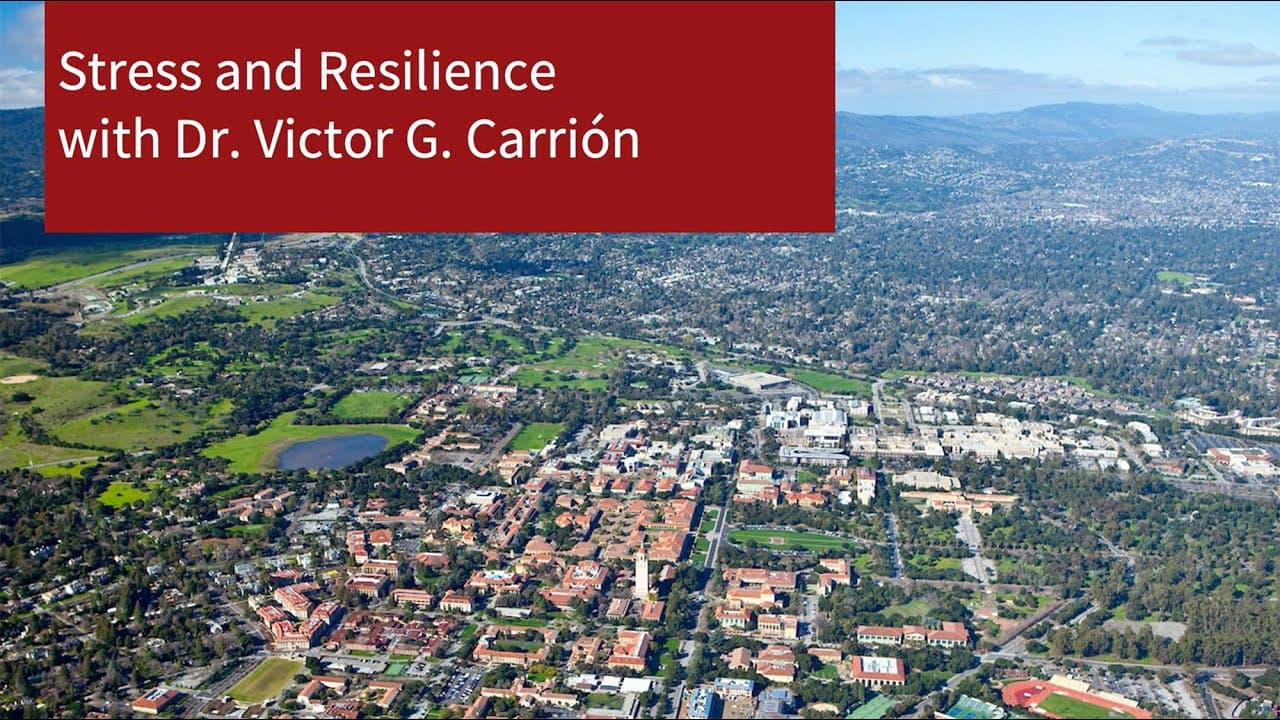
Dr. Victor Carrion shares insights on early life stress and resilience, highlighting the impact of stress on brain development and the importance of neuroplasticity in improving outcomes. He suggests that coping methods may vary between individuals and emphasizes the need for a personalized approach. He also discusses the role of educators in assisting students dealing with stress and anxiety.
Transcript
Good morning, everyone. Once again, I'm Jennifer Deitz, Director and Associate Dean for Stanford Continuing Studies. Thank you all for joining us today for discover Stanford for you. We are very excited to bring you this event. It's our second in our series, and it's being co-sponsored by Continuing Studies and by the Office of External Relations. ... Read More
Key Insights
- ✋ Stress triggers the release of cortisol, which can be neurotoxic in high levels.
- 👻 Neuroplasticity allows the brain to rewire and adapt to stress and trauma.
- 🔬 Coping methods vary between individuals, and it's important to offer personalized approaches.
- 🧑🏫 Teachers can support students by creating a nurturing environment and teaching coping skills.
- 👶 Empathy and empowerment, rather than micromanagement, can help foster resilience in children.
- 😨 Self-care, social support, and resource accessibility are vital in addressing stress and trauma.
- ⚾ Racially-based violence and adoption experiences can contribute to traumatic stress.
- 💭 Promoting positive thoughts and mindfulness can enhance well-being and resilience.
- 👶 Empathizing with children's problems and offering support can build agency and resilience.
Install to Summarize YouTube Videos and Get Transcripts
Explore YouTube Video Summarizer or Get YouTube Transcript Extractor
Questions & Answers
Q: How can teachers assist students dealing with stress and anxiety?
Teachers can create a nurturing environment, teach coping skills, and refer students to additional support if needed. Incorporating mindfulness and yoga practices, as well as brain breaks, can also be beneficial.
Q: Are coping methods different for each person based on their personality?
Yes, coping methods can vary based on individual preferences and strengths. It's important to offer a range of coping strategies and allow individuals to choose what works best for them.
Q: What are the impacts of racially-based violence on children and youth?
Racially-based violence can be traumatic for children and youth. It's essential to provide support, educate about trauma, and develop coping tools specific to their experiences.
Q: Can self-inflicted trauma, even on a minor scale, cause PTSD-like symptoms?
Yes, even minor self-inflicted trauma can contribute to symptoms similar to PTSD. It's crucial to seek professional help and provide supportive interventions to address these symptoms.
Q: Does stress have an impact on developmental issues such as malnutrition?
Stress can impact various aspects of development, including nutrition. Stressful experiences can contribute to maladaptive behaviors that affect physical and mental health.
Q: Can you elaborate on the benefits of CBT and DBT therapies as interventions?
Cognitive behavioral therapy (CBT) and dialectical behavior therapy (DBT) can be effective interventions for addressing trauma and enhancing coping skills. These therapies help individuals reframe negative thoughts, regulate emotions, and develop adaptive responses to stress.
Summary & Key Takeaways
-
Early life stress and trauma can have long-term impacts on brain structure and function.
-
Stress triggers the release of cortisol, which can be neurotoxic when present in high levels.
-
Neuroplasticity allows for the rewiring of the brain, and interventions such as cue-centered therapy and mindfulness can enhance neuroplasticity.
-
Teachers can play a crucial role in supporting students by creating an environment that promotes resilience and providing resources for coping with stress.
Read in Other Languages (beta)
Share This Summary 📚
Summarize YouTube Videos and Get Video Transcripts with 1-Click
Try YouTube Summary with ChatGPT & Claude or YouTube Transcript Generator
Explore More Summaries from Stanford 📚



Summarize YouTube Videos and Get Video Transcripts with 1-Click
Try YouTube Summary with ChatGPT & Claude or YouTube Transcript Generator