Introduction to Heat and Temperature - Heat - Diploma Physics 1
TL;DR
Heat is a form of energy that transfers due to temperature differences, with temperature being the measure of the average kinetic energy of particles in a system.
Transcript
click the Bell icon to get latest videos from akira hello friends today we will see introduction about heat and temperature we know any material is made up of atoms and molecule and as per the kinetic theory of gases this atom and molecule are continuously in the state of motion so let us take the example of solid now when we are talking about soli... Read More
Key Insights
- 🎭 Heat is a form of energy that transfers due to temperature differences between bodies.
- 🫢 Energy transfer in solids occurs through vibrational energy, while in liquids and gases, it occurs through transitional energy.
- 🥵 The sum of all molecule energies in a material is called thermal or internal energy, which is equivalent to heat energy.
- 😘 Heat transfers from a body at a higher temperature to one at a lower temperature.
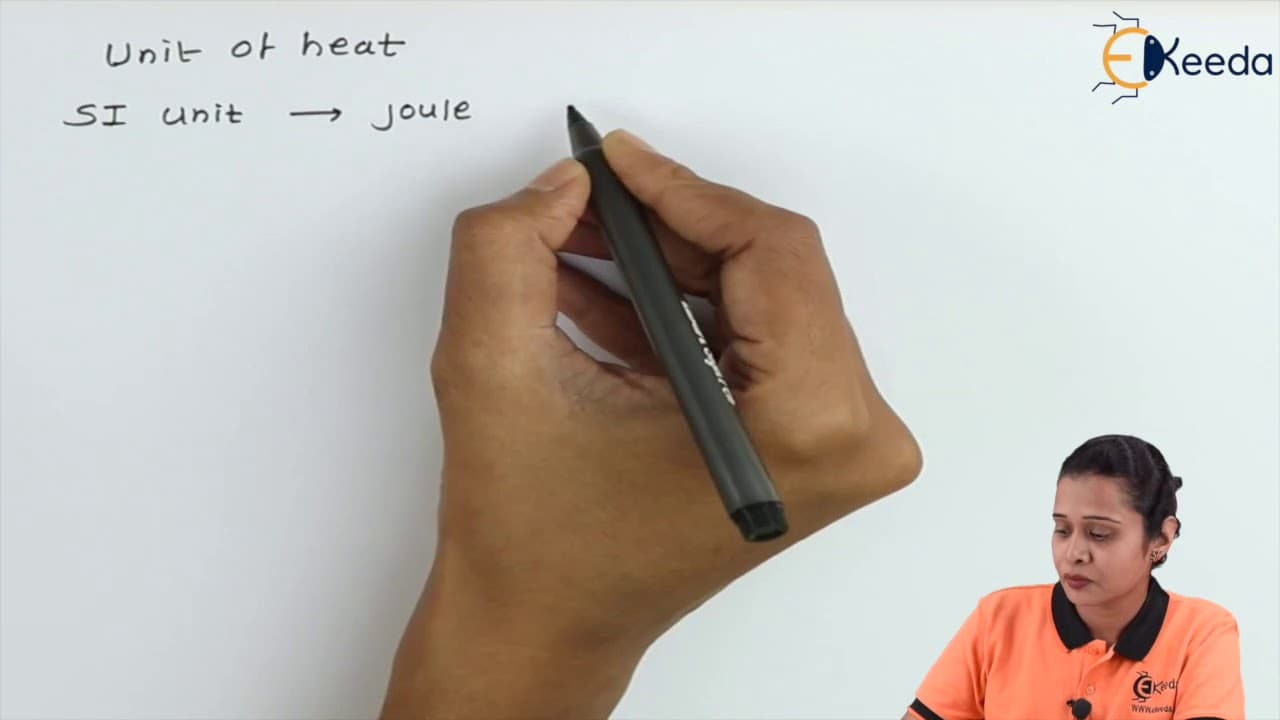
- 🇦🇪 The SI unit of heat is the Joule (J), and other units include kilocalories (kcal) and calories (cal).
- 🎭 The dimension of heat is represented by L^2M^1T^-2, as it is a form of energy.
- ❓ Temperature is a measure of the average kinetic energy of particles in a system.
Install to Summarize YouTube Videos and Get Transcripts
Explore YouTube Video Summarizer or Get YouTube Transcript Extractor
Questions & Answers
Q: What is the difference between heat transfer in solids and liquids/gases?
In solids, energy transfer occurs through vibrational energy, while in liquids and gases, it occurs through transitional energy.
Q: How is heat defined?
Heat is defined as the sum of all the energies of all the molecules in a system, which produces the sensation of hotness.
Q: How does heat transfer occur between two bodies?
Heat transfer occurs due to the temperature difference between the two bodies, with heat energy transferring from the body at a higher temperature to the one at a lower temperature.
Q: What are the units of heat?
The SI unit of heat is the Joule (J), while in the MKS system, it is the kilocalorie (kcal) and in the CGS system, it is the calorie (cal).
Summary & Key Takeaways
-
Heat is a form of energy that is transferred due to temperature differences between bodies.
-
In solids, energy transfer occurs through vibrational energy, while in liquids and gases, it occurs through transitional energy.
-
The sum of all energies of molecules in a material is called thermal or internal energy, which is equivalent to heat energy.
Read in Other Languages (beta)
Share This Summary 📚
Summarize YouTube Videos and Get Video Transcripts with 1-Click
Try YouTube Summary with ChatGPT & Claude or YouTube Transcript Generator
Explore More Summaries from Ekeeda 📚




Summarize YouTube Videos and Get Video Transcripts with 1-Click
Try YouTube Summary with ChatGPT & Claude or YouTube Transcript Generator