How climate change makes hurricanes worse
TL;DR
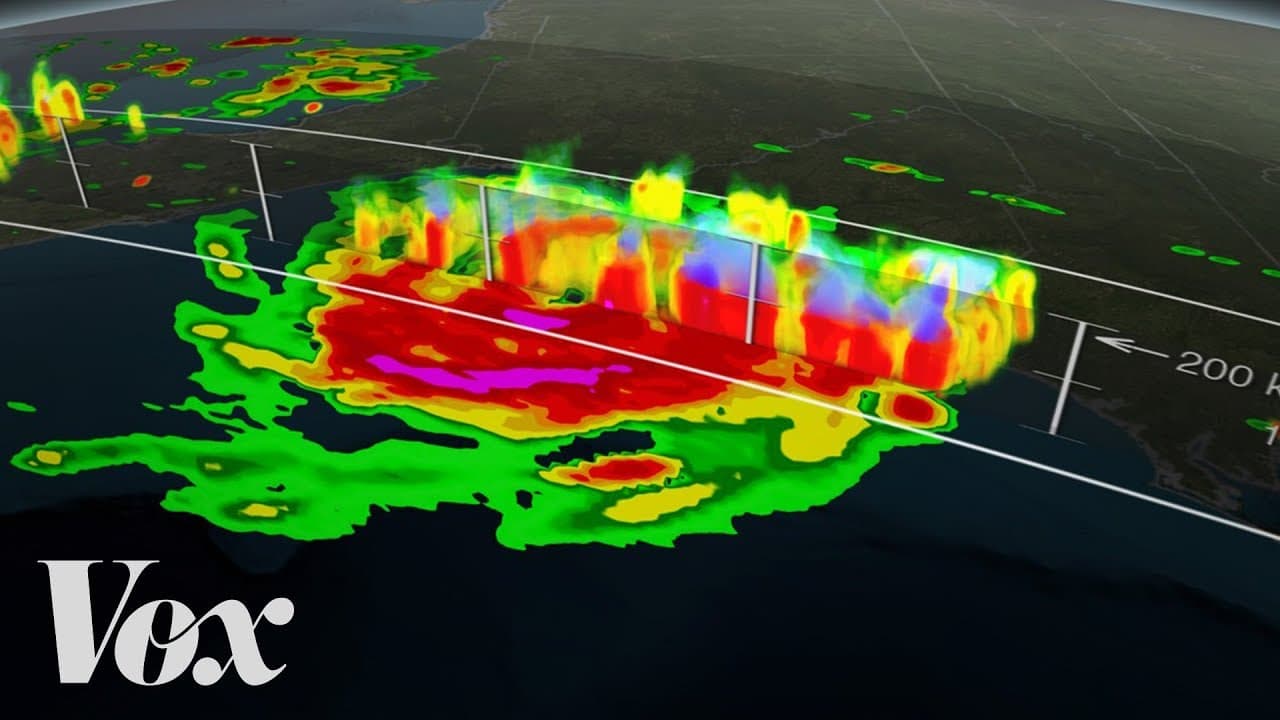
Climate change is increasing the intensity and rainfall of hurricanes.
Transcript
"Thirty inches of rain ahead." "Could climate change be fueling the history-making nature of this storm?" We know that humanity's carbon footprint has shifted the baseline conditions of the climate, the context in which every weather event takes place. But trying to isolate the human influence from everything else that is going on can be really har... Read More
Key Insights
- Humanity's carbon footprint has altered the baseline conditions of the climate, affecting all weather events, including hurricanes.
- Hurricanes, or tropical cyclones, are complex systems, and isolating human influence on them is challenging due to poor historical data.
- Hurricanes are driven by heat transfer from the sea to the air, and warming oceans increase their potential intensity.
- Climate models predict a decrease in the total number of tropical cyclones but an increase in the frequency of the most intense storms.
- The increase in intense hurricanes is concerning as they cause the most damage and loss of life.
- Regional projections for hurricane intensity are uncertain due to limitations in simulation resolution.
- Future hurricanes are expected to bring more rainfall, leading to increased freshwater flooding alongside storm surges and rising sea levels.
- Global warming is linked to more frequent heavy precipitation events, worsening floods like those experienced in Houston.
Install to Summarize YouTube Videos and Get Transcripts
Explore YouTube Video Summarizer or Get YouTube Transcript Extractor
Questions & Answers
Q: How does climate change affect hurricanes?
Climate change affects hurricanes by altering the baseline conditions of the climate. Warmer oceans increase the potential intensity of hurricanes, leading to more frequent intense storms. Additionally, global warming results in more rainfall during hurricanes, increasing the risk of flooding in coastal areas.
Q: Why is it difficult to isolate human influence on hurricanes?
Isolating human influence on hurricanes is difficult due to their complexity and the poor quality of historical data. Hurricanes are affected by numerous factors, and determining the specific contribution of human activities requires sophisticated models and simulations that can capture these intricate interactions.
Q: What do climate models predict about future hurricanes?
Climate models predict that the total number of tropical cyclones globally may decrease slightly, but the frequency of the most intense storms, categories four and five, is expected to increase. This trend is concerning as these intense storms cause the most damage and loss of life.
Q: How will future hurricanes impact coastal cities?
Future hurricanes are expected to bring more rainfall, leading to increased freshwater flooding. Combined with higher storm surges due to rising sea levels, coastal cities face significant risks. This dual threat of rain and storm surge could lead to severe flooding and infrastructure damage.
Q: What role does ocean warming play in hurricane intensity?
Ocean warming plays a crucial role in hurricane intensity by providing the heat energy necessary for hurricanes to develop and strengthen. As the oceans warm, hurricanes have more energy to draw from, potentially increasing their maximum wind speeds and overall intensity.
Q: What are the challenges in making regional hurricane projections?
Regional hurricane projections are challenging due to the limitations in the resolution of climate models. While global trends can be identified, the fine details necessary for accurate regional forecasts are often missing, leading to uncertainties in predicting changes in hurricane activity in specific areas.
Q: How does global warming contribute to increased flooding events?
Global warming contributes to increased flooding events by causing more frequent heavy precipitation. Warmer air can hold more moisture, leading to intense rainfall when it is released. This results in more significant and frequent flooding events, as seen in places like Houston.
Q: What actions can be taken to mitigate hurricane impacts?
To mitigate hurricane impacts, it is crucial to rethink infrastructure and regulations to minimize damage. Additionally, reducing carbon emissions and transitioning to clean energy are essential steps to slow global warming and its effects on hurricane intensity and frequency.
Summary & Key Takeaways
-
Human activities have altered the climate baseline, complicating the isolation of human influence on hurricanes. Hurricanes are fueled by ocean heat, and warming oceans increase their intensity. Climate models predict fewer but more intense hurricanes, with significant implications for damage and loss of life.
-
The frequency of intense hurricanes is expected to rise, although regional projections remain uncertain. Future hurricanes will bring more rainfall, exacerbating flooding risks. Rising sea levels further compound these risks, posing significant threats to coastal cities.
-
Global warming is linked to increased heavy precipitation events, worsening floods. Mitigating these impacts requires rethinking infrastructure and reducing carbon emissions. Without action, the situation will deteriorate, emphasizing the need for clean energy transitions.
Read in Other Languages (beta)
Share This Summary 📚
Summarize YouTube Videos and Get Video Transcripts with 1-Click
Try YouTube Summary with ChatGPT & Claude or YouTube Transcript Generator
Explore More Summaries from Vox 📚




Summarize YouTube Videos and Get Video Transcripts with 1-Click
Try YouTube Summary with ChatGPT & Claude or YouTube Transcript Generator