Texas's power disaster is a warning sign for the US
TL;DR
Texas's power failure warns of US grid vulnerabilities.
Transcript
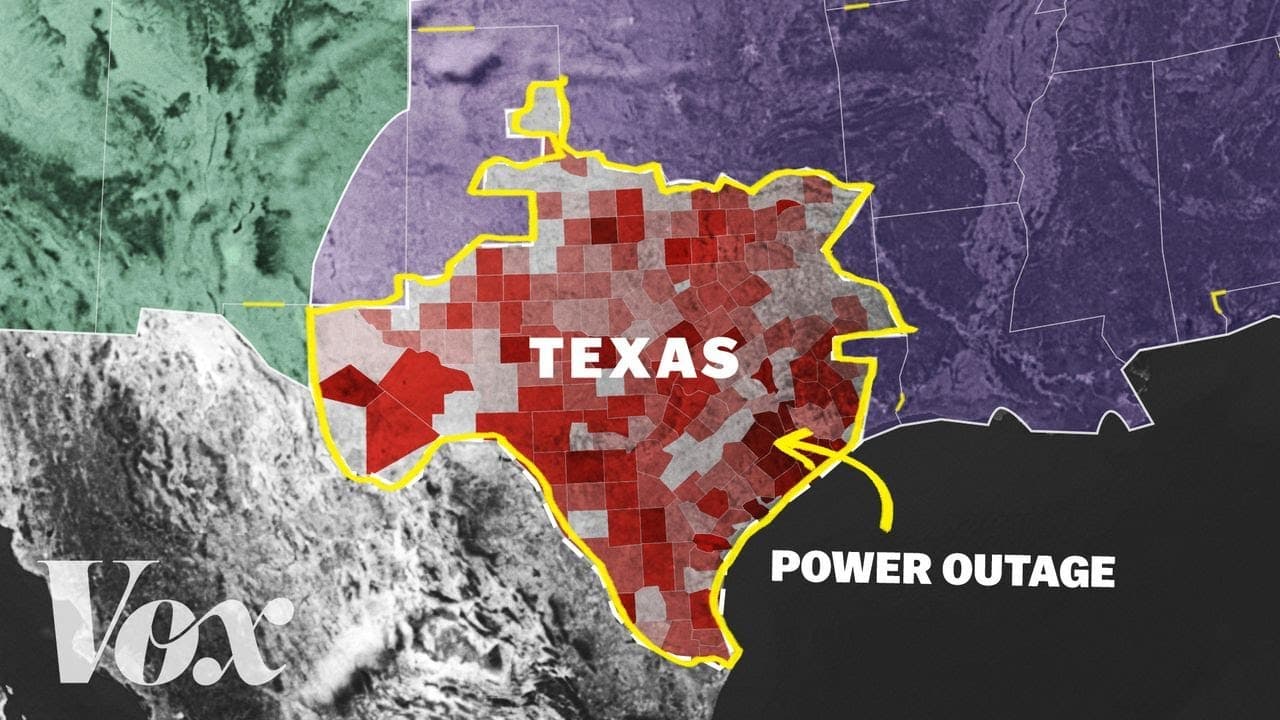
In mid-February, cold arctic air, usually contained up north in the Earth’s jet stream, dipped down into the US. It’s called a polar vortex, and it’s pretty common. It’s what brings the coldest air to the US during the winter. What was unusual, is for it to dip as far south as it did. In Texas, where February is typically fairly warm, temperatures ... Read More
Key Insights
- A polar vortex brought unprecedented cold to Texas, causing a massive power outage affecting over 4 million residents.
- Texas's independent grid couldn't import power from other states during the crisis, exacerbating the outage.
- The power failure was due to unprepared energy systems, including frozen coal, nuclear, wind, and natural gas facilities.
- Texas has faced similar weather-related power failures in 1989 and 2011, but recommendations for winterization were largely ignored.
- The US power grid is aging and not equipped to handle increasing severe weather events due to climate change.
- Private energy companies lack incentives to prepare for rare weather events without regulatory mandates.
- Federal, state, and utility commissions can enforce regulations and provide funding to improve grid resilience.
- The Texas crisis underscores the need for nationwide infrastructure readiness for extreme weather events.
Install to Summarize YouTube Videos and Get Transcripts
Explore YouTube Video Summarizer or Get YouTube Transcript Extractor
Questions & Answers
Q: What caused the power outage in Texas during the February storm?
The power outage in Texas was caused by a combination of factors, primarily the failure of multiple energy sources due to extreme cold. Coal piles froze, a nuclear plant went offline, wind turbines stopped, and natural gas systems froze. These failures were due to a lack of preparedness for such severe weather conditions.
Q: Why couldn't Texas get power from other states during the crisis?
Texas couldn't get power from other states during the crisis because it operates on its own independent electrical grid, separate from the larger grids that cover the east and west coasts of the US. This independence means Texas cannot easily import electricity from neighboring states in emergencies.
Q: Has Texas experienced similar power failures before?
Yes, Texas has experienced similar power failures before, notably in 1989 and 2011, due to arctic storms causing natural gas plants to fail. Despite these incidents, recommendations for winterization and improved reliability in extreme weather conditions were not fully implemented, leading to repeated vulnerabilities.
Q: Why were the energy systems in Texas unprepared for the cold?
The energy systems in Texas were unprepared for the cold because the state had not enforced mandatory winterization standards for its energy infrastructure. Recommendations for preparing for extreme weather were made after past failures, but without regulatory mandates, many private companies did not invest in necessary upgrades.
Q: What role does climate change play in the Texas power crisis?
Climate change plays a significant role in the Texas power crisis by increasing the frequency and severity of extreme weather events. As these events become more common, the vulnerabilities in aging energy infrastructure are exposed, highlighting the urgent need for resilience and preparedness in power systems across the US.
Q: How can the US improve its power grid resilience?
The US can improve its power grid resilience by enforcing regulatory mandates for winterization and infrastructure upgrades, providing funding for modernization, and ensuring that energy systems are prepared for a range of extreme weather scenarios. This requires coordinated efforts from federal, state, and utility commissions to implement effective standards.
Q: What lessons can other states learn from the Texas power crisis?
Other states can learn the importance of preparing for unlikely but catastrophic weather events, investing in infrastructure resilience, and ensuring regulatory measures are in place to mandate necessary upgrades. The Texas crisis serves as a wake-up call for the rest of the US to address vulnerabilities in energy systems before facing similar disasters.
Q: Why is Texas's power grid independent from the rest of the US?
Texas's power grid is independent from the rest of the US because the state opted out of joining the larger national grids to avoid federal regulation. This decision allows Texas to operate its grid independently but also limits its ability to import electricity from other states during emergencies, as seen during the February storm.
Summary & Key Takeaways
-
In February, Texas experienced a severe winter storm that led to a massive power outage due to unprepared energy systems. The state's independent grid couldn't import power from other states, worsening the situation. This event highlights the vulnerabilities in the US power grid amidst increasing severe weather events.
-
Texas's power crisis was not solely due to its independent grid but rather the failure of multiple energy sources unprepared for extreme cold. Despite past warnings, necessary winterization measures were not enforced, causing widespread outages and highlighting the need for regulatory action.
-
The Texas power crisis serves as a warning for the US to prepare its aging energy infrastructure for extreme weather events. Without regulatory mandates, private companies lack incentives to invest in resilience, risking similar failures nationwide as climate change increases severe weather frequency.
Read in Other Languages (beta)
Share This Summary 📚
Summarize YouTube Videos and Get Video Transcripts with 1-Click
Try YouTube Summary with ChatGPT & Claude or YouTube Transcript Generator
Explore More Summaries from Vox 📚



Summarize YouTube Videos and Get Video Transcripts with 1-Click
Try YouTube Summary with ChatGPT & Claude or YouTube Transcript Generator