Prandtl Mixing Flow - Real Fluid Flows - Fluid Mechanics 1
TL;DR
Turbulent flow is characterized by fluctuating velocities, with a mean velocity and fluctuating velocity contributing to the total fluid velocity. The Prandtl Mixing Length Theory explains the intermixing of adjacent layers in turbulent flow.
Transcript
as we have seen in the previous section what is turbulent flow as well as we have seen what is eddie's viscosity so now let us study layer by layer turbulent flow now what happens when there is an intermixing of adjacent layer of the fluid which is in the case of turbulent flow so for that a printer device a theory called as the prandtl theory of m... Read More
Key Insights
- 💐 Turbulent flow is characterized by fluctuating velocities, with mean velocity and fluctuating velocity contributing to the total velocity.
- 💐 The Prandtl Mixing Length Theory explains the intermixing of adjacent layers in turbulent flow.
- 💐 Reynolds shear stress quantifies the exchange of momentum between fluid layers in turbulent flow.
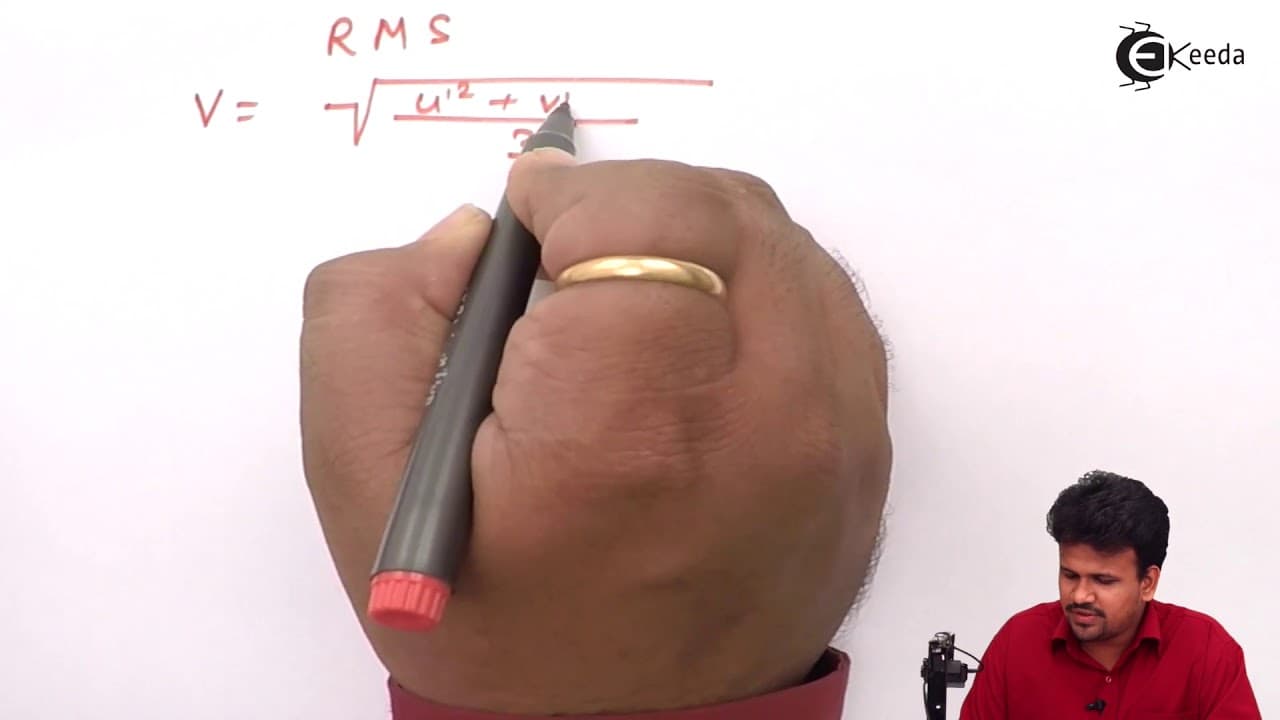
- 💐 The RMS velocity or intensity of turbulence is a measure of the violent nature of turbulent flow.
- 🥳 The degree of turbulence is the ratio of fluctuating velocity to average velocity.
- 😒 The Prandtl Mixing Length Theory uses a mixing length parameter to calculate fluctuating and mean velocities.
- 💐 The theory has limitations and other theories have been developed to further understand turbulent flow.
Install to Summarize YouTube Videos and Get Transcripts
Explore YouTube Video Summarizer or Get YouTube Transcript Extractor
Questions & Answers
Q: What is the difference between turbulent flow and laminar flow?
Turbulent flow is characterized by fluctuating velocities, while laminar flow has a constant velocity throughout the fluid.
Q: How is the total velocity of the fluid in turbulent flow determined?
The total velocity is the combination of mean velocity (u dash) and fluctuating velocity (u bar), with the mean velocity being constant and the fluctuating velocity varying with time.
Q: What is the Prandtl Mixing Length Theory?
The Prandtl Mixing Length Theory explains the intermixing of adjacent layers in turbulent flow. It considers a mixing length (l) between these layers to calculate the fluctuating velocity (u dash) and mean velocity (u bar).
Q: What is Reynolds shear stress?
Reynolds shear stress is the shear stress caused by the exchange of momentum between adjacent layers of fluid in turbulent flow. It can be calculated as rhol^2(dU/dy)^2, where rho is density and dU/dy is the velocity gradient along the y-axis.
Summary & Key Takeaways
-
Turbulent flow is characterized by fluctuating velocities, unlike the constant velocity in laminar flow.
-
Mean velocity (u dash) and fluctuating velocity (u bar) together determine the total velocity of the fluid.
-
The Prandtl Mixing Length Theory explains how adjacent layers of fluid intermix in turbulent flow.
Read in Other Languages (beta)
Share This Summary 📚
Summarize YouTube Videos and Get Video Transcripts with 1-Click
Try YouTube Summary with ChatGPT & Claude or YouTube Transcript Generator
Explore More Summaries from Ekeeda 📚




Summarize YouTube Videos and Get Video Transcripts with 1-Click
Try YouTube Summary with ChatGPT & Claude or YouTube Transcript Generator