Introduction to Centripetal Acceleration - Period, Frequency, & Linear Speed - Physics Problems
TL;DR
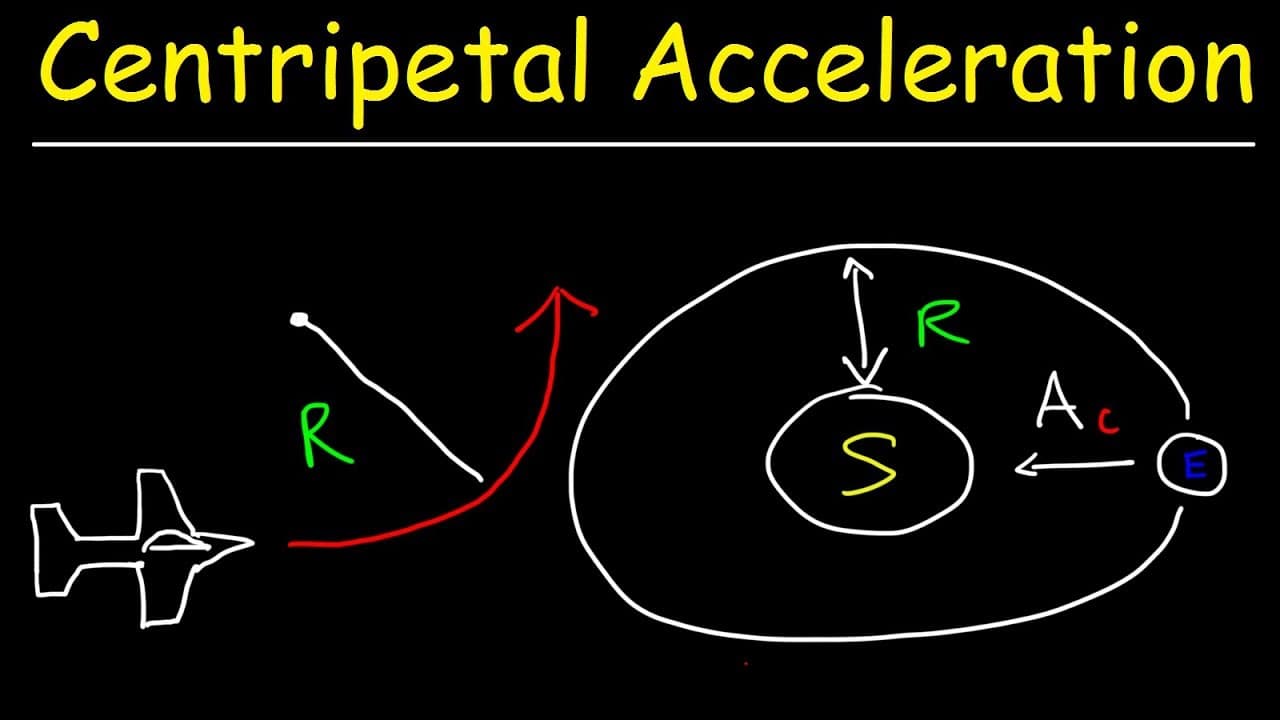
Centripetal acceleration is the acceleration experienced by an object moving in a circle, and it depends on the speed and radius of the circle.
Transcript
in this video we're gonna focus on centripetal acceleration and also how to solve some physics problems associated with it let's see if you have an object moving to the right and it's speeding up if it's speeding up and moving to the right the acceleration is positive so the acceleration and the velocity vectors they're parallel to each other now l... Read More
Key Insights
- ⭕ Centripetal acceleration is the acceleration experienced by an object moving in a circle, and it depends on the speed and radius of the circle.
- 🐎 The direction of centripetal acceleration depends on the motion of the object (speeding up or slowing down).
- 🐎 Increasing the speed of an object in a circle increases the centripetal acceleration.
- ⭕ Increasing the radius of the circle decreases the centripetal acceleration.
- 🐎 The speed of an object moving in a circle at constant speed can be found using the formula V = 2πR/T.
Install to Summarize YouTube Videos and Get Transcripts
Explore YouTube Video Summarizer or Get YouTube Transcript Extractor
Questions & Answers
Q: What is centripetal acceleration?
Centripetal acceleration is the acceleration experienced by an object moving in a circle, and it is always directed towards the center of the circle.
Q: How does the direction of centripetal acceleration change based on the object's motion?
If the object is speeding up, centripetal acceleration is in the same direction as the velocity. If the object is slowing down, centripetal acceleration is in the opposite direction as the velocity.
Q: What factors does centripetal acceleration depend on?
Centripetal acceleration depends on the speed of the object and the radius of the circle.
Q: Is there acceleration when an object moves at a constant speed in a circle?
Yes, even if an object is moving at a constant speed in a circle, it experiences centripetal acceleration because the velocity is changing due to the change in direction.
Q: How does increasing the speed of an object affect centripetal acceleration?
Increasing the speed of an object in a circle will increase the centripetal acceleration. The relationship is directly proportional; if the speed is doubled, the acceleration will increase by a factor of four.
Q: What happens to centripetal acceleration if the radius of the circle is increased?
Increasing the radius of the circle will decrease the centripetal acceleration. The relationship is inversely proportional; if the radius doubles, the acceleration will decrease by a factor of two.
Q: How can you find the speed of an object moving in a circle at constant speed?
The speed of an object moving in a circle at a constant speed can be found using the formula V = 2πR/T, where V is the speed, R is the radius, and T is the period of one full cycle.
Q: How can the centripetal acceleration be calculated directly using the radius of the circle and the period?
The centripetal acceleration can be calculated using the formula A = 4π²R/T², where A is the centripetal acceleration, R is the radius, and T is the period of one full cycle.
Summary & Key Takeaways
-
Centripetal acceleration occurs when an object is moving in a circle, and it is always directed towards the center of the circle.
-
The direction of centripetal acceleration depends on whether the object is speeding up or slowing down.
-
Centripetal acceleration is calculated using the formula V²/R, where V is the speed of the object and R is the radius of the circle.
Read in Other Languages (beta)
Share This Summary 📚
Summarize YouTube Videos and Get Video Transcripts with 1-Click
Try YouTube Summary with ChatGPT & Claude or YouTube Transcript Generator
Explore More Summaries from The Organic Chemistry Tutor 📚


Summarize YouTube Videos and Get Video Transcripts with 1-Click
Try YouTube Summary with ChatGPT & Claude or YouTube Transcript Generator