Artificial Sweeteners - Chemistry In Everyday Life - Chemistry Class 12
TL;DR
Artificial sweeteners are synthetic chemicals that have a sweet taste but no caloric value, commonly used as substitutes for sugar in food products.
Transcript
click the bell icon to get latest videos from equator heads in the previous topic we have discuss about the foot preservation and now in this topic I'm going to talk about artificial sweeteners so therefore this is the another food additive that is what I'm going to talk about so what is the definition of it and one of the different examples relate... Read More
Key Insights
- 👅 Artificial sweeteners are chemicals that provide a sweet taste but have no caloric value.
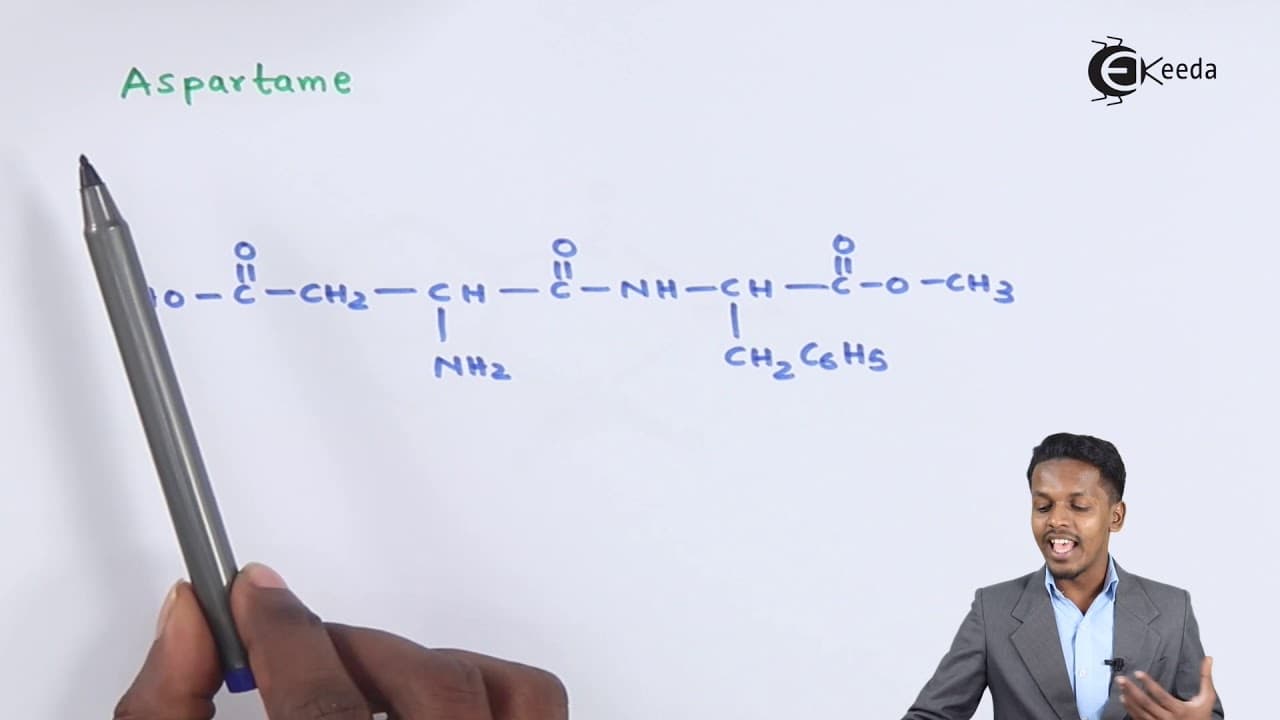
- 🛰️ Examples of artificial sweeteners include saccharin (Cyclamate), aspartame (X-14), and acesulfame potassium (Alitame).
- ❓ These sweeteners are commonly used as substitutes for sugar, particularly for diabetic patients, as they do not increase caloric intake.
- 🛰️ Artificial sweeteners have varying levels of sweetness and chemical structures.
- 💉 There have been debates about the potential health risks of artificial sweeteners, but more research is needed to fully understand their long-term effects.
- 😋 Artificial sweeteners are widely used in the food industry to provide taste without adding calories.
- 🏋️ Some studies suggest that artificial sweeteners may impact weight gain and appetite, but the evidence is inconclusive.
Install to Summarize YouTube Videos and Get Transcripts
Explore YouTube Video Summarizer or Get YouTube Transcript Extractor
Questions & Answers
Q: What are artificial sweeteners?
Artificial sweeteners are synthetic chemicals that are created in a laboratory and provide a sweet taste without any caloric value. They are used as sugar substitutes in food products.
Q: What are some examples of artificial sweeteners?
Some examples of artificial sweeteners are saccharin (Cyclamate), aspartame (X-14), and acesulfame potassium (Alitame). Each of these sweeteners has a different chemical structure and level of sweetness.
Q: Why are artificial sweeteners used?
Artificial sweeteners are commonly used as substitutes for sugar because they do not increase caloric intake. They are particularly popular among diabetic patients who need to control their blood sugar levels.
Q: Are there any health concerns associated with artificial sweeteners?
There have been debates about the potential health risks of artificial sweeteners, including concerns about their impact on weight gain, appetite, and the development of chronic diseases. Some studies suggest that they may have negative effects, but more research is needed to fully understand their long-term consequences.
Summary & Key Takeaways
-
Artificial sweeteners are chemicals synthesized in a laboratory that provide a sweet taste but have no caloric value.
-
Examples of artificial sweeteners include saccharin (brand name: Cyclamate), aspartame (brand name: X-14), and acesulfame potassium (brand name: Alitame).
-
These sweeteners are commonly used as sugar substitutes, particularly for diabetic patients, because they do not increase caloric intake.
Read in Other Languages (beta)
Share This Summary 📚
Summarize YouTube Videos and Get Video Transcripts with 1-Click
Try YouTube Summary with ChatGPT & Claude or YouTube Transcript Generator
Explore More Summaries from Ekeeda 📚




Summarize YouTube Videos and Get Video Transcripts with 1-Click
Try YouTube Summary with ChatGPT & Claude or YouTube Transcript Generator