Why Is Mexico Important to the United States?
TL;DR
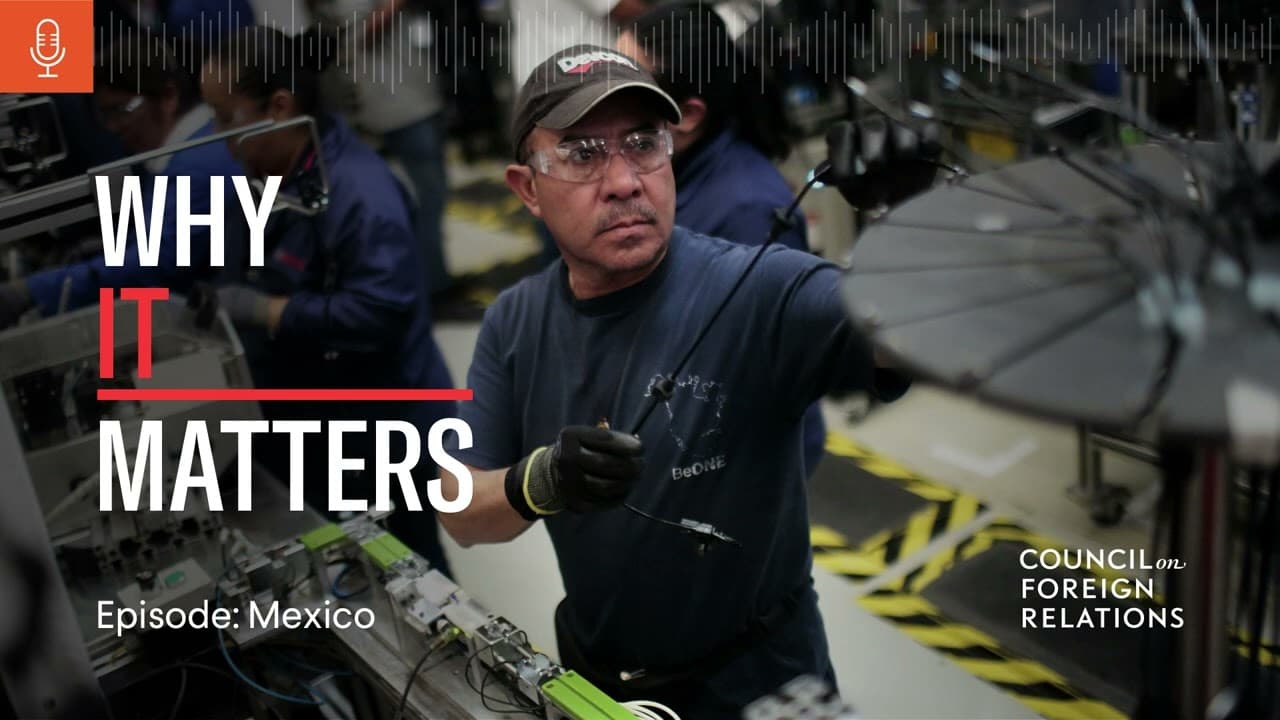
Mexico is vital to the U.S. due to its role as the country's most significant trade partner, with over $677 billion in trade as of 2019. The bilateral relationship impacts various aspects of daily life, including trade, immigration, and security, and is essential for addressing shared challenges like drug trafficking and organized crime.
Transcript
SIERRA: Neighbors. Everyone has them, and the kind you have can make a big difference in your life. They can be frustrating or they can be a godsend, it all depends. Countries are in the same situation. Good neighbors can mean beneficial security and trade agreements. Bad neighbors can mean border crises, conflict over resources, and even war. Toda... Read More
Key Insights
- Mexico is the United States' most important trade partner, with over $677 billion in trade in 2019, surpassing trade with China.
- NAFTA significantly transformed Mexico's economy, turning it into a manufacturing powerhouse, especially in the northern regions.
- The USMCA replaced NAFTA, updating trade agreements to include modern elements like digital trade and data privacy.
- Immigration from Mexico to the U.S. has decreased, with Mexico now being a transit and receiving country for migrants from other regions.
- The U.S. and Mexico have a complex relationship involving drug trafficking, with illegal trade of drugs, money, and guns affecting both nations.
- Mexico's current president, AMLO, is a populist with a strong agenda that includes rolling back energy reforms and limiting political opposition.
- Security cooperation between the U.S. and Mexico has diminished, posing challenges for both countries in addressing organized crime and violence.
- The stability and success of Mexico directly impact the United States, emphasizing the need for strong bilateral relations.
Install to Summarize YouTube Videos and Get Transcripts
Explore YouTube Video Summarizer or Get YouTube Transcript Extractor
Questions & Answers
Q: Why is Mexico considered the United States' most important trade partner?
Mexico is the United States' most important trade partner due to the extensive economic exchange between the two countries. In 2019, trade between Mexico and the U.S. amounted to over $677 billion, surpassing trade with China. This trade relationship supports approximately 5 million jobs in the U.S. and involves significant integration in manufacturing, with many products containing components made in both countries.
Q: How did NAFTA change Mexico's economy?
NAFTA, the North American Free Trade Agreement, significantly changed Mexico's economy by transforming it into a manufacturing powerhouse. It eliminated tariffs on goods traded between Mexico, the U.S., and Canada, allowing for the free movement of products and services. This led to a boom in manufacturing, particularly in northern Mexico, and increased economic growth. Mexican consumers also benefited from access to a wider range of goods at lower prices.
Q: What are the main challenges in U.S.-Mexico security cooperation?
U.S.-Mexico security cooperation faces challenges due to the complex nature of organized crime and drug trafficking. Mexico is a major source of drugs entering the U.S., while the U.S. supplies money and guns to Mexican cartels. Despite past initiatives like the Mérida Initiative, cooperation has diminished in recent years. Mexico's current administration under AMLO has expressed dissatisfaction with existing agreements, and the U.S. has concerns about Mexico's capacity to manage security issues effectively.
Q: How has immigration from Mexico to the U.S. changed over the years?
Immigration from Mexico to the U.S. has significantly decreased over the past 10 to 15 years. Economic improvements, demographic changes, and political stability in Mexico have contributed to this decline. Currently, Mexico is close to net zero in terms of immigration to the U.S., with as many people returning to Mexico as those migrating to the U.S. Additionally, Mexico has become a transit and receiving country for migrants from Central America and other regions.
Q: What impact has AMLO's presidency had on Mexico's domestic and international relations?
AMLO's presidency has had a mixed impact on Mexico's domestic and international relations. Domestically, his administration has struggled to address crime and corruption, with increased violence and allegations of corruption involving his family members. Internationally, AMLO's populist agenda, including efforts to roll back energy reforms and limit political opposition, has strained relations with the U.S. The Biden administration has expressed concerns about democratic backsliding and human rights issues in Mexico.
Q: What are the key elements of the USMCA agreement?
The USMCA, or United States-Mexico-Canada Agreement, is a modernized version of NAFTA that includes new elements to address contemporary trade issues. Key elements of the USMCA include provisions for digital trade, e-commerce, and data privacy, which were not part of the original NAFTA. The agreement also updates rules on labor, environmental standards, and intellectual property rights, aiming to create a more balanced and equitable trade environment among the three countries.
Q: How does drug trafficking affect U.S.-Mexico relations?
Drug trafficking significantly affects U.S.-Mexico relations, as both countries face challenges from the illegal trade of drugs, money, and weapons. Mexico is a major source of drugs entering the U.S., while the U.S. supplies money and guns to Mexican cartels. This illegal trade contributes to violence and organized crime in Mexico, while the U.S. grapples with drug-related issues like opioid overdoses. Both countries have attempted cooperation to address these problems, but challenges remain.
Q: Why is it important for the U.S. to maintain strong relations with Mexico?
Maintaining strong relations with Mexico is crucial for the U.S. due to their shared border and interconnected economies. A stable and prosperous Mexico benefits the U.S. by providing a secure border, fostering economic growth, and enhancing cultural ties. Conversely, instability in Mexico could lead to increased migration, security threats, and economic disruptions. Cooperation on issues like trade, security, and immigration is essential for the well-being of both nations.
Summary & Key Takeaways
-
Mexico is a key partner for the United States, affecting daily life through trade, culture, and security. With a shared 2,000-mile border, cooperation is crucial in areas like immigration and organized crime. Despite challenges like democratic backsliding, the relationship remains vital for U.S. interests.
-
The North American Free Trade Agreement (NAFTA) transformed Mexico's economy, fostering growth and manufacturing. It was replaced by the United States-Mexico-Canada Agreement (USMCA), which modernized trade relations. However, issues like job losses and competition from China have impacted perceptions of these agreements.
-
Immigration dynamics have shifted, with Mexico becoming a transit hub for migrants from Central America and beyond. Drug trafficking remains a significant problem, with both countries facing challenges from illegal trade. AMLO's presidency has seen increased violence and corruption, complicating U.S.-Mexico relations.
Read in Other Languages (beta)
Share This Summary 📚
Summarize YouTube Videos and Get Video Transcripts with 1-Click
Try YouTube Summary with ChatGPT & Claude or YouTube Transcript Generator
Explore More Summaries from Council on Foreign Relations 📚


Summarize YouTube Videos and Get Video Transcripts with 1-Click
Try YouTube Summary with ChatGPT & Claude or YouTube Transcript Generator