What Does the Federal Reserve Do for the Economy?
TL;DR
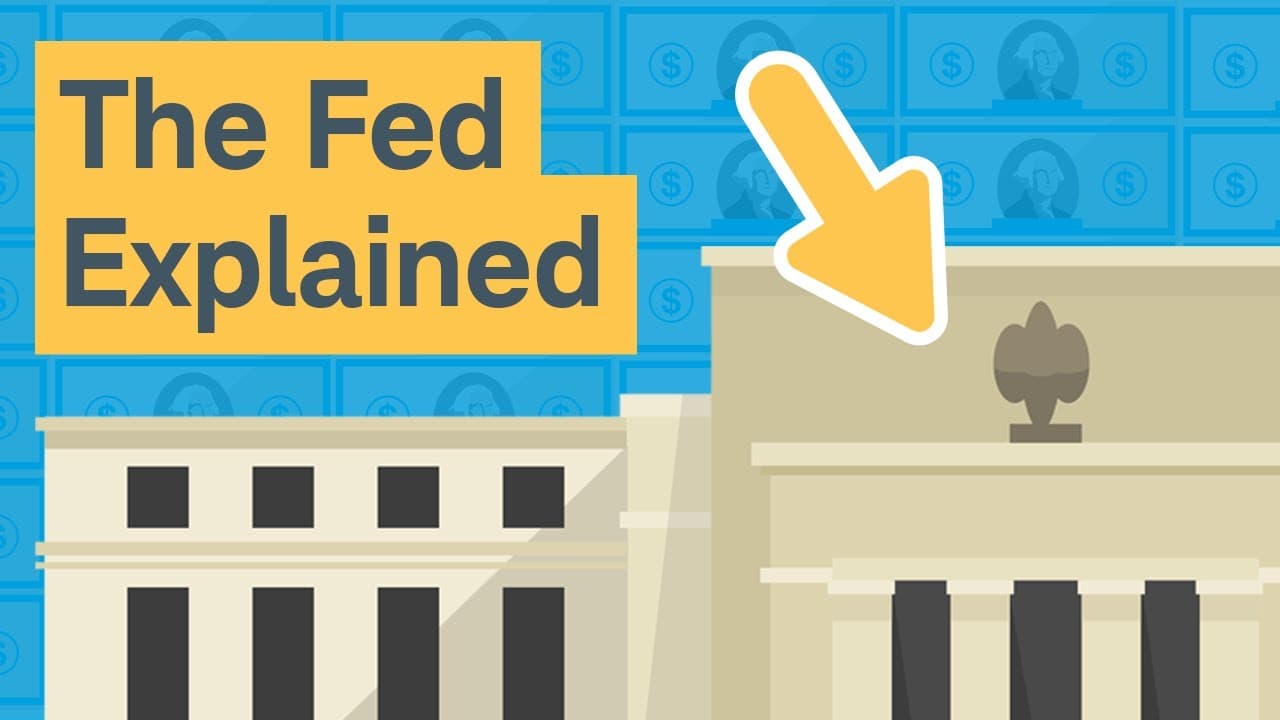
The Federal Reserve manages the money supply and influences interest rates to ensure economic stability. By adjusting the federal funds rate, the Fed aims to control inflation and unemployment, impacting consumer spending and overall economic growth. Tools like open market operations and quantitative easing further help the Fed stimulate or cool down the economy as needed.
Transcript
The Federal Reserve, or the Fed, is the central bank of the United States. As the central bank, it determines our nation’s monetary policy. This means the Fed determines how much money is floating around in the U.S. economic ecosystem ready to be spent on goods or services. By controlling the money supply, the Fed is able to influence both interest... Read More
Key Insights
- 🤑 The Federal Reserve controls the money supply and interest rates to influence the U.S. economy.
- ☠️ The federal funds rate is a crucial tool for the Fed, impacting short-term rates and borrowing costs for banks and customers.
- 🤗 Open market operations and quantitative easing are used by the Fed to manipulate interest rates and stimulate economic activity.
- ☠️ Lowering interest rates encourages borrowing, spending, and investment, while increasing rates controls inflation and reduces expansion.
- 🤩 The Fed's actions can have a significant impact on employment, consumer spending, and key economic measures like inflation.
- 🏦 The central bank's goal is to strike a balance between unemployment and inflation to maintain a healthy economy.
- 💹 The Great Recession prompted the Fed to implement unconventional monetary policies like quantitative easing.
Install to Summarize YouTube Videos and Get Transcripts
Explore YouTube Video Summarizer or Get YouTube Transcript Extractor
Questions & Answers
Q: What is the role of the Federal Reserve in the U.S. economy?
The Federal Reserve is responsible for determining monetary policies, such as controlling the money supply and influencing interest rates, to maintain economic stability and promote growth.
Q: How does the federal funds rate affect borrowing costs for banks and customers?
When the Fed increases the federal funds rate, banks raise the interest rates they charge customers, making borrowing more expensive. Conversely, lowering the rate makes borrowing cheaper and encourages spending and investment.
Q: How does the Fed use open market operations to influence interest rates?
Through open market operations, the Federal Reserve buys or sells government securities, which affects supply and demand in the bond market and subsequently changes the federal funds rate.
Q: What is quantitative easing (QE), and why did the Fed employ it during the Great Recession?
Quantitative easing is a monetary policy where the central bank purchases longer-term securities to lower long-term interest rates. The Fed used QE during the Great Recession to stimulate borrowing and investment, boosting employment and economic growth.
Summary & Key Takeaways
-
The Federal Reserve is the central bank of the U.S. and sets monetary policies, including controlling the money supply and influencing interest rates.
-
The main tool the Fed uses to control the economy is the federal funds rate, which affects short-term rates and borrowing costs for banks and customers.
-
By adjusting interest rates, the Fed aims to stimulate economic growth or control inflation, impacting employment and consumer spending.
Read in Other Languages (beta)
Share This Summary 📚
Summarize YouTube Videos and Get Video Transcripts with 1-Click
Try YouTube Summary with ChatGPT & Claude or YouTube Transcript Generator
Explore More Summaries from Charles Schwab 📚





Summarize YouTube Videos and Get Video Transcripts with 1-Click
Try YouTube Summary with ChatGPT & Claude or YouTube Transcript Generator