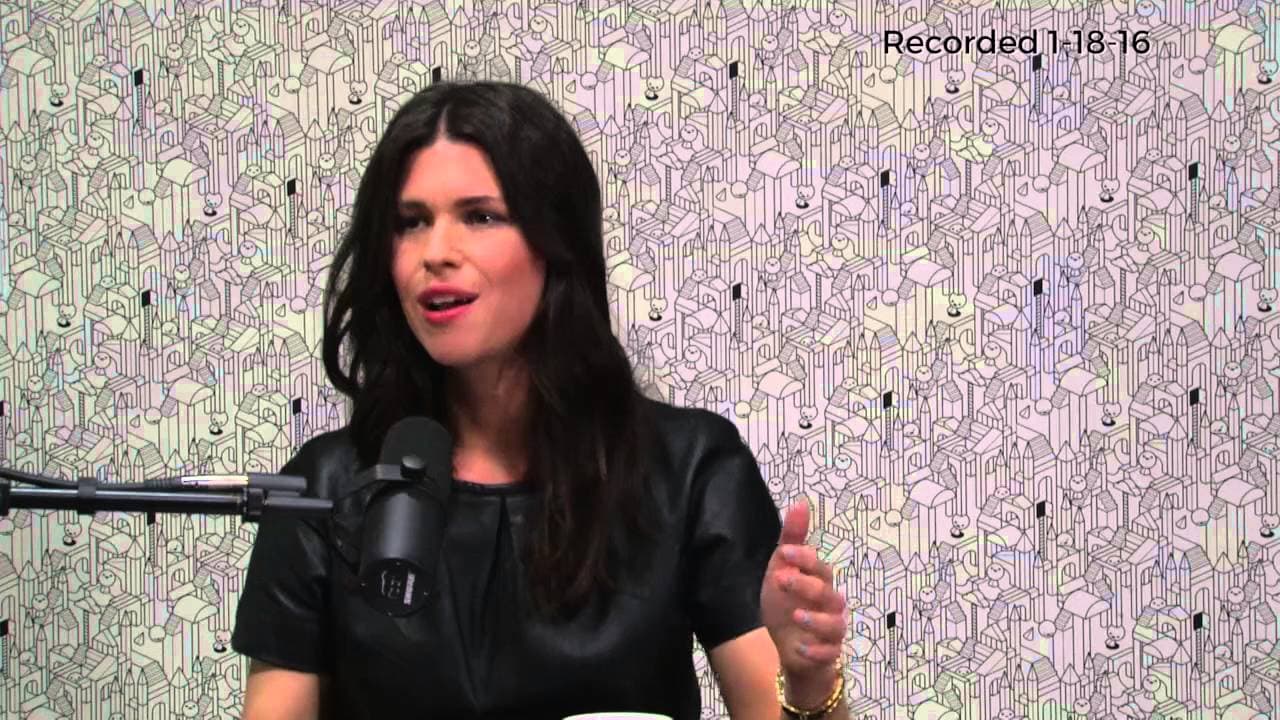
Emily Kirsch of Powerhouse on the history of solar, and the influence of government and innovation.
TL;DR
Solar power has become more affordable and efficient, with government subsidies playing a crucial role in its growth and adoption.
Transcript
how much has the government played a role in the boom in solar because a lot of people I talked to obviously I'm friends with a lot of the solar city folks the the subsidies that are given were quite significant and the government in fact funded and gave huge loans I think to a bunch of these solar companies sometimes it worked out sometimes it did... Read More
Key Insights
- 💦 Solar power has experienced significant cost reductions, with the price of panels dropping by 80-90% in the past five years alone.
- 🍦 Soft costs, such as customer acquisition and data management, account for a significant portion of residential solar installation expenses.
- ✊ Solar power is a technology, not a finite resource, which means its costs will continue to decline as innovation and efficiency improve.
- ✊ While government subsidies have facilitated the growth of solar power, it is becoming increasingly cost-competitive with fossil fuels even without subsidies.
- 🥺 The affordability of solar power has led individuals to opt for self-financed installations rather than relying on subsidies.
- ✊ The government's role in subsidizing solar power is crucial for preserving the environment and reducing reliance on fossil fuels.
- 🙈 Solar power is seen as an inevitable component of our energy future, with widespread adoption expected.
Install to Summarize YouTube Videos and Get Transcripts
Explore YouTube Video Summarizer or Get YouTube Transcript Extractor
Questions & Answers
Q: How have the costs of solar panels changed in the past five years?
In the past five years, the cost of solar panels has decreased by 80-90%. This substantial reduction in cost has made solar power much more affordable and accessible to individuals and businesses.
Q: What are the main expenses associated with residential solar installations?
The biggest cost component for residential solar installations is the "soft costs," including customer acquisition, data management, design, and asset management. These costs often account for more than 50% of the total installation expenses.
Q: Are government subsidies necessary for the growth of solar power?
While solar power is becoming more cost-competitive with fossil fuels, government subsidies have played a vital role in driving its growth. However, solar energy is expected to become economically viable even without subsidies in the future.
Q: How does the government's role in solar subsidies contribute to preserving the environment?
By subsidizing solar power, the government promotes the adoption of clean energy sources, which helps reduce reliance on fossil fuels. This support is crucial for preserving the environment and combatting climate change.
Summary & Key Takeaways
-
Solar power has seen significant advancements in the past decade, with the cost of solar panels dropping by 80-90% in the last five years alone.
-
The affordability of solar power has prompted individuals to invest in solar energy systems for their homes instead of relying on subsidies from companies like SolarCity.
-
The government's role in subsidizing solar power has been essential in driving its growth, but solar energy is becoming cost-competitive with fossil fuels even without subsidies.
Read in Other Languages (beta)
Share This Summary 📚
Summarize YouTube Videos and Get Video Transcripts with 1-Click
Try YouTube Summary with ChatGPT & Claude or YouTube Transcript Generator
Explore More Summaries from This Week in Startups 📚


Summarize YouTube Videos and Get Video Transcripts with 1-Click
Try YouTube Summary with ChatGPT & Claude or YouTube Transcript Generator