What Are the Key Points of the Bill of Rights?
TL;DR
The Bill of Rights comprises the first 10 amendments to the Constitution, ensuring individual freedoms like speech and assembly, and protections for the accused. It emphasizes that unlisted rights are still retained by the people, and any powers not granted to the federal government belong to the states or individuals.
Transcript
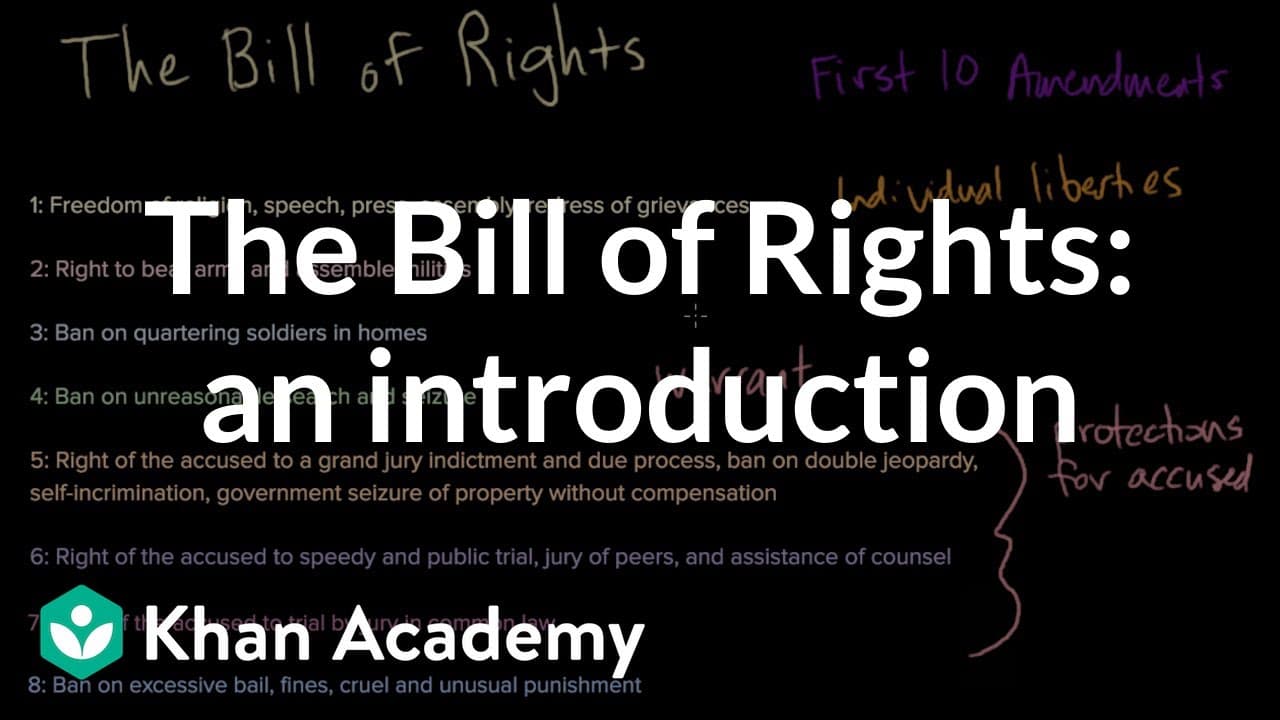
- [Tutor] The Bill of Rights, as we know it today were the first 10 amendments to the Constitution and these amendments guaranteed individual liberty to make sure that citizens had stated expectation for what the government could or could not do to them and you can kind of see here in many of these rights, the legacy of the Revolutionary War and th... Read More
Key Insights
- 🗽 The Bill of Rights guarantees individual liberties and protections against government abuses.
- 🗯️ The first four amendments focus on individual freedoms, while the next four amendments protect the rights of people accused of crimes.
Install to Summarize YouTube Videos and Get Transcripts
Explore YouTube Video Summarizer or Get YouTube Transcript Extractor
Questions & Answers
Q: What is the purpose of the Bill of Rights?
The purpose of the Bill of Rights is to guarantee individual liberties and protect against government abuses by setting clear expectations for the government's limitations on its power.
Q: What rights are protected in the first four amendments?
The first four amendments protect rights such as freedom of religion, speech, press, assembly, the right to address grievances with the government, and the right to bear arms and assemble militias.
Q: What rights are granted to people accused of crimes in the Bill of Rights?
The Bill of Rights grants protections for people accused of crimes, including the right to due process, protection against being tried twice for the same crime, a speedy and public trial, a jury of peers, and protection against excessive bail and cruel punishment.
Q: What do the ninth and tenth amendments address?
The ninth amendment clarifies that the rights not explicitly listed in the Constitution are still retained by the people. The tenth amendment states that any powers not delegated to the federal government are reserved for the states or the people.
Summary & Key Takeaways
-
The first four amendments of the Bill of Rights ensure individual liberties such as freedom of religion, speech, press, assembly, and the right to bear arms.
-
The next four amendments focus on protections for people accused of crimes, including the right to due process, a speedy and public trial, and protection against excessive bail and cruel punishment.
-
The ninth and tenth amendments clarify that the rights not explicitly listed are still retained by the people, and any powers not delegated to the federal government are reserved for the states or the people.
Read in Other Languages (beta)
Share This Summary 📚
Summarize YouTube Videos and Get Video Transcripts with 1-Click
Try YouTube Summary with ChatGPT & Claude or YouTube Transcript Generator
Explore More Summaries from Khan Academy 📚



Summarize YouTube Videos and Get Video Transcripts with 1-Click
Try YouTube Summary with ChatGPT & Claude or YouTube Transcript Generator