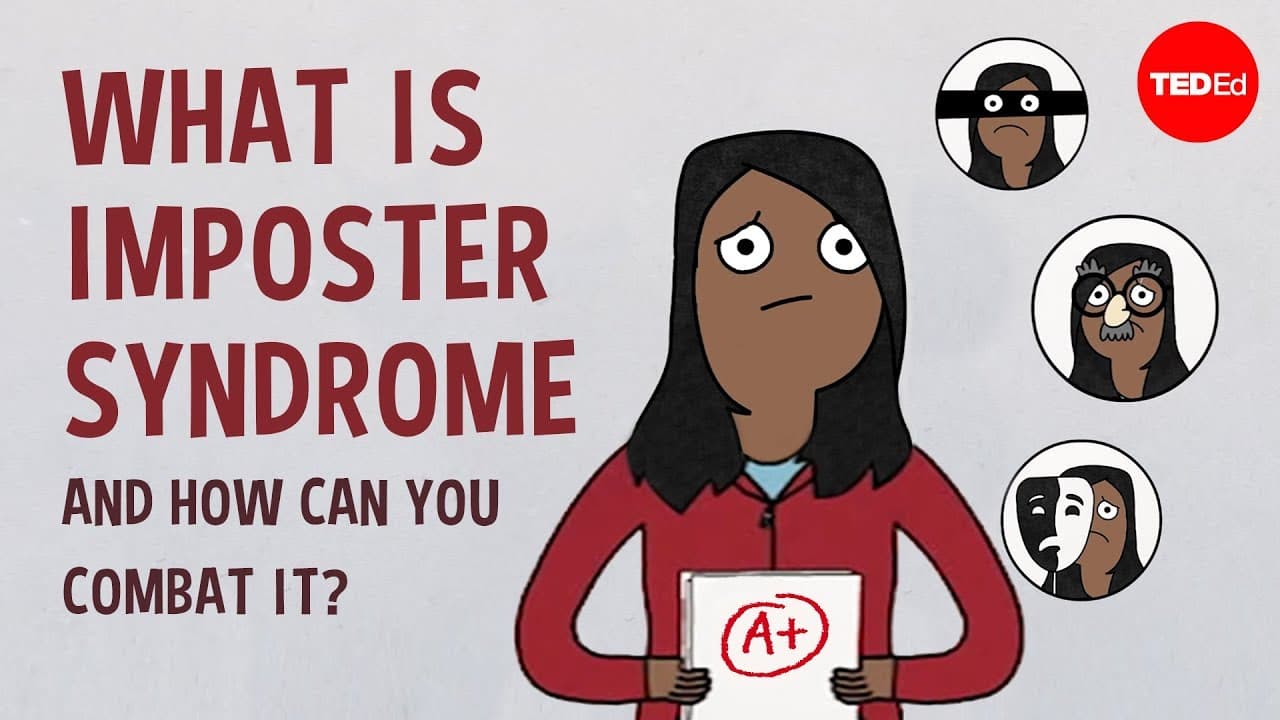
What is imposter syndrome and how can you combat it? - Elizabeth Cox
TL;DR
Despite their achievements, many individuals feel like frauds or believe they don't deserve recognition or opportunities, a phenomenon known as imposter syndrome.
Transcript
Even after writing eleven books and winning several prestigious awards, Maya Angelou couldn’t escape the nagging doubt that she hadn’t really earned her accomplishments. Albert Einstein experienced something similar: he described himself as an “involuntary swindler” whose work didn’t deserve as much attention as it had received. Accomplishmen... Read More
Key Insights
- ❓ Maya Angelou and Albert Einstein both experienced imposter syndrome despite their accomplishments, highlighting the commonality of these feelings.
- ⛔ Imposter syndrome is not limited to highly skilled individuals, as everyone may doubt themselves privately due to pluralistic ignorance.
- 🏛️ Holding open conversations about imposter syndrome and building awareness can help individuals feel freer to discuss their feelings and build confidence.
- ❓ Acknowledging and collecting positive feedback can be instrumental in combating imposter syndrome.
- 💡 Imposter syndrome can hinder individuals from sharing ideas and applying for opportunities, limiting their personal and professional growth.
- ❓ Imposter syndrome is not a disease or abnormality but a universal phenomenon that can affect individuals across various demographics and occupations.
- 👥 Underrepresented or disadvantaged groups may experience imposter syndrome more disproportionately.
Install to Summarize YouTube Videos and Get Transcripts
Explore YouTube Video Summarizer or Get YouTube Transcript Extractor
Questions & Answers
Q: What is imposter syndrome?
Imposter syndrome, also known as imposter phenomenon or imposter experience, refers to the feelings of self-doubt and unworthiness despite achievements or recognition. It is not tied to depression, anxiety, or self-esteem.
Q: Who is susceptible to imposter syndrome?
Imposter syndrome can affect individuals of all skill levels and backgrounds. It is a common phenomenon, with people often doubting themselves privately due to pluralistic ignorance.
Q: How can imposter syndrome impact individuals?
Imposter syndrome can prevent individuals from sharing ideas, applying for opportunities, and reaching their full potential. It can hinder personal and professional growth.
Q: How can individuals overcome imposter syndrome?
Openly discussing imposter syndrome with mentors, advisors, or peers can help relieve feelings of fraudulence. Collecting and revisiting positive feedback, as well as recognizing one's competence, can combat imposter syndrome.
Key Insights:
- Maya Angelou and Albert Einstein both experienced imposter syndrome despite their accomplishments, highlighting the commonality of these feelings.
- Imposter syndrome is not limited to highly skilled individuals, as everyone may doubt themselves privately due to pluralistic ignorance.
- Holding open conversations about imposter syndrome and building awareness can help individuals feel freer to discuss their feelings and build confidence.
- Acknowledging and collecting positive feedback can be instrumental in combating imposter syndrome.
- Imposter syndrome can hinder individuals from sharing ideas and applying for opportunities, limiting their personal and professional growth.
- Imposter syndrome is not a disease or abnormality but a universal phenomenon that can affect individuals across various demographics and occupations.
- Underrepresented or disadvantaged groups may experience imposter syndrome more disproportionately.
- Although it may not be possible to completely eliminate feelings of fraudulence, individuals can embrace their talent, capability, and sense of belonging.
Summary & Key Takeaways
-
Psychologist Pauline Rose Clance first studied imposter syndrome, a phenomenon characterized by feelings of fraudulence and self-doubt, in female college students and faculty.
-
Imposter syndrome affects individuals across gender, race, age, and occupations, but may be more prevalent in underrepresented or disadvantaged groups.
-
Feelings of imposterism can hinder individuals from sharing ideas, pursuing opportunities, and reaching their full potential.
Read in Other Languages (beta)
Share This Summary 📚
Summarize YouTube Videos and Get Video Transcripts with 1-Click
Try YouTube Summary with ChatGPT & Claude or YouTube Transcript Generator
Explore More Summaries from TED-Ed 📚




Summarize YouTube Videos and Get Video Transcripts with 1-Click
Try YouTube Summary with ChatGPT & Claude or YouTube Transcript Generator