What Causes Pressure Loss in Pipes and How to Manage It?
TL;DR
Pressure loss in pipes is primarily caused by friction and turbulence, which can be estimated using the Hazen-Williams equation. Factors like pipe length, diameter, and fittings contribute significantly to pressure drop, impacting everything from home plumbing to large pipelines. Understanding these dynamics is crucial for engineers to optimize designs for cost and performance.
Transcript
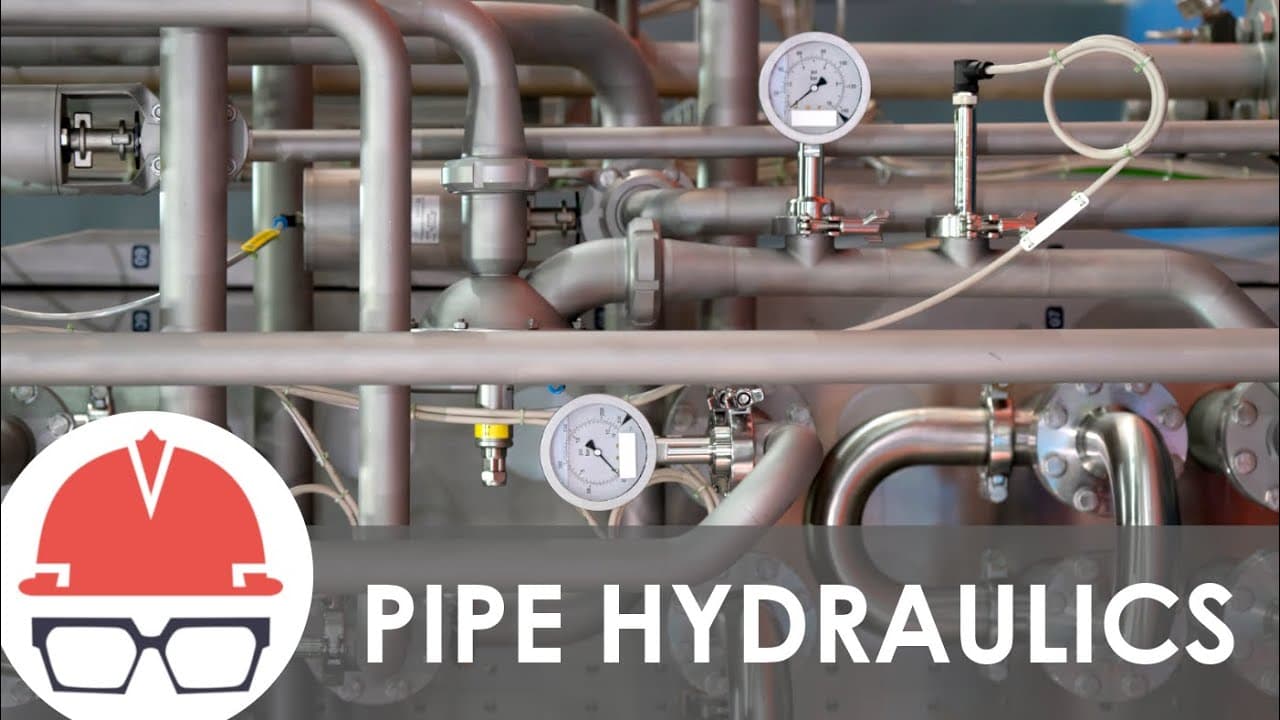
All pipes carrying fluids experience losses of pressure caused by friction and turbulence of the flow. It affects seemingly simple things like the plumbing in your house all the way up to the design of massive, way more complex, long-distance pipelines. I’ve talked about many of the challenges engineers face in designing piped systems, includin... Read More
Key Insights
- Friction and turbulence cause pressure losses in pipes, affecting both simple home plumbing and complex pipelines.
- The Hazen-Williams equation helps estimate pressure drops in pipes, factoring in flow rate, diameter, length, and roughness.
- Pipe diameter significantly impacts flow velocity and pressure loss, with smaller diameters increasing friction and turbulence.
- Minor losses from fittings and directional changes can significantly contribute to overall pressure drop in certain scenarios.
- The hydraulic grade line visually represents pressure loss along a pipe, aiding in identifying areas needing design adjustments.
- Engineers balance cost and performance by understanding how design changes affect pressure and flow in pipeline systems.
- Practical demonstrations with clear pipes and gauges illustrate the real-world application of engineering equations.
- HelloFresh sponsors the video, highlighting the convenience of pre-portioned meals for enjoyable cooking experiences.
Install to Summarize YouTube Videos and Get Transcripts
Explore YouTube Video Summarizer or Get YouTube Transcript Extractor
Questions & Answers
Q: What causes pressure losses in pipes?
Pressure losses in pipes are primarily caused by friction and turbulence as fluids flow through them. Friction occurs between the fluid and the pipe walls, while turbulence arises from changes in flow velocity and direction. These factors affect both simple household plumbing and complex industrial pipelines.
Q: How does the Hazen-Williams equation help in pipe design?
The Hazen-Williams equation helps estimate the pressure drop in pipes by considering variables such as flow rate, pipe diameter, length, and roughness. It provides a way to predict how these factors will affect fluid dynamics, allowing engineers to design efficient systems with minimal pressure loss.
Q: Why is pipe diameter important in fluid flow?
Pipe diameter is crucial because it directly affects fluid velocity and pressure loss. A smaller diameter increases velocity, leading to more friction and turbulence, which results in higher pressure loss. Conversely, a larger diameter reduces velocity, decreasing friction and pressure loss, which is important for efficient system design.
Q: What are minor losses in pipe systems?
Minor losses refer to additional pressure drops caused by fittings, bends, expansions, and contractions in pipe systems. These losses occur due to increased turbulence at points where the fluid changes direction or cross-sectional area. Although often small, they can significantly impact pressure drop in systems with many fittings or directional changes.
Q: How is the hydraulic grade line useful in pipe design?
The hydraulic grade line is a visual representation of pressure loss along a pipe. It shows how pressure decreases due to friction and minor losses, helping engineers identify areas where design changes, like adding booster pumps or altering pipe diameter, may be necessary to maintain desired flow and pressure levels.
Q: What role does intuition play in pipe system design?
While intuition helps in understanding basic principles, engineers cannot rely solely on it for pipe system design. Equations like Hazen-Williams provide quantifiable data on how design changes affect pressure and flow, allowing for informed decisions that balance performance and cost without physically testing each configuration.
Q: How do fittings affect pressure loss in pipes?
Fittings, such as elbows and quick-release connections, introduce additional turbulence, leading to minor losses in pressure. These losses accumulate in systems with multiple fittings, significantly impacting overall pressure drop. Engineers must account for these when calculating total head loss to ensure efficient system performance.
Q: What is the significance of the sponsor segment in the video?
The sponsor segment highlights HelloFresh, a meal kit service that simplifies cooking by providing pre-portioned ingredients and curated recipes. This sponsorship supports the Practical Engineering channel, allowing the creator to produce educational content, and offers viewers a convenient solution for enjoyable, stress-free cooking experiences.
Summary & Key Takeaways
-
The video explains how friction and turbulence cause pressure losses in pipes, affecting systems from home plumbing to large pipelines. The Hazen-Williams equation is introduced as a tool for estimating pressure drops, considering factors like flow rate, diameter, length, and roughness.
-
Demonstrations with different pipe configurations illustrate how changes in length, diameter, and fittings affect flow and pressure. Minor losses from fittings and directional changes can significantly impact pressure drop, which engineers must account for in their designs.
-
The hydraulic grade line is a useful tool for visualizing pressure loss along a pipe, helping engineers make informed decisions about design adjustments. The video emphasizes the importance of understanding these dynamics in balancing cost and performance in pipeline systems.
Read in Other Languages (beta)
Share This Summary 📚
Summarize YouTube Videos and Get Video Transcripts with 1-Click
Try YouTube Summary with ChatGPT & Claude or YouTube Transcript Generator
Explore More Summaries from Practical Engineering 📚





Summarize YouTube Videos and Get Video Transcripts with 1-Click
Try YouTube Summary with ChatGPT & Claude or YouTube Transcript Generator