GCSE Physics - Nuclear Fission #38
TL;DR
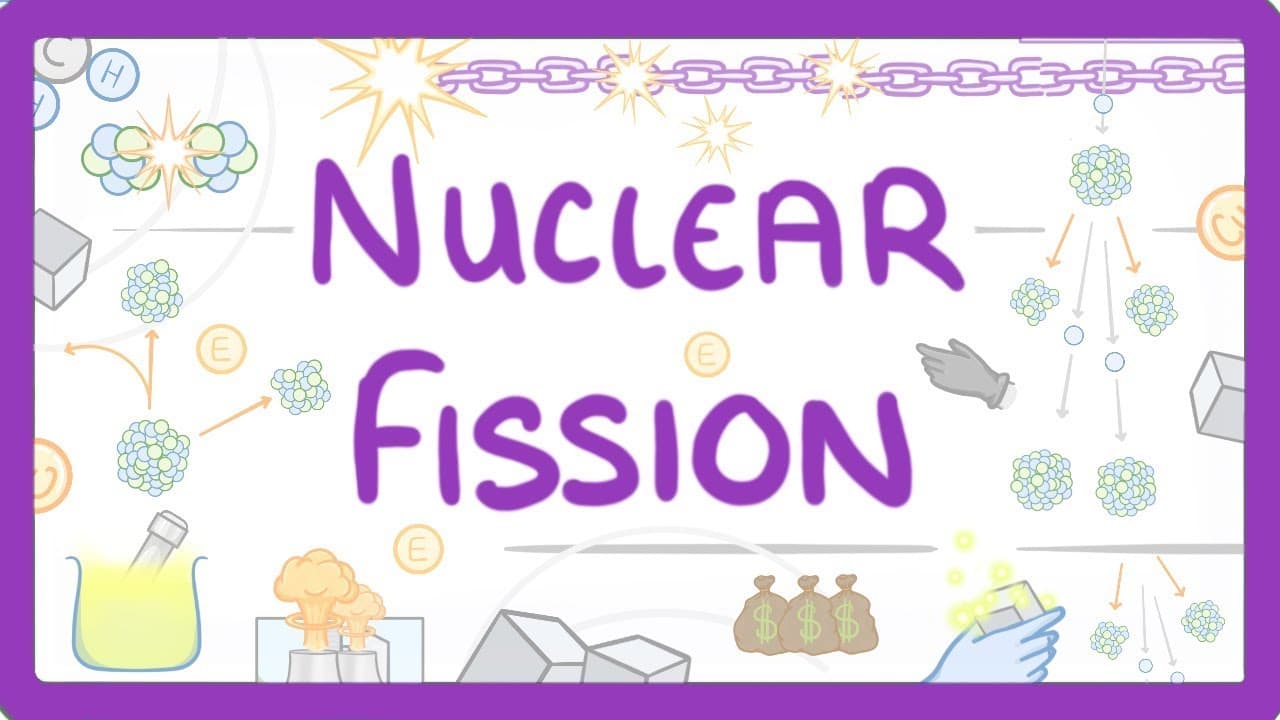
Nuclear fission is the process of splitting large and unstable nuclei, releasing large amounts of energy. It can occur spontaneously or by absorbing a neutron. Nuclear fission is used in nuclear reactors to generate electricity, but it poses risks and challenges in terms of cost, waste disposal, and the potential for major disasters.
Transcript
in today's video we're looking at nuclear fission which is the splitting up of a large and unstable nuclei into smaller nuclei at the same time it releases loads of energy which is how we get all of our nuclear energy here on earth now nuclear fission can occur in two different ways either spontaneously where the fission is unforced and happens all... Read More
Key Insights
- ✊ Nuclear fission is the process that powers nuclear reactors, producing energy by splitting large nuclei.
- ⛓️ Neutrons are crucial in initiating and sustaining the chain reaction of fission in reactors.
- 🎮 Proper control mechanisms, such as control rods, are necessary to prevent the reaction from becoming uncontrollable and resulting in dangerous energy releases.
- 🦺 Nuclear fission is a complex process that requires careful handling to ensure safe and efficient energy generation.
- 😘 While nuclear energy has benefits, such as low greenhouse gas emissions and steady energy production, it also poses challenges in terms of cost, waste disposal, and safety concerns.
- ✊ Nuclear power plants are expensive to build and require specialized infrastructure for the disposal of nuclear waste.
- 👏 The risk of major disasters, although unlikely, is a significant concern and raises suspicion among many people regarding the use of nuclear energy.
Install to Summarize YouTube Videos and Get Transcripts
Explore YouTube Video Summarizer or Get YouTube Transcript Extractor
Questions & Answers
Q: What is nuclear fission?
Nuclear fission is the process of splitting large and unstable nuclei, releasing energy in the form of gamma radiation and daughter nuclei. It can occur spontaneously or by absorbing a neutron.
Q: How is nuclear fission initiated in nuclear reactors?
Nuclear fission in reactors is initiated by absorbing neutrons, which makes the nucleus even less stable and causes it to split. Neutrons released during fission can then continue to trigger more fission processes.
Q: How is nuclear fission controlled in reactors?
The rate of fission in reactors is carefully controlled using control rods that absorb neutrons. These rods can be lowered into the reactor to slow down the reaction and prevent it from getting out of control.
Q: How is the energy from nuclear fission used?
The energy released from nuclear fission is used to heat up water and produce steam. The steam drives turbines connected to electricity generators, generating electricity.
Key Insights:
- Nuclear fission is the process that powers nuclear reactors, producing energy by splitting large nuclei.
- Neutrons are crucial in initiating and sustaining the chain reaction of fission in reactors.
- Proper control mechanisms, such as control rods, are necessary to prevent the reaction from becoming uncontrollable and resulting in dangerous energy releases.
- Nuclear fission is a complex process that requires careful handling to ensure safe and efficient energy generation.
- While nuclear energy has benefits, such as low greenhouse gas emissions and steady energy production, it also poses challenges in terms of cost, waste disposal, and safety concerns.
- Nuclear power plants are expensive to build and require specialized infrastructure for the disposal of nuclear waste.
- The risk of major disasters, although unlikely, is a significant concern and raises suspicion among many people regarding the use of nuclear energy.
- Nuclear fission is not considered a renewable energy source due to the reliance on the uranium or plutonium fuel.
Summary & Key Takeaways
-
Nuclear fission is the splitting of large and unstable nuclei, resulting in the release of energy.
-
Neutrons are used to initiate the fission process in nuclear reactors.
-
The energy released from nuclear fission is used to heat up water and generate steam, which drives turbines to generate electricity.
Read in Other Languages (beta)
Share This Summary 📚
Summarize YouTube Videos and Get Video Transcripts with 1-Click
Try YouTube Summary with ChatGPT & Claude or YouTube Transcript Generator
Explore More Summaries from Cognito 📚

Summarize YouTube Videos and Get Video Transcripts with 1-Click
Try YouTube Summary with ChatGPT & Claude or YouTube Transcript Generator