What Is Active Transport and How Does It Work?
TL;DR
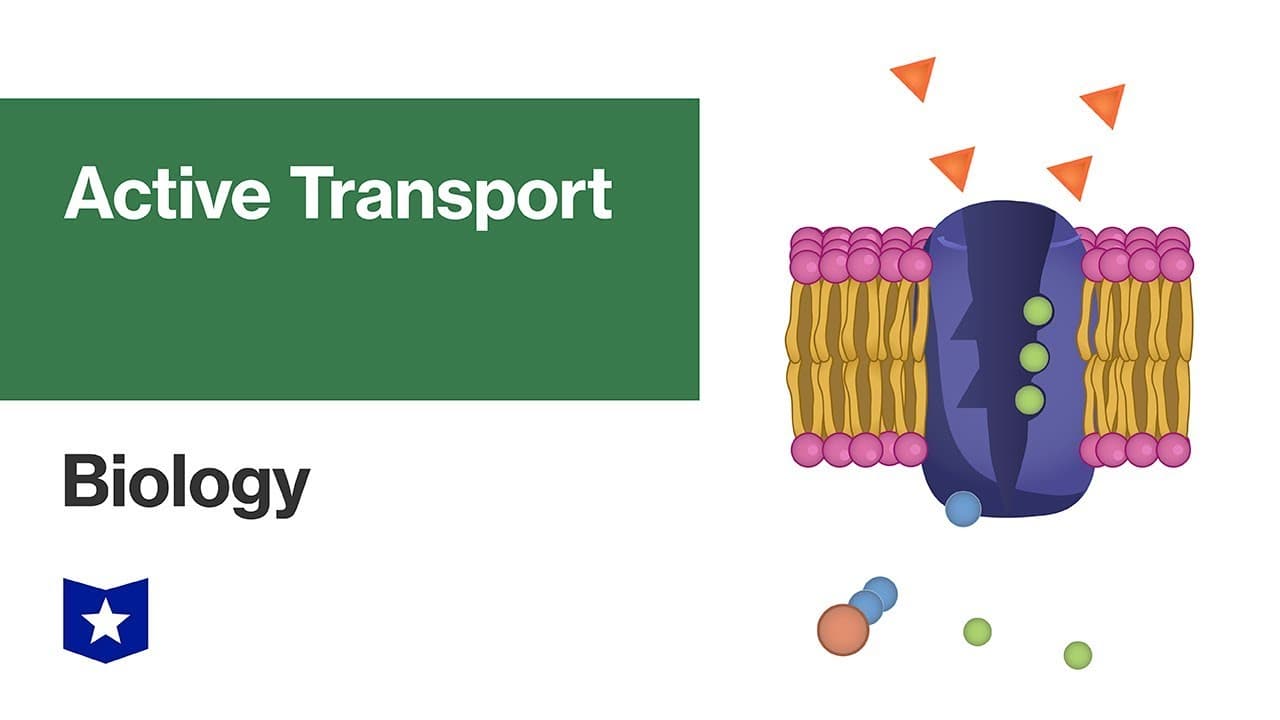
Active transport requires energy, typically from ATP, to move substances like ions and glucose across cell membranes against their concentration gradient. A key example is the sodium-potassium pump, which helps maintain membrane potential by regulating ion concentrations, ensuring proper cell function and signaling.
Transcript
the cell uses the number of mechanisms to transport material across the membrane some types of transport do not require the cell to expend energy and a cooled passive transport was other types of transport do require the cell to expend energy in the form of ATP and these are called active transport the active transport mechanism commonly involves t... Read More
Key Insights
- 💁 Active transport mechanisms require energy expenditure, primarily in the form of ATP, to move substances across the cell membrane.
- 😑 The electrochemical gradient, combining chemical and electrical forces, influences ion movement across the membrane.
- 😑 The sodium-potassium pump plays a vital role in maintaining the ideal concentration of ions inside the cell and generating membrane potential.
- ⚖️ Membrane potential is essential for various cell functions, such as nerve cell signaling and nutrient balance.
- 😑 Cellular transport mechanisms, including active transport, help regulate ions for proper cell function.
- 😑 The cyclic process of the sodium-potassium pump involves binding and release of sodium and potassium ions, driven by ATP hydrolysis.
- 😥 The sodium-potassium pump contributes to the regulation of cell volume, pH, and nutrient balance in living cells.
Install to Summarize YouTube Videos and Get Transcripts
Explore YouTube Video Summarizer or Get YouTube Transcript Extractor
Questions & Answers
Q: What are the main differences between active and passive transport mechanisms?
Active transport requires the cell to expend energy, usually in the form of ATP, to move substances across the membrane against their concentration gradient. In contrast, passive transport does not require energy and allows substances to move along their concentration gradient.
Q: How does the electrochemical gradient influence ion movement across the membrane?
The electrochemical gradient is a combination of chemical and electrical forces that determine the direction of ion movement. It results from the uneven distribution of ions and membrane potential, driving diffusion across the membrane.
Q: What is the role of the sodium-potassium pump in maintaining cell function?
The sodium-potassium pump regulates the concentrations of sodium and potassium ions inside and outside the cell, crucial for cell volume, pH balance, and nutrient transport. It also helps generate membrane potential essential for nerve cell function.
Q: Can you explain the cyclic process of the sodium-potassium pump?
The sodium-potassium pump undergoes a cyclic process involving binding and release of sodium and potassium ions, triggered by ATP hydrolysis. This process results in the transfer of positive charges and maintenance of the cell's membrane potential.
Summary & Key Takeaways
-
Cells use active and passive transport mechanisms to move substances across the membrane efficiently.
-
Membrane potential is crucial for cell function and is maintained by active transport mechanisms like the sodium-potassium pump.
-
The sodium-potassium pump helps regulate ions' concentration, cell volume, and generates voltages crucial for nerve cell function.
Read in Other Languages (beta)
Share This Summary 📚
Summarize YouTube Videos and Get Video Transcripts with 1-Click
Try YouTube Summary with ChatGPT & Claude or YouTube Transcript Generator
Explore More Summaries from Course Hero 📚




Summarize YouTube Videos and Get Video Transcripts with 1-Click
Try YouTube Summary with ChatGPT & Claude or YouTube Transcript Generator