How Can AI Combat Group Performance Disparities?
TL;DR
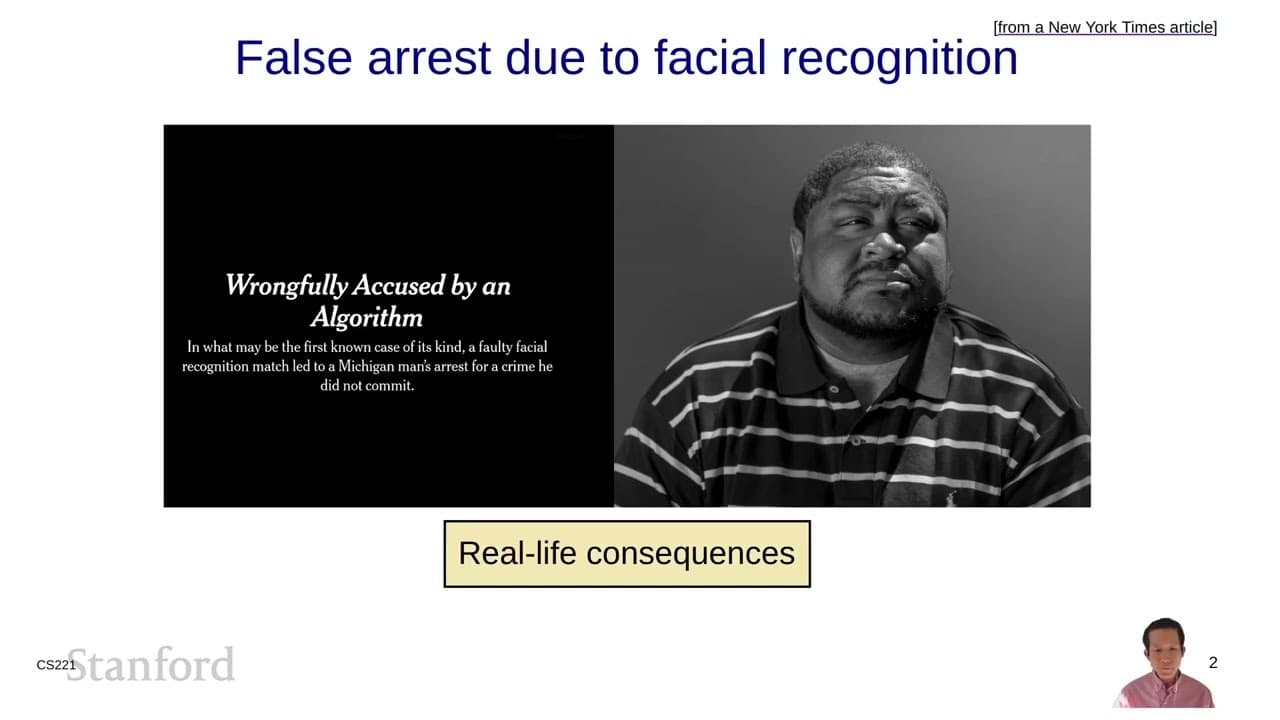
Minimizing average error in machine learning can lead to significant performance disparities among different demographic groups. The Gender Shades project illustrates this issue, highlighting real-world consequences like wrongful arrests due to biased facial recognition systems. Group Distributionally Robust Optimization (Group DRO) offers a way to address these disparities by focusing on minimizing the maximum group loss.
Transcript
hello in this module i'm going to first show you how minimizing the average error on your training examples can actually lead to disparities between a performance between groups and then i'm going to show you a simple approach called group distribution and robust optimization that can mitigate some of these disparities so let me begin with a very f... Read More
Key Insights
- 👥 Machine learning algorithms that minimize average error can result in disparities between different groups.
- ⚾ The Gender Shades project demonstrated performance disparities in facial recognition systems based on gender and skin tone.
- 🌍 Performance disparities in machine learning can have real-world consequences, such as wrongful arrests.
- 👥 Group DRO offers a solution to mitigate performance disparities by minimizing the maximum group loss.
- 😒 Ethical considerations arise regarding the use of facial recognition technology in law enforcement and surveillance.
- 👥 Intersectionality, overfitting, and inferring groups are additional considerations in addressing performance disparities.
- 🤩 Performance disparities should be treated as a key consideration in machine learning methods.
Install to Summarize YouTube Videos and Get Transcripts
Explore YouTube Video Summarizer or Get YouTube Transcript Extractor
Questions & Answers
Q: What is the Gender Shades project?
The Gender Shades project collected a dataset of images and faces of different genders and skin tones to evaluate facial recognition systems. It revealed disparities in performance, with higher accuracy for lighter-skinned males and worse accuracy for darker-skinned females.
Q: What are the consequences of performance disparities in machine learning?
Performance disparities can lead to real-world issues, such as wrongful arrests based on incorrect matches made by facial recognition systems. This exacerbates existing societal inequalities.
Q: What is Group Distributionally Robust Optimization (Group DRO)?
Group DRO is an approach that aims to mitigate performance disparities by minimizing the maximum group loss. It considers the performance of different groups and balances them more equally.
Q: Are there ethical considerations regarding the use of facial recognition technology in law enforcement?
Yes, there are ethical questions surrounding the use of facial recognition technology in law enforcement and surveillance. The video highlights that the framing of the problem itself is important to consider, and these ethical questions merit further discussion.
Summary & Key Takeaways
-
Machine learning algorithms can lead to performance disparities between different groups, as demonstrated by the Gender Shades project's findings on facial recognition systems.
-
Performance disparities can have real-world consequences, such as wrongful arrests based on incorrect matches made by facial recognition systems.
-
Group Distributionally Robust Optimization (Group DRO) offers a solution to mitigate performance disparities by minimizing the maximum group loss.
Read in Other Languages (beta)
Share This Summary 📚
Summarize YouTube Videos and Get Video Transcripts with 1-Click
Try YouTube Summary with ChatGPT & Claude or YouTube Transcript Generator
Explore More Summaries from Stanford Online 📚

Summarize YouTube Videos and Get Video Transcripts with 1-Click
Try YouTube Summary with ChatGPT & Claude or YouTube Transcript Generator