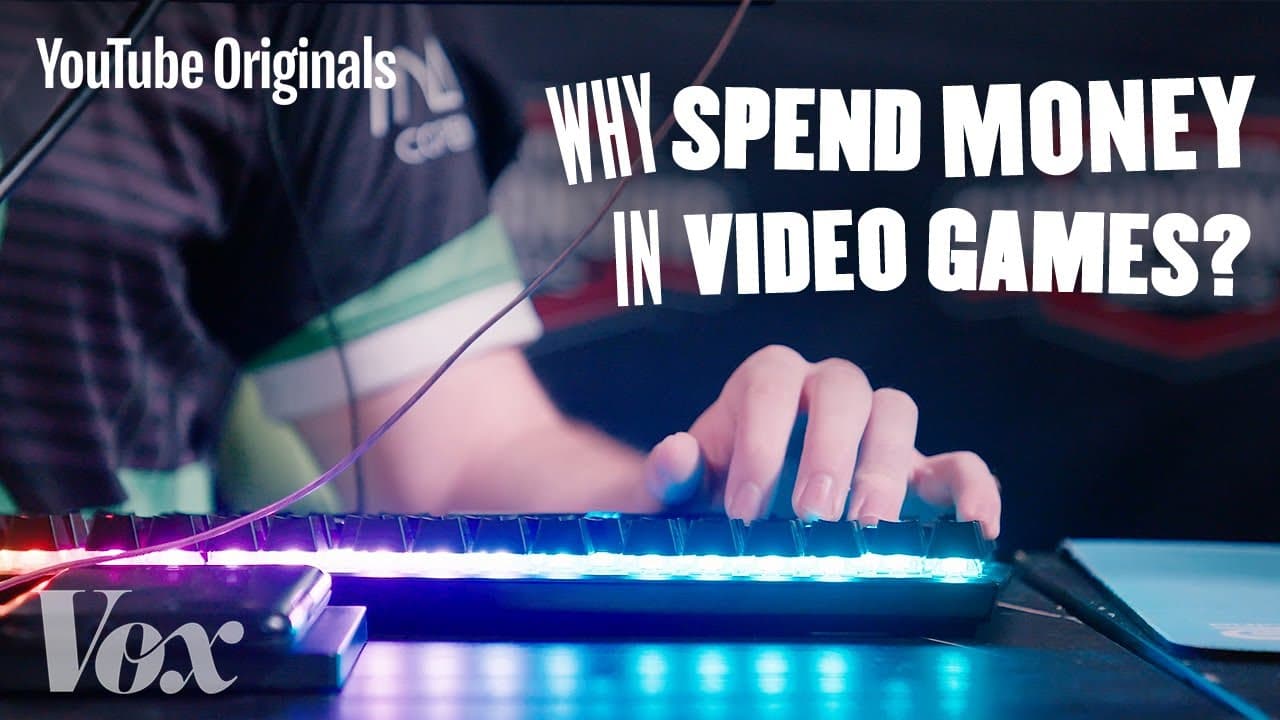
Why Spend Money in Video Games? - Glad You Asked S1
TL;DR
Explores why people spend money on virtual game items.
Transcript
( coin rattling ) ( game sound effects ) Alex: I've been playing video games for about 25 years. One of my first memories was begging my parents for a quarter at the arcade just so I could get a little bit further at "Galaga." Games used to be simple. You pay for the game, you play the game. But eventually, that all flipped. Instead of paying to pl... Read More
Key Insights
- The gaming industry has evolved from simple pay-to-play models to complex economies where players can earn and spend real money on virtual items.
- Virtual items can be bought, sold, and traded within games and on external marketplaces, with some items fetching thousands of dollars.
- Games like 'World of Warcraft' and 'Counter-Strike' have created in-game economies, allowing players to invest in virtual goods that can appreciate in value.
- The market for virtual goods has grown significantly, with estimates suggesting its value could be as high as $50 billion.
- Transactions of virtual items can occur on unregulated third-party sites, posing risks and challenges for both players and developers.
- Developers have created their own marketplaces to regulate the trade of virtual goods, but these economies can still be vulnerable to bugs and exploitation.
- The 'Diablo III' auction house incident highlighted the potential risks of linking virtual economies to real money, leading to hyperinflation and player account bans.
- For many gamers, spending money on virtual items is about enhancing their gaming experience and showing off their achievements, rather than financial gain.
Install to Summarize YouTube Videos and Get Transcripts
Explore YouTube Video Summarizer or Get YouTube Transcript Extractor
Questions & Answers
Q: Why do players spend money on virtual items in video games?
Players spend money on virtual items for various reasons, including enhancing their gaming experience, showcasing achievements, and investing in items that may appreciate in value. Some players also participate in the trading of virtual goods as a form of investment, hoping to profit from market fluctuations.
Q: How have virtual economies in video games evolved over time?
Virtual economies have evolved from simple pay-to-play models to complex systems where players can buy, sell, and trade items for real money. This evolution has been driven by the introduction of in-game marketplaces and the growing value of virtual goods, which has attracted both gamers and investors to the market.
Q: What risks are associated with trading virtual items?
Trading virtual items carries risks such as market volatility, unregulated transactions on third-party sites, and potential exploitation of game mechanics. The 'Diablo III' auction house incident exemplifies how bugs can lead to hyperinflation and account bans, highlighting the need for regulation and oversight in virtual economies.
Q: What impact did the 'Diablo III' auction house have on the gaming industry?
The 'Diablo III' auction house incident demonstrated the vulnerabilities of linking virtual economies to real money. The ability to duplicate gold led to hyperinflation, causing significant disruption. This incident highlighted the risks associated with virtual economies and prompted developers to reconsider how they manage in-game transactions.
Q: How do developers regulate virtual item transactions?
Developers regulate virtual item transactions by creating in-game marketplaces, allowing for controlled buying, selling, and trading of items. These marketplaces help prevent unregulated third-party transactions and provide developers with a share of the profits. However, challenges remain in ensuring fairness and preventing exploitation.
Q: What motivates players to invest in virtual goods?
Players are motivated to invest in virtual goods for various reasons, including personal enjoyment, the desire to enhance their gaming experience, and the social aspect of showcasing rare or valuable items. Some players also view virtual goods as investment opportunities, hoping to profit from market fluctuations.
Q: How does the virtual goods market compare to other entertainment industries?
The virtual goods market has grown significantly, with estimates suggesting it could be worth as much as $50 billion. This value surpasses the global box office revenue for the same year, indicating the substantial economic impact and popularity of virtual goods within the gaming industry.
Q: What role do virtual items play in competitive gaming?
In competitive gaming, virtual items often serve as status symbols, allowing players to showcase their achievements and skill. Items like skins and weapons can enhance a player's in-game appearance, contributing to their reputation and motivation. Additionally, virtual items can be part of prize pools, further incentivizing competitive play.
Summary & Key Takeaways
-
The video explores the evolution of gaming from simple pay-to-play models to complex economies where players can buy, sell, and trade virtual items for real money. It highlights the growing market for virtual goods, which is estimated to be worth billions.
-
Players can acquire virtual items through in-game purchases or third-party marketplaces, with some items fetching thousands of dollars. However, these transactions can be risky, as demonstrated by the 'Diablo III' auction house incident.
-
For many gamers, spending money on virtual items is about enhancing their gaming experience and showing off their achievements. The video concludes that investing in virtual goods is a way for players to invest in what they love.
Read in Other Languages (beta)
Share This Summary 📚
Summarize YouTube Videos and Get Video Transcripts with 1-Click
Try YouTube Summary with ChatGPT & Claude or YouTube Transcript Generator
Explore More Summaries from Vox 📚




Summarize YouTube Videos and Get Video Transcripts with 1-Click
Try YouTube Summary with ChatGPT & Claude or YouTube Transcript Generator