What Happens When Alcohols Are Oxidized?
TL;DR
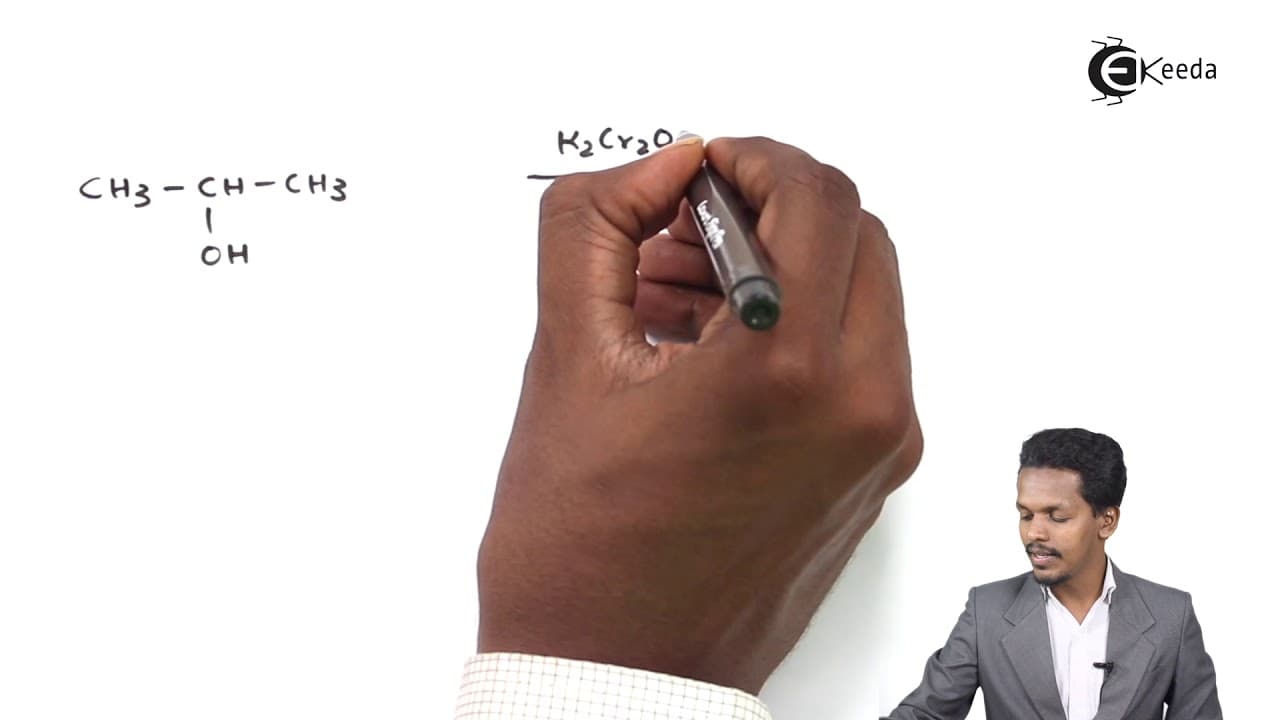
The oxidation of primary alcohols converts them to aldehydes, which can further oxidize to carboxylic acids without changing the carbon count. Secondary alcohols oxidize to ketones, resulting in a loss of one carbon atom, while tertiary alcohols oxidize to ketones as well, eventually yielding carboxylic acids with a loss of two carbon atoms. Common oxidizing agents include K2Cr2O7 and sulfuric acid.
Transcript
click the bell icon to get latest videos from equator heaviness now in this topic we are going to talk about the chemical properties of alcohol and that is the oxidation of Alfonso now let us understand this topic very clearly so friends in this topic we are going to talk about the oxidation of primary alcohols secondary coils and tertiary alcohol ... Read More
Key Insights
- 🥺 Primary alcohols can be oxidized to aldehydes and further oxidation leads to the formation of carboxylic acids.
- 🫀 The oxidation of primary alcohols does not change the number of carbon atoms.
- 🫀 Secondary alcohols undergo oxidative cleavage, resulting in the loss of one carbon atom.
- 🥺 Tertiary alcohols can be oxidized to ketones, and further oxidation leads to the formation of carboxylic acids with the loss of two carbon atoms.
- ❓ The reagents commonly used for alcohol oxidation include K2Cr2O7 and sulfuric acid.
- ❓ The oxidizing agents produce nascent oxygen, which is responsible for the oxidation process.
- ❓ The oxidation of alcohols is an important reaction in organic synthesis.
Install to Summarize YouTube Videos and Get Transcripts
Explore YouTube Video Summarizer or Get YouTube Transcript Extractor
Questions & Answers
Q: What are the reagents used for the oxidation of primary alcohols?
Primary alcohols can be oxidized using an oxidizing agent, such as K2Cr2O7, in the presence of sulfuric acid.
Q: How is an aldehyde formed from the oxidation of a primary alcohol?
The oxidation of a primary alcohol produces an aldehyde and water, where the aldehyde has one fewer carbon atom compared to the original alcohol.
Q: What happens when a secondary alcohol undergoes oxidation?
Oxidation of a secondary alcohol leads to the formation of a ketone and the loss of one carbon atom due to oxidative cleavage.
Q: How is a carboxylic acid formed from a ketone?
A ketone can be further oxidized to form a carboxylic acid using an oxidizing agent like K2Cr2O7 in the presence of sulfuric acid, resulting in the loss of two carbon atoms.
Summary & Key Takeaways
-
Primary alcohols can be oxidized to aldehydes using an oxidizing agent, such as K2Cr2O7 in the presence of sulfuric acid.
-
Aldehydes can be further oxidized to carboxylic acids using the same oxidizing agent, resulting in no change in the number of carbon atoms.
-
Secondary alcohols undergo oxidative cleavage, leading to the formation of ketones and the loss of one carbon atom.
-
Tertiary alcohols can be oxidized to ketones, and further oxidation leads to the formation of carboxylic acids, resulting in the loss of two carbon atoms.
Read in Other Languages (beta)
Share This Summary 📚
Summarize YouTube Videos and Get Video Transcripts with 1-Click
Try YouTube Summary with ChatGPT & Claude or YouTube Transcript Generator
Explore More Summaries from Ekeeda 📚






Summarize YouTube Videos and Get Video Transcripts with 1-Click
Try YouTube Summary with ChatGPT & Claude or YouTube Transcript Generator