What Do Ocean Microbes Reveal About Climate Change?

TL;DR
Ocean microbes are vital indicators of climate change, as they form the foundation of the marine food web. Recent studies show that harmful algal blooms and ocean acidification are increasing due to rising temperatures and carbon dioxide levels, threatening marine life and ecosystems. Understanding these changes is crucial for addressing the impacts of climate change on our oceans.
Transcript
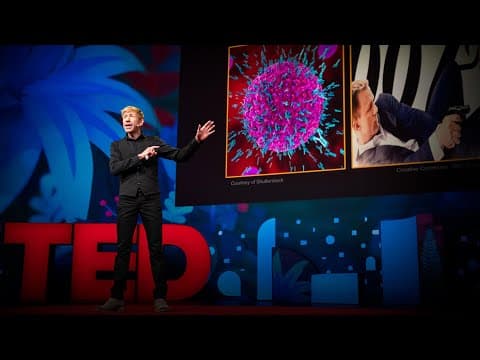
Translator: Joseph Geni Reviewer: Krystian Aparta I'm a biological oceanographer. I have the absolute privilege of studying microbial lives in the Pacific Ocean. So we'll talk about microbes in a minute, but I first want to give you a sense of place, a sense of scale. The Pacific Ocean is our largest, deepest ocean basin. It covers 60 million squar... Read More
Key Insights
- 🌊 The Pacific Ocean is the largest and deepest ocean basin, covering 60 million square miles. It is a massive ecosystem that is crucial for understanding microbial lives and the base of the ocean food web.
- 🌍 Ocean change is planetary change, as oceans cover 70% of the planet. Microbes play a vital role in this change and understanding their impact is crucial.
- 🌿 Microbes in the ocean are microscopic plants and animals that are more abundant than we realize, with hundreds of thousands in a single milliliter of seawater. They produce oxygen, consume CO2, and form the base of the ocean food web.
- 🔬 Climate change is impacting harmful algal blooms, decreasing salmon recruitment, and leading to the intrusion of invasive species. The risk of harmful algal blooms is tightly linked to aspects of climate, such as warming and changes in circulation.
- 🔥 The frequency and severity of harmful algal blooms are increasing due to climate change, with 2014 being one of the worst bloom years in Oregon's history. The five hottest years in the modern climate record have also coincided with harmful algal blooms.
- 🌊 The Hawaiian Islands and the North Pacific Subtropical Gyre are a remote and beautiful part of the Pacific. They have provided valuable data on the increase in carbon dioxide in the atmosphere and the decline in pH in the surface ocean, affecting organisms and ecosystems.
- 🐋 The impacts of ocean change, including harmful algal blooms and ocean acidification, go beyond shellfish and impact economically important fisheries and marine mammals like whales. These changes are interconnected and must be addressed.
- 🔬 Sustained observation of our oceans is a moral imperative for scientists. By bearing witness to the changes and understanding microbial ecosystems, we have the opportunity to adapt and enact global change to better care for our oceans and nurture the microbes that sustain us.
Install to Summarize YouTube Videos and Get Transcripts
Explore YouTube Video Summarizer or Get YouTube Transcript Extractor
Questions & Answers
Q: What is the Pacific Ocean's significance in terms of scale?
The Pacific Ocean is the largest and deepest ocean basin, covering 60 million square miles. It is so vast that if all the continents were put together in a Pangaea 2.0, they would fit comfortably inside the Pacific.
Q: What is the focus of the speaker's research in the Pacific Ocean?
The speaker, who is a biological oceanographer, studies microbial life in the Pacific Ocean. Specifically, they study the base of the food web, which is composed of plankton.
Q: How are microbial ecosystems in the ocean changing?
The speaker emphasizes that microbial ecosystems in the ocean are undergoing measurable and real changes. These changes are visible and indicate that ocean change is also planetary change, with microbial organisms playing a crucial role.
Q: What are harmful algal blooms and how do they impact the ecosystem?
Harmful algal blooms are blooms of toxin-producing phytoplankton. These blooms can contaminate food webs and accumulate in shellfish and fish, posing a threat to human consumption. Their occurrence is influenced by climate factors and can lead to ecological and economic impacts, affecting economically important fisheries and marine mammals like whales.
Q: How are carbon dioxide levels and pH changing in the ocean, and what are the consequences?
Carbon dioxide levels in the atmosphere and the ocean have been rapidly increasing, causing a decline in the pH of seawater. The speaker mentions a 30 percent decline in pH in the surface ocean over a 30-year time series. This change in ocean chemistry has consequences for organisms that rely on the ocean, including impacts on growth rates, metabolic interactions, and even large ecosystems like coral reefs.
Summary & Key Takeaways
-
The Pacific Ocean is the largest and deepest ocean basin, covering 60 million square miles. It is a massive ecosystem, supporting a variety of marine life.
-
Microbial ecosystems in the Pacific Ocean are changing in measurable ways, with harmful algal blooms and ocean acidification being prominent examples.
-
Sustained observation of our oceans is crucial to understanding and mitigating the impacts of climate change and pollution on marine ecosystems, as they play a vital role in sustaining our planet.
Read in Other Languages (beta)
Share This Summary 📚
Summarize YouTube Videos and Get Video Transcripts with 1-Click
Try YouTube Summary with ChatGPT & Claude or YouTube Transcript Generator
Explore More Summaries from TED 📚





Summarize YouTube Videos and Get Video Transcripts with 1-Click
Try YouTube Summary with ChatGPT & Claude or YouTube Transcript Generator