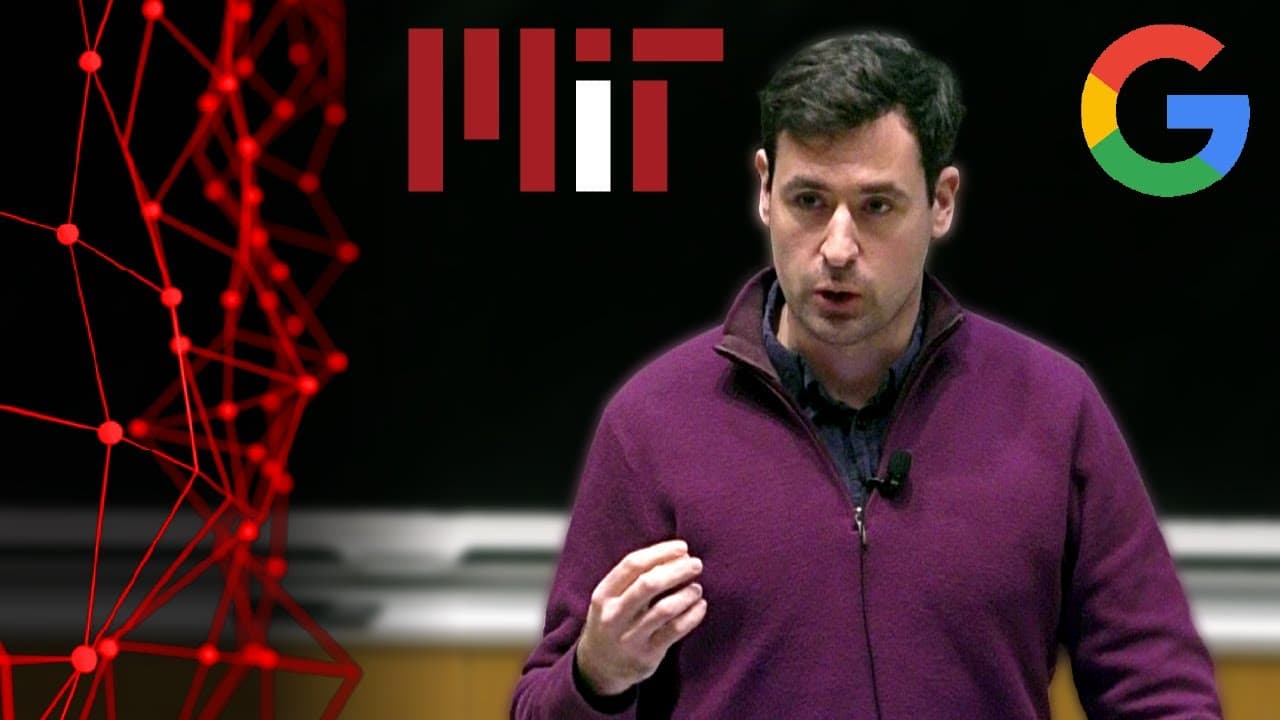
MIT 6.S191 (2020): Machine Learning for Scent
TL;DR
This presentation discusses the work being done to use machine learning to predict the smell of molecules. The speaker explains the challenges they faced, the techniques they used, and the potential applications of this research.
Transcript
you hey everybody first of all thank you for inviting me thank you for organizing all this this seems like a really really cool what's it called No so j-term is Harvard what's this called IP okay cool so this I'm sure there's many different courses you could choose from it's really cool that you were able to choose this one so I'm going to tell you... Read More
Key Insights
- 👃 The speaker's approach of using graph neural networks to predict the smell of molecules shows promising results, outperforming existing baseline models.
- 👾 The embedding space learned by the model reveals interesting structure and can be used as a representation of odor space.
- 👃 The speaker acknowledges the challenges of predicting the smell of mixtures and the need for further research in this area.
Install to Summarize YouTube Videos and Get Transcripts
Explore YouTube Video Summarizer or Get YouTube Transcript Extractor
Questions & Answers
Q: How does the speaker's approach to predicting smells differ from previous methods?
The speaker's approach uses graph neural networks to represent molecules and make predictions based on their structure. This is different from previous methods that used simpler techniques such as counting subfragments or using random forests.
Q: Can the speaker's model be used to predict the smell of mixtures?
The speaker acknowledges that predicting the smell of mixtures is a challenge and is something they are actively researching. They mention the need to find an effective way to represent mixtures in machine learning models.
Q: How does the speaker validate the accuracy of their predictions?
The speaker mentions using benchmark datasets and comparing their model's performance to existing baseline models. They also mention collaborating with experts in flavor and fragrance to validate their predictions.
Q: What are the potential applications of this research in real-world scenarios?
The speaker mentions potential applications such as designing better olfactory molecules, reducing crime related to fragrance theft, and improving quality control in industries like food and beverages.
Key Insights:
- The speaker's approach of using graph neural networks to predict the smell of molecules shows promising results, outperforming existing baseline models.
- The embedding space learned by the model reveals interesting structure and can be used as a representation of odor space.
- The speaker acknowledges the challenges of predicting the smell of mixtures and the need for further research in this area.
- The research has potential applications in various industries, including fragrance, food, and beverage, as well as potential implications for crime prevention.
Summary & Key Takeaways
-
The speaker discusses their work on using machine learning to predict the smell of molecules, with a focus on olfactory neuroscience.
-
They explain their approach of using graph neural networks to represent molecules as graphs and make predictions based on the structure of the molecule.
-
The speaker presents results showing the success of their model in predicting different odors, as well as the potential applications of this technology.
Read in Other Languages (beta)
Share This Summary 📚
Summarize YouTube Videos and Get Video Transcripts with 1-Click
Try YouTube Summary with ChatGPT & Claude or YouTube Transcript Generator
Explore More Summaries from Alexander Amini 📚
Summarize YouTube Videos and Get Video Transcripts with 1-Click
Try YouTube Summary with ChatGPT & Claude or YouTube Transcript Generator