What Are Recurrent Neural Networks and How Do They Work?

TL;DR
Recurrent Neural Networks (RNNs) are designed to process sequential data by maintaining a hidden state that updates at each time step, allowing them to learn dependencies over time. However, traditional RNNs face issues such as encoding bottlenecks and difficulty capturing long-term dependencies. Self-attention mechanisms enhance modeling capabilities by allowing the network to focus on important input features, offering a solution to these limitations.
Transcript
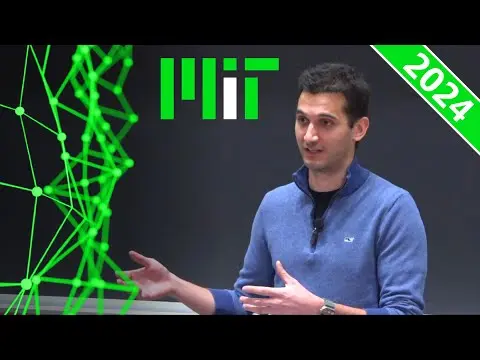
Hello everyone! I hope you enjoyed Alexander's first lecture. I'm Ava and in this second lecture, Lecture 2, we're going to focus on this question of sequence modeling -- how we can build neural networks that can handle and learn from sequential data. So in Alexander's first lecture he introduced the essentials of neural networks starting... Read More
Key Insights
- 🍵 RNNs are neural networks that can handle sequential data by maintaining a hidden state and updating it at each timestep.
- 🐢 Traditional RNNs have limitations, including encoding bottlenecks, slow processing, and difficulty in capturing long-term dependencies.
- 👻 Self-attention is a powerful concept that allows models to attend to important features in the input data, and it can address the limitations of traditional RNNs.
Install to Summarize YouTube Videos and Get Transcripts
Explore YouTube Video Summarizer or Get YouTube Transcript Extractor
Questions & Answers
Q: What is the difference between traditional neural networks and recurrent neural networks?
Traditional neural networks process input data without considering the sequential nature, while recurrent neural networks (RNNs) can handle sequential data by maintaining a hidden state that is updated at each timestep.
Q: What are the limitations of traditional RNNs?
Traditional RNNs have encoding bottlenecks, meaning they struggle to encode and capture all the relevant information in a long sequence. They also process data timestep by timestep, resulting in slow computation, and they have difficulty in capturing long-term dependencies.
Q: How does self-attention work in sequence modeling?
Self-attention allows the model to attend to important features in the input data by computing similarity scores between queries and keys. These scores are used to extract relevant information, or values, which reflect features that deserve high attention.
Q: How can self-attention be used to address the limitations of traditional RNNs?
Self-attention eliminates the need for recurrence and allows for continuous processing, which addresses the encoding bottleneck and enables parallel computation. It also helps in capturing long-term dependencies by attending to relevant features in the input data.
Summary & Key Takeaways
-
The lecture starts by explaining the basics of neural networks and how they can be trained for sequential data.
-
It introduces the concept of recurrence in RNNs and how they process sequential data timestep by timestep.
-
The lecture then highlights the limitations of traditional RNNs, such as encoding bottlenecks, slow processing, and difficulty in capturing long-term dependencies.
-
Finally, it explores the concept of self-attention, which allows the network to attend to important features in the input data, and how it is used in models like Transformers.
Read in Other Languages (beta)
Share This Summary 📚
Summarize YouTube Videos and Get Video Transcripts with 1-Click
Try YouTube Summary with ChatGPT & Claude or YouTube Transcript Generator
Explore More Summaries from Alexander Amini 📚





Summarize YouTube Videos and Get Video Transcripts with 1-Click
Try YouTube Summary with ChatGPT & Claude or YouTube Transcript Generator