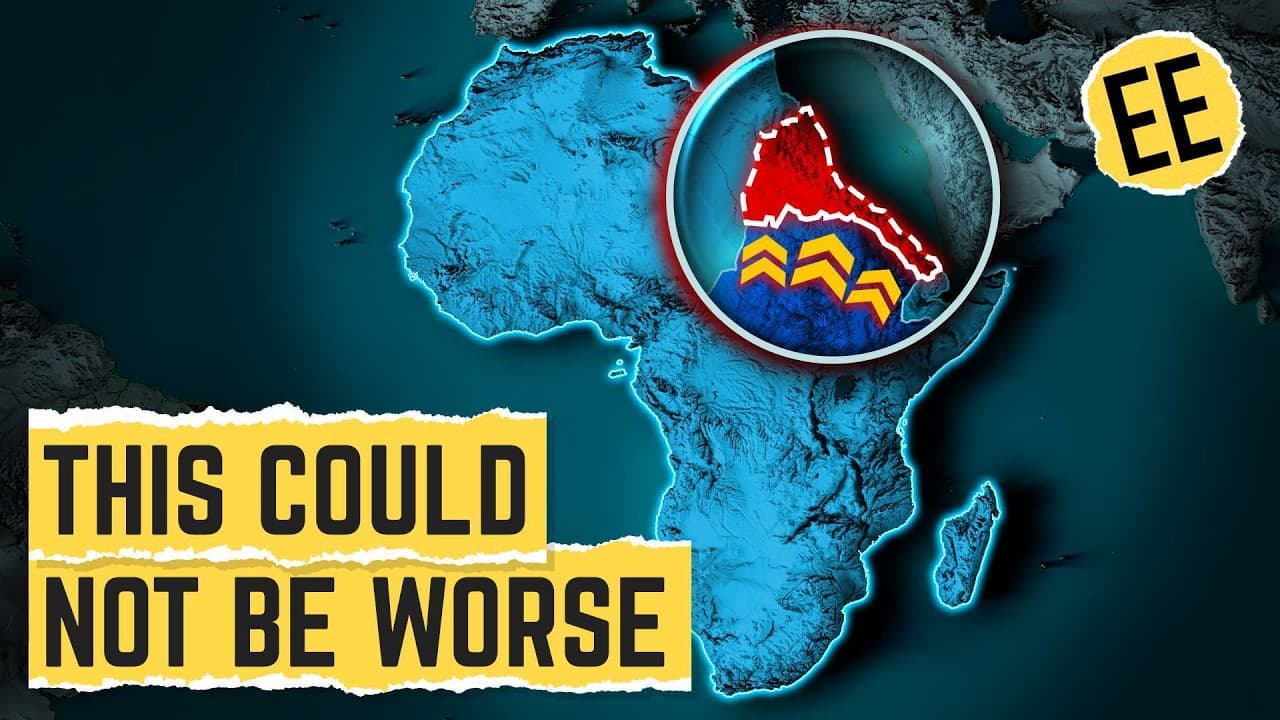
Why Eritrea Might Be The Worst Economy In The World
TL;DR
Eritrea's economy is severely mismanaged under a totalitarian regime.
Transcript
This is Eritrea, a small nation on the horn of Africa that unfortunately most of the world is only learning about for the first time because of an ongoing conflict with its neighbour Ethiopia, which is threatening to spill out over into one of the most geopolitically consequential regions in the world. Eritrea sits at the entrance to the Red Sea at... Read More
Key Insights
- Eritrea is strategically located at the entrance to the Red Sea, a crucial trade route, yet its economy is among the poorest globally due to geopolitical tensions and internal mismanagement.
- The country is often compared to North Korea due to its totalitarian government, forced military service, and extreme control over its economy, with almost all industries state-owned.
- Eritrea's economic struggles stem from its historical context, including a prolonged war for independence from Ethiopia and poorly drawn colonial borders that ignored ethnic divisions.
- The Eritrean government mandates conscription, using military personnel for labor in state-owned industries, which stifles private sector growth and economic diversification.
- Despite having natural resources, Eritrea suffers from the 'resource curse,' with government projects funded by loans that are not effectively repaid, leading to a high debt-to-GDP ratio.
- Eritrea's command economy lacks the flexibility and efficiency of free markets, resulting in poor economic output and living conditions comparable to the world's least developed countries.
- A unique policy requires Eritreans abroad to pay a 2% tax on their income, aimed at mitigating brain drain but largely ineffective due to widespread emigration and lack of international cooperation.
- The country's dire situation is exacerbated by a lack of press freedom and transparency, making it difficult to obtain accurate economic data and hindering potential international assistance.
Install to Summarize YouTube Videos and Get Transcripts
Explore YouTube Video Summarizer or Get YouTube Transcript Extractor
Questions & Answers
Q: Why is Eritrea's location strategically important?
Eritrea is located at the entrance to the Red Sea, a vital bottleneck to the Suez Canal, linking Europe and Asia. This position makes it crucial for global trade, particularly for the shipping of goods and oil from the Persian Gulf. Despite this strategic importance, Eritrea's economy remains underdeveloped due to geopolitical tensions and internal mismanagement.
Q: How does Eritrea's government control affect its economy?
Eritrea's government exerts extreme control over its economy, with almost all industries being state-owned and run by military personnel. This command economy approach stifles private sector growth and innovation, leading to misalignment between supply and demand. The heavy-handed governance is likened to North Korea, with forced military service and limited economic freedom for citizens.
Q: What historical factors have influenced Eritrea's current economic situation?
Eritrea's economic challenges are rooted in its history, including a 30-year war for independence from Ethiopia and poorly drawn borders by colonial powers that ignored ethnic divisions. These factors have left the country with a fragile political and economic foundation, further hindered by a government formed from a separatist group ill-equipped for peaceful governance.
Q: What is the impact of Eritrea's conscription policy on its economy?
Eritrea mandates military service for men and women over 18, often extending beyond the official 18 months. Conscripts are used for labor in state-run industries, such as mining and construction, for little or no pay. This policy limits workforce availability for the private sector and contributes to economic inefficiency and stagnation.
Q: Why is Eritrea's debt-to-GDP ratio so high?
Eritrea has a high debt-to-GDP ratio due to loans taken to fund government projects, often repaid through the export of precious metals mined by conscripts. These projects are mismanaged, and the loans are rarely repaid effectively, leading to financial instability. The debt is primarily from nation-state investors seeking regional influence rather than financial returns.
Q: How does Eritrea's command economy compare to free-market economies?
Eritrea's command economy suffers from inefficiencies due to centralized decision-making, unlike free-market economies where individual choices drive supply and demand. This system lacks the flexibility and responsiveness of market economies, resulting in poor economic output and living conditions. The centralized control also creates a single point of failure, risking widespread economic collapse from policy errors.
Q: What is the purpose of Eritrea's expatriate tax, and is it effective?
Eritrea imposes a 2% tax on citizens living abroad to mitigate brain drain and generate revenue. However, this policy is largely ineffective due to widespread emigration and the country's lack of international tax treaties. Many Eritreans abroad do not intend to return, diminishing the tax's potential impact on the economy.
Q: What challenges does Eritrea face in improving its economy?
Eritrea faces numerous challenges, including a lack of press freedom and transparency, which hinders accurate economic data collection and international assistance. The command economy limits private sector growth, and the high debt burden restricts financial flexibility. Additionally, the government's focus on control over development further exacerbates economic stagnation and poor living conditions.
Summary & Key Takeaways
-
Eritrea's economy is severely constrained by its totalitarian regime, with state control over industries and mandated military service stifling growth. Despite its strategic location, the economy remains one of the poorest globally.
-
Historical factors, including a long war for independence and colonial-era border issues, have contributed to Eritrea's current economic challenges. The government's command economy approach further limits economic potential and development.
-
With a high debt-to-GDP ratio and poor living conditions, Eritrea's situation is worsened by ineffective policies like the expatriate tax and a lack of transparency. The country faces significant obstacles in achieving economic stability and growth.
Read in Other Languages (beta)
Share This Summary 📚
Summarize YouTube Videos and Get Video Transcripts with 1-Click
Try YouTube Summary with ChatGPT & Claude or YouTube Transcript Generator
Explore More Summaries from Economics Explained 📚
Summarize YouTube Videos and Get Video Transcripts with 1-Click
Try YouTube Summary with ChatGPT & Claude or YouTube Transcript Generator