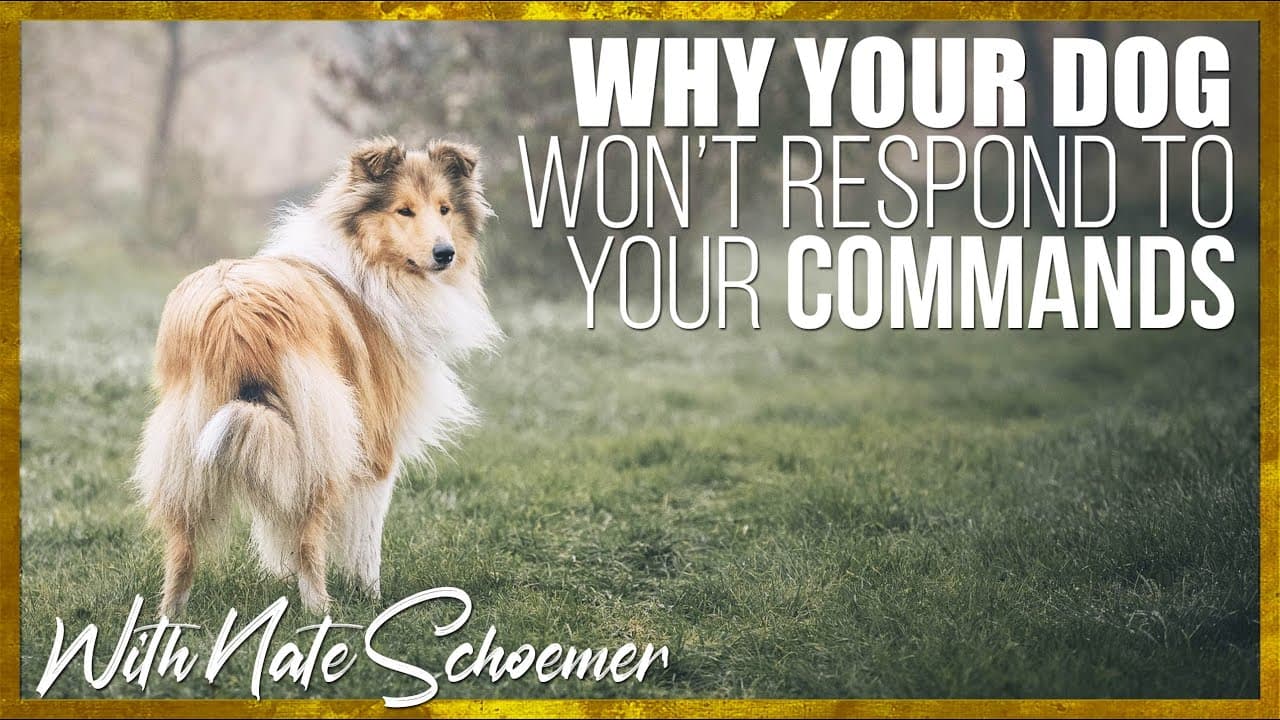
Why Your Dog Doesn't Respond to Your Commands.
TL;DR
Teach commands by giving verbal cues before physical ones.
Transcript
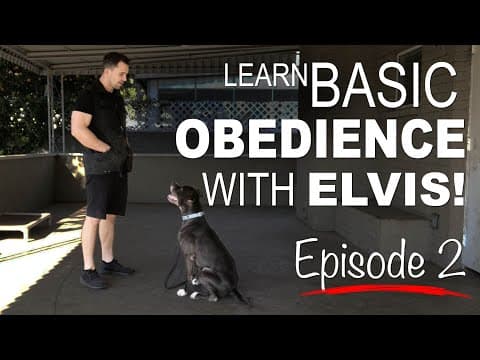
welcome back to another episode today we are going to start introducing the verbal command to our dogs now if you've been following my channel you've seen this in a few of the other ones and it's something i talk about a lot and it's known as pairing or also known as overshadowing this is the most common mistake that most people make when they star... Read More
Key Insights
- Pairing verbal commands with physical cues simultaneously can lead to overshadowing, where the dog focuses on the physical cue over the verbal command.
- For effective training, always give the verbal command before the physical cue to ensure the dog associates the action with the command.
- Breaking down training into steps like command, motivate, mark, and reward can enhance the learning process for dogs.
- Using markers such as 'yes' or 'free' can help pinpoint the completion of a behavior, making it clear when the dog has performed correctly.
- Leash pressure should be used as a cue, not as a forceful method, to guide the dog into the desired position.
- Varying commands and making training sessions fun can prevent monotony and keep the dog engaged and motivated.
- Dogs can learn to respond to verbal commands without physical cues if trained correctly, demonstrating true understanding of the command.
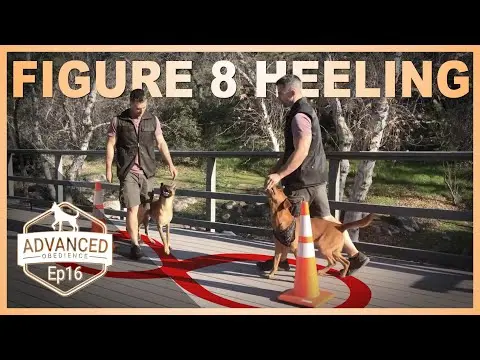
- Incorporating fun elements like cones or different environments can enhance a dog's awareness and responsiveness during training.
Install to Summarize YouTube Videos and Get Transcripts
Explore YouTube Video Summarizer or Get YouTube Transcript Extractor
Questions & Answers
Q: Why is it important to give the verbal command before the physical cue?
Giving the verbal command before the physical cue is crucial because it prevents overshadowing. When both cues are given simultaneously, dogs tend to focus on the more noticeable physical cue, ignoring the verbal command. By giving the verbal command first, dogs learn to associate the action with the verbal cue, ensuring they respond correctly to verbal commands alone.
Q: What is the process of command, motivate, mark, and reward?
The process of command, motivate, mark, and reward is a structured approach to dog training. First, the command is given verbally, followed by the motivation through a physical cue. Once the dog performs the desired action, a marker like 'yes' is used to indicate success, and then the dog is rewarded. This sequence helps dogs understand and learn commands more effectively.
Q: How does using markers help in dog training?
Markers help in dog training by clearly indicating when a dog has successfully completed a behavior. Words like 'yes' or 'free' are used as markers to pinpoint the exact moment of success, reinforcing the desired behavior. This clarity helps dogs understand which actions are correct, facilitating faster learning and stronger command association.
Q: What role does leash pressure play in training?
Leash pressure plays a role as a cue rather than a forceful method in training. It guides the dog into the desired position without applying force. This technique helps communicate with the dog effectively, teaching them to respond to gentle cues rather than relying on physical force, which strengthens the training relationship.
Q: Why is it important to vary commands and make training fun?
Varying commands and making training fun is important to prevent monotony and keep the dog engaged. Repetitive training can become boring for dogs, reducing their motivation to learn. By incorporating different commands and fun activities, trainers can maintain a dog's interest, leading to more effective and enjoyable training sessions.
Q: How can you test if a dog has learned a verbal command without physical cues?
To test if a dog has learned a verbal command without physical cues, place the dog in a position where they cannot see the trainer's movements, like on a climb platform. Give the verbal command without any physical gesture. If the dog performs the action correctly, it indicates that they have associated the verbal command with the behavior independently of physical cues.
Q: What is the significance of using the 'free' marker during training?
The 'free' marker is significant during training as it serves as a terminal marker, indicating the end of a command sequence and the release of the dog from the task. It signals to the dog that they have completed the desired behavior and can expect a reward, reinforcing the correct action and providing clarity in training.
Q: How does incorporating cones or different environments enhance training?
Incorporating cones or different environments enhances training by increasing a dog's awareness and responsiveness. These elements introduce new challenges and stimuli, encouraging the dog to focus and adapt to different situations. This variety not only makes training more engaging but also helps dogs generalize commands across diverse settings, improving their overall obedience and adaptability.
Summary & Key Takeaways
-
The video emphasizes the importance of giving verbal commands before physical cues to prevent overshadowing, where dogs focus more on physical cues. This method ensures that dogs learn to associate actions with verbal commands effectively.
-
Training should be broken down into steps: command, motivate, mark, and reward. This structured approach helps dogs learn more efficiently and ensures that they understand the sequence of actions required for each command.
-
Using markers like 'yes' or 'free' can help reinforce the desired behavior by clearly indicating when the dog has completed the action correctly. This technique, along with varied and fun training sessions, keeps dogs engaged and responsive.
Read in Other Languages (beta)
Share This Summary 📚
Summarize YouTube Videos and Get Video Transcripts with 1-Click
Try YouTube Summary with ChatGPT & Claude or YouTube Transcript Generator
Explore More Summaries from Nate Schoemer 📚

Summarize YouTube Videos and Get Video Transcripts with 1-Click
Try YouTube Summary with ChatGPT & Claude or YouTube Transcript Generator