How Is Vietnam Transforming Its Manufacturing Sector?
TL;DR
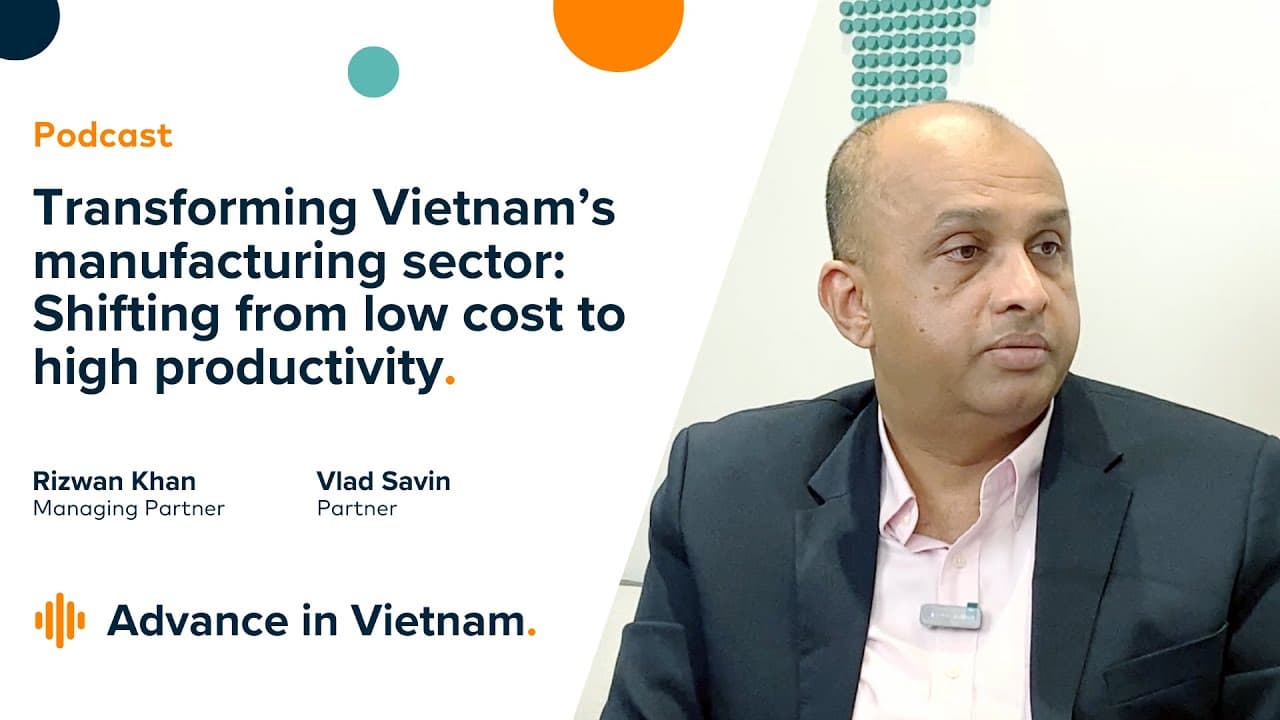
Vietnam is shifting its manufacturing sector from low-cost to high-productivity by embracing smart manufacturing and Industry 4.0. As it adapts to new economic realities, the country benefits from a stable business environment, competitive labor costs, and various free trade agreements, positioning itself favorably for foreign investment and growth in high-tech industries.
Transcript
hello and welcome to climbs podcast series advancing Vietnam with me Vlad Savin as your host in this episode I'm discussing with ranam management partner of a CL Vietnam about the manufacturing potential for foreign investors in country looking at the digital transformation scope and uh development for companies active in Vietnam and as well lookin... Read More
Key Insights
- Vietnam's manufacturing sector is critical to its economy, contributing around 25% to the GDP, with expectations to grow, particularly in high-tech industries.
- The country offers a robust supply chain, competitive labor costs, and government initiatives supporting smart manufacturing and Industry 4.0.
- Challenges in 2023 included high inventory levels and transportation costs, but 2024 looks promising with potential growth driven by supply chain shifts and new investments.
- The China plus one strategy positions Vietnam as a favorable alternative, attracting companies seeking risk management and diversification.
- Differences between industrial parks and export processing zones impact market entry decisions, with each offering unique benefits for domestic sales and exports.
- Free trade agreements like the EU-Vietnam FTA enhance Vietnam's export potential, though some businesses remain unaware of these opportunities.
- Vietnam offers tax incentives for manufacturing, with additional benefits for high-tech industries and disadvantaged areas, making it attractive for foreign investors.
- Digital transformation is gradually impacting manufacturing, with IoT and real-time reporting being implemented to improve efficiency and sustainability.
Install to Summarize YouTube Videos and Get Transcripts
Explore YouTube Video Summarizer or Get YouTube Transcript Extractor
Questions & Answers
Q: What are the main factors contributing to Vietnam's manufacturing sector's growth?
Vietnam's manufacturing sector growth is driven by a robust supply chain, competitive labor costs, and government initiatives supporting smart manufacturing and Industry 4.0. The sector contributes around 25% to the GDP, with expectations to grow, particularly in high-tech industries. The China plus one strategy also positions Vietnam as a favorable alternative for companies seeking diversification.
Q: How did the manufacturing sector fare in 2023, and what are the expectations for 2024?
In 2023, Vietnam's manufacturing sector faced challenges due to high inventory levels and transportation costs. However, 2024 looks promising with potential growth driven by supply chain shifts and new investments. The sector is expected to grow by around 10%, supported by the China plus one strategy and new companies entering Vietnam.
Q: What are the differences between industrial parks and export processing zones in Vietnam?
Industrial parks and export processing zones offer unique benefits for businesses. Export processing zones are ideal for export-only businesses, offering better infrastructure and strategic locations. Industrial parks allow for domestic sales and offer certain benefits like tax incentives. Companies in export processing zones benefit from not paying import tariffs, making them favorable for export-oriented producers.
Q: How do free trade agreements impact Vietnam's manufacturing sector?
Free trade agreements like the EU-Vietnam FTA enhance Vietnam's export potential, allowing manufacturers to export to European Union countries with reduced tariffs. These agreements can lead to a significant increase in trade, particularly in the manufacturing sector. However, awareness of these opportunities varies among businesses, affecting their ability to leverage these benefits.
Q: What tax incentives are available for manufacturing companies in Vietnam?
Vietnam offers tax incentives for manufacturing companies, including up to two years of 0% corporate income tax and additional years of reduced tax liability. Companies in disadvantaged areas or high-tech industries may receive further benefits, potentially leading to 18 years of reduced or fixed tax rates. These incentives make Vietnam attractive for foreign investors.
Q: How is digital transformation impacting Vietnam's manufacturing sector?
Digital transformation is gradually impacting Vietnam's manufacturing sector, with technologies like IoT and real-time reporting being implemented to improve efficiency and sustainability. However, adoption is hindered by the low labor cost and the small percentage of high-value-added manufacturing. As labor costs and skills improve, manufacturers will have more incentives to adopt smart technologies.
Q: What operational challenges do investors face in Vietnam's manufacturing sector?
Investors in Vietnam's manufacturing sector face challenges related to infrastructure, such as proximity to ports and availability of utilities. Managing the workforce can also be challenging due to location and skill set variations. Strong HR practices, training, and incentives can help improve productivity and address these challenges effectively.
Q: What areas need improvement for Vietnam to attract more manufacturing investments?
Vietnam needs to improve the skill set of its labor force to attract high-tech manufacturing investments. The government is working on enhancing intellectual property rights protection and the Innovation index. Additionally, infrastructure development and consistent government policies are crucial to creating a conducive environment for foreign investors.
Summary & Key Takeaways
-
Vietnam's manufacturing sector is a significant part of its economy, with the government aiming to boost high-tech industries. Despite challenges in 2023, the sector shows promise for 2024, driven by supply chain shifts and new investments.
-
The China plus one strategy positions Vietnam as a favorable alternative for companies seeking diversification. Differences between industrial parks and export processing zones affect market entry decisions, with unique benefits for domestic and export-focused businesses.
-
Free trade agreements enhance Vietnam's export potential, though awareness varies among businesses. Tax incentives for manufacturing, particularly in high-tech industries, make Vietnam attractive for foreign investors. Digital transformation is improving efficiency and sustainability.
Read in Other Languages (beta)
Share This Summary 📚
Summarize YouTube Videos and Get Video Transcripts with 1-Click
Try YouTube Summary with ChatGPT & Claude or YouTube Transcript Generator
Explore More Summaries from Acclime Vietnam 📚




Summarize YouTube Videos and Get Video Transcripts with 1-Click
Try YouTube Summary with ChatGPT & Claude or YouTube Transcript Generator