What Are Game Dynamics and Why Are They Important?

TL;DR
Game dynamics are essential for influencing behavior and constructing a new 'game layer' on society that enhances engagement. Key dynamics include the appointment dynamic, which mandates actions at set times, the progression dynamic that tracks progress towards goals, influence and status that motivate through comparison, and communal discovery that leverages networks to achieve objectives. Understanding these can shape our future interactions positively.
Transcript
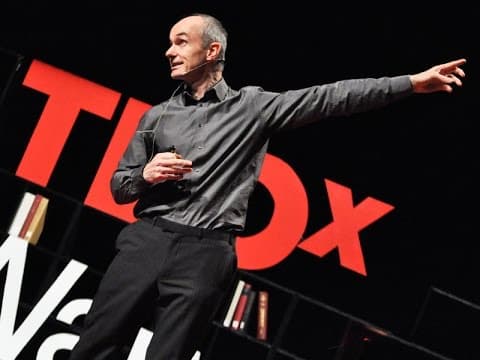
My name's Seth Priebatsch. I'm the chief ninja of SCVNGR. I'm a proud Princeton dropout. Also proud to have relocated here to Boston, where I actually grew up. (Applause) Yeah, Boston. Easy wins, I should just name the counties that we've got around here. I'm also fairly determined to try and build a game layer on top of the world. This is sort of ... Read More
Key Insights
- 💡 The game layer, which is the framework for influencing behavior, is currently under construction and has the potential to be more important than the social layer.
Install to Summarize YouTube Videos and Get Transcripts
Explore YouTube Video Summarizer or Get YouTube Transcript Extractor
Questions & Answers
Q: What does Seth Priebatsch mean by building a "game layer" on top of the world?
By building a "game layer," Seth Priebatsch means creating a framework that uses game dynamics to influence behavior and motivate individuals to achieve certain goals or engage in certain actions. Similar to how social media platforms like Facebook have built a framework for connections, Priebatsch believes that the next decade will be about constructing a framework using game dynamics.
Q: How does the appointment dynamic work, and what are some examples?
The appointment dynamic requires players to do specific tasks at designated times and places. For example, "happy hour" promotions at bars, where customers are encouraged to show up at specific times to get discounted drinks, utilize the appointment dynamic. In gaming, popular games like Farmville require players to return at certain times to care for their virtual crops or animals. In the real world, a company called Vitality has used the appointment dynamic to remind people to take their medicine on time using flashing reminders and email notifications.
Q: How does the influence and status dynamic influence behavior?
Influence and status dynamics tap into the human desire for recognition and superiority. In the real world, credit card companies use the status symbol of having a black card to attract customers who want to be perceived as exclusive or elite. In gaming, titles, badges, or levels can create a sense of achievement and superiority, motivating players to strive for higher levels. This dynamic can be consciously used to incentivize positive behavior or drive engagement.
Q: What is the progression dynamic, and how is it used in the real world and gaming?
The progression dynamic involves allowing individuals to make progress and move through different steps in a granular fashion. In the real world, platforms like LinkedIn use progression bars to encourage users to complete their profiles fully. In gaming, popular games like "World of Warcraft" allow players to level up by completing quests and gaining experience points. Incentivizing small, achievable steps can motivate individuals to continue engaging with a task or activity.
Q: How does communal discovery work, and what are some examples?
Communal discovery involves using the collective knowledge and participation of a group to solve problems or achieve goals. Websites like Digg use communal discovery to find and share interesting news stories, allowing users to recommend and vote for their favorite content. In the real world, McDonald's Monopoly game creates a community of people working together to find winning game pieces. Communal discovery can also be scaled up, as shown by the DARPA balloon challenge, where a network of people collaborated to locate hidden balloons across the United States.
Summary & Key Takeaways
-
The speaker, Seth Priebatsch, talks about the need to build a game layer on top of the world.
-
The current game layer is poorly designed and not fun.
-
He explains the importance of game dynamics and discusses four essential game dynamics: appointment dynamic, influence and status, progression dynamic, and communal discovery.
Read in Other Languages (beta)
Share This Summary 📚
Summarize YouTube Videos and Get Video Transcripts with 1-Click
Try YouTube Summary with ChatGPT & Claude or YouTube Transcript Generator
Explore More Summaries from TED 📚





Summarize YouTube Videos and Get Video Transcripts with 1-Click
Try YouTube Summary with ChatGPT & Claude or YouTube Transcript Generator