How Does Architecture Promote Community in Ethiopia and Tunisia?
TL;DR
Architecture can enhance community life by integrating local culture and natural conditions into design. In Ethiopia, a multistory building prioritizes open-air markets and energy efficiency, while a housing project in Tunisia incorporates traditional patterns and communal spaces, fostering connections among residents. Both projects show that sustainable architecture can positively impact rapidly growing communities.
Transcript
My work focuses on the connection of both thinking about our community life being part of the environment where architecture grows from the natural local conditions and traditions. Today I brought two recent projects as an example of this. Both projects are in emerging countries, one in Ethiopia and another one in Tunisia. And also they have in com... Read More
Key Insights
- 🏢 The design of a multistory shopping mall in Addis Ababa, Ethiopia is based on principles of sustainability, local culture, and public space, challenging traditional mall designs.
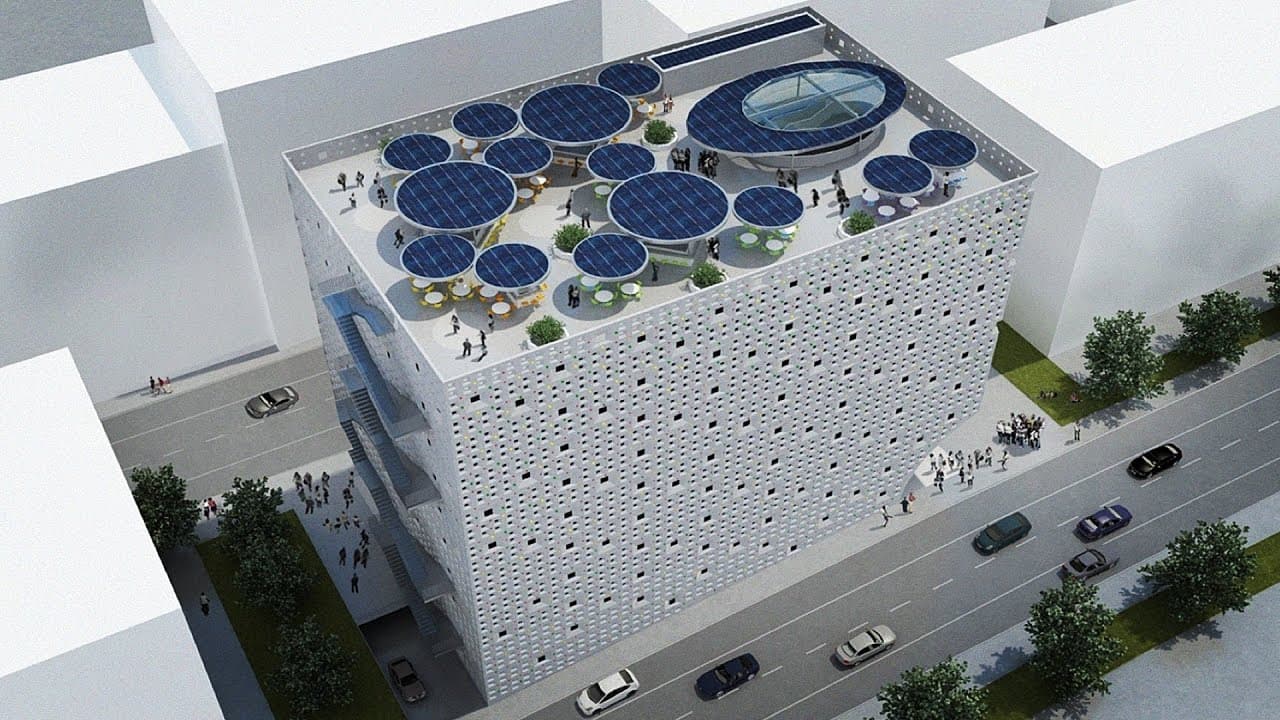
- 🏙️ The design incorporates an inclined atrium to create an open-air space protected from the sun and rain, and utilizes the concept of a market with small shops that change on each floor.
- 🌍 The façade design is inspired by Ethiopian women's dresses, featuring concrete with perforations that allow filtered air and light, reducing the need for air conditioning and making the building more energy-efficient.
- 💡 The design of the shopping mall was initially met with resistance from developers who wanted a traditional mall, but the concept of a market turned out to be more profitable due to increased shop space and lower construction costs.
- 🌞 The building is being made self-sufficient in terms of energy by incorporating photovoltaics on the roof, providing electricity in a city with frequent power cuts, and creating a new public space with gathering areas and bars.
- 🏘️ In the master plan for 2,000 apartments in Tunis, the design incorporates features inspired by the medina, including extended streets, connecting gates, and courtyards, blending European and Arab design elements.
- 🌬️ The orientation of the apartments prioritizes natural ventilation and thermal difference, with most apartments facing north-south in order to maximize comfort in the Mediterranean climate.
- 👥 The design emphasizes community spaces, with facilities such as gyms and kindergartens in the courtyards, commercial spaces on the ground floor, and a communal roof space for socializing and activities.
Install to Summarize YouTube Videos and Get Transcripts
Explore YouTube Video Summarizer or Get YouTube Transcript Extractor
Questions & Answers
Q: What were the initial challenges faced when designing the multistory shopping mall in Addis Ababa, Ethiopia?
The initial challenges faced when designing the multistory shopping mall in Addis Ababa, Ethiopia were the need to create a building that was not empty like the existing buildings in the city, the requirement for energy-intensive cooling despite the mild weather in the area, and the lack of a connection between the two parallel streets where the site was located.
Q: How did the architect incorporate the idea of a market into the design of the shopping mall?
The architect incorporated the idea of a market into the design of the shopping mall by creating a connection between the two parallel streets and designing an inclined atrium that acts as an open-air space within the building. Small shops were placed around this void, changing on each floor to utilize the shape of the void and create a market-like atmosphere.
Q: How did the architect address the local climate conditions in the design of the shopping mall's facade?
The architect addressed the local climate conditions by designing a concrete shell facade with perforations inspired by the fractal geometry properties found in Ethiopian women's dresses. These perforations allow air and light to enter the building in a controlled way. Colored glasses were also incorporated to use the internal light to illuminate the building at night.
Q: How did the architect make the shopping mall more cost-effective compared to traditional glass-clad buildings?
The architect made the shopping mall more cost-effective by using a concrete shell facade instead of glass, which was not only cheaper in terms of materials but also eliminated the need for air conditioning. The budget savings from these design choices were used to implement other aspects of the project, such as making the building self-sufficient in terms of energy through the use of photovoltaics on the roof.
Q: What was the design concept behind the master plan for the 2,000 apartments and facilities in Tunis, Tunisia?
The design concept behind the master plan for the 2,000 apartments and facilities in Tunis, Tunisia was to combine elements of European city blocks with the Arab city concept. The streets were extended to create blocks with courtyards, reminiscent of European cities, and strategic points were connected in a pattern inspired by the gates of the medina. The apartments were oriented north-south to maximize natural ventilation, and the overall design followed local regulations for density.
Summary & Key Takeaways
-
The speaker's work focuses on connecting community life and natural local conditions in architecture projects.
-
They give two examples of their work, one in Ethiopia and one in Tunisia, which prioritize sustainability and local culture.
-
The speaker emphasizes the importance of affordable, environmentally-conscious architecture in rapidly growing cities.
Read in Other Languages (beta)
Share This Summary 📚
Summarize YouTube Videos and Get Video Transcripts with 1-Click
Try YouTube Summary with ChatGPT & Claude or YouTube Transcript Generator
Explore More Summaries from TED 📚




Summarize YouTube Videos and Get Video Transcripts with 1-Click
Try YouTube Summary with ChatGPT & Claude or YouTube Transcript Generator