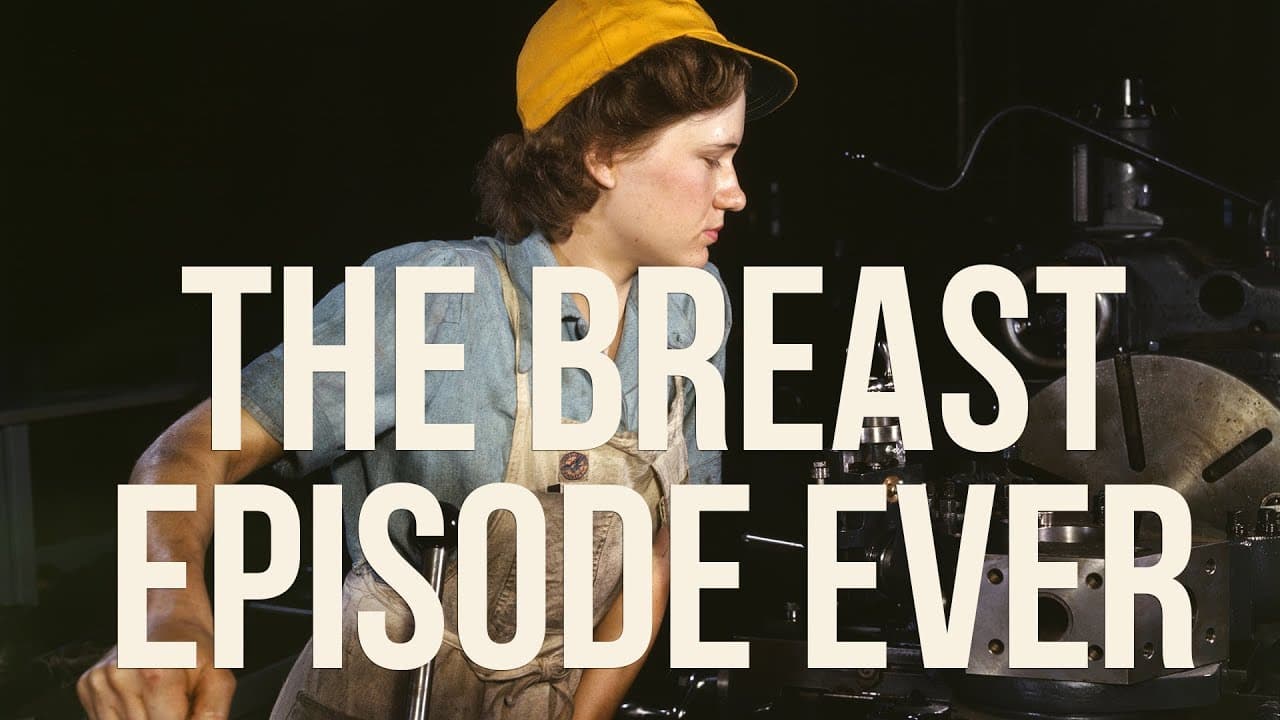
The Breast Episode Ever
TL;DR
Breastfeeding is biologically essential for infants, but cultural practices and societal structures have influenced its perception and duration.
Transcript
So today we're sitting with Robert Martin and we're going to talk about Chapter 6 in his book, titled "How We Do It." And Chapter 6 is all about feeding babies and breastfeeding. It's great. A good way to determine a biological anthropologist versus a cultural anthropologist is that... you can tell us why we breastfeed, and you can tell us the biol... Read More
Key Insights
- 👩🍼 Breastfeeding is a biological imperative rooted in evolutionary history, allowing babies to feed on demand.
- 📅 Societal changes, influenced by the Industrial Revolution, introduced non-demand breastfeeding practices and schedules.
- ❓ Breastfeeding for around 3 years aligns with primate behavior and offers optimal nutrition for infants.
- 🍼 The composition of human breast milk differs from cow's milk, making alternatives like horse milk more suitable.
- 💦 Balancing work and breastfeeding requires recognizing the importance of mother-infant contact and providing appropriate alternatives.
- 🍃 Optimal conditions for mothers involve societal support, including mandatory maternity leave and stress reduction.
- 🫡 Society must invest in the well-being of the next generation by understanding and respecting biological needs.
Install to Summarize YouTube Videos and Get Transcripts
Explore YouTube Video Summarizer or Get YouTube Transcript Extractor
Questions & Answers
Q: What distinguishes a biological anthropologist from a cultural anthropologist when studying breastfeeding?
A biological anthropologist delves into the evolutionary reasons behind breastfeeding, while a cultural anthropologist focuses on social behaviors and taboos associated with breastfeeding beyond a certain age.
Q: Why are breastfeeding schedules and separate bedrooms for infants contrary to our biology?
Throughout primate evolution, babies have fed on demand as they are carried by their mothers. Imposing rigid schedules and physical separation are at odds with our biological inclination.
Q: Why do humans stop breastfeeding around 6 months to a year, even though biologically, we could breastfeed for much longer?
Taking body size and archaeological evidence into account, breastfeeding for at least 3 years aligns with natural behavior. Exclusive breastfeeding usually lasts 6 months to a year.
Q: Why do humans drink cow's milk instead of milk from animals with closer similarities, such as horses?
The consumption of cow's milk is a result of domestication and convenience. However, horse milk is more akin to human milk, containing the right fats for brain growth.
Summary & Key Takeaways
-
Biological anthropologists explain the biological imperatives behind breastfeeding, while cultural anthropologists study the social taboo against breastfeeding beyond a certain age.
-
Historical influences, particularly during the Industrial Revolution, led to the promotion of scheduled and non-demand breastfeeding, contradicting our evolutionary biology.
-
Breastfeeding duration, ideally around three years, aligns with primate behavior and archaeological evidence, considering the stage of development and size of human infants.
Read in Other Languages (beta)
Share This Summary 📚
Summarize YouTube Videos and Get Video Transcripts with 1-Click
Try YouTube Summary with ChatGPT & Claude or YouTube Transcript Generator
Explore More Summaries from thebrainscoop 📚





Summarize YouTube Videos and Get Video Transcripts with 1-Click
Try YouTube Summary with ChatGPT & Claude or YouTube Transcript Generator