How to Process Anger and Manage Suppressed Rage
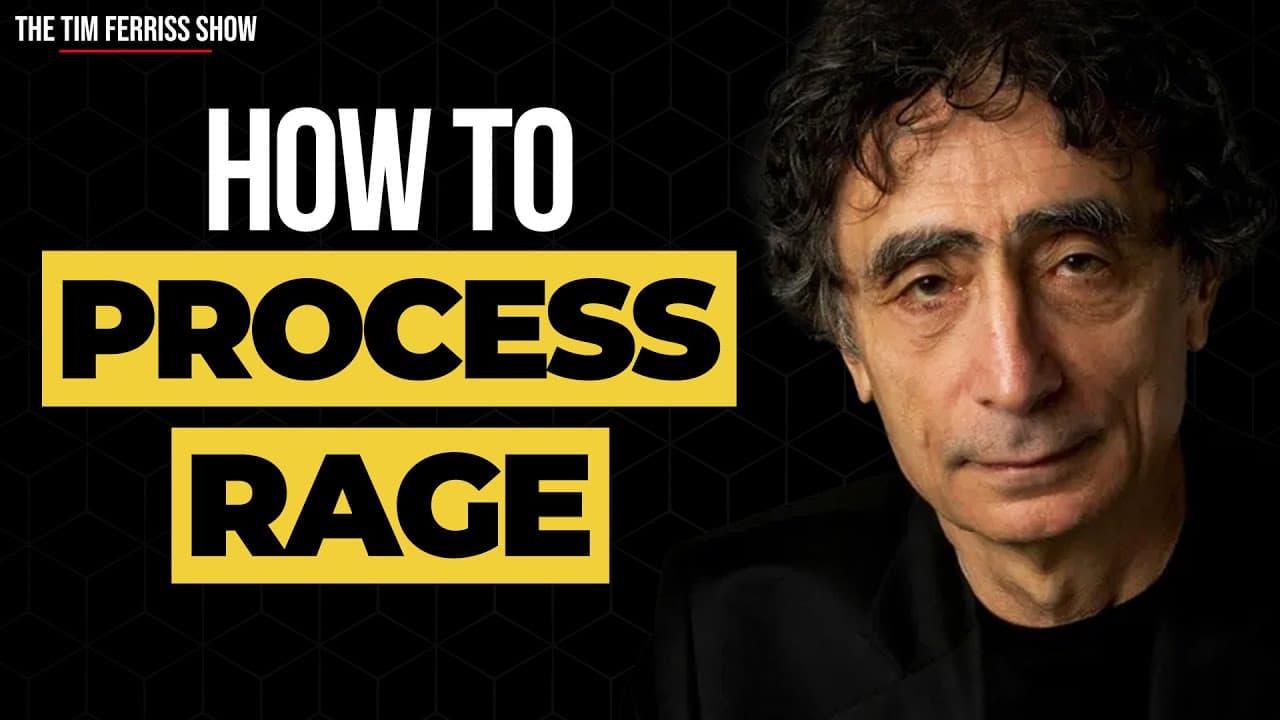
TL;DR
To process anger effectively, recognize and allow yourself to fully experience the physical sensations of rage in your body. This involves acknowledging the emotion, investigating its roots, and nurturing the suppressed feelings associated with past trauma. Unlike healthy anger, which serves to protect boundaries, suppressed rage can lead to uncontrollable outbursts, so proper processing is essential.
Transcript
let me come back to the rage for a second because i would love to get your advice or at least hear of some of your learnings over the last decades because i recall from our first conversation that you know in your 40s your successful doctor you're driven workaholic you had challenges in your marriage your kids were at least based on my notes afraid... Read More
Key Insights
- 😡 Differentiate between healthy anger and suppressed rage.
- 🥺 Childhood trauma can lead to suppressed rage in adulthood.
- 😡 Processing rage involves experiencing it fully in the body.
- 👻 Recognize, allow, investigate, and nurture suppressed emotions.
- 😡 Acting out anger physically intensifies and prolongs the rage.
- 💀 Healthy anger serves as an essential boundary defense mechanism.
- 💀 Parenting advice advocating for suppressing children's anger is unhealthy.
Install to Summarize YouTube Videos and Get Transcripts
Explore YouTube Video Summarizer or Get YouTube Transcript Extractor
Questions & Answers
Q: What distinguishes healthy anger from suppressed rage?
Healthy anger is a natural response to boundary transgressions, whereas suppressed rage stems from unexpressed childhood trauma, leading to uncontrollable outbursts triggered by past experiences.
Q: How does childhood trauma contribute to suppressed rage?
Children who experience boundary violations and are unable to express anger suppress it as a survival mechanism, leading to unresolved emotions that resurface in adulthood as uncontrollable rage.
Q: What techniques can be used to process rage effectively?
Fully experiencing rage in the body, recognizing, allowing, investigating, and nurturing the suppressed emotions are effective ways to process and manage rage without either suppressing it or acting it out.
Q: Why does expressing anger through physical means not always work in processing rage?
Simply acting out anger physically does not address the root cause of suppressed rage, as it intensifies and magnifies the emotions by recruiting more brain circuits into its service, leading to more significant outbursts.
Summary & Key Takeaways
-
Healthy anger serves as a boundary defense, protecting one's boundaries in the moment.
-
Suppressed rage, often stemming from childhood trauma, can lead to uncontrollable outbursts triggered by past experiences.
-
Processing rage involves fully experiencing it in the body, recognizing, allowing, investigating, and nurturing the suppressed emotions.
Read in Other Languages (beta)
Share This Summary 📚
Summarize YouTube Videos and Get Video Transcripts with 1-Click
Try YouTube Summary with ChatGPT & Claude or YouTube Transcript Generator
Explore More Summaries from Tim Ferriss 📚






Summarize YouTube Videos and Get Video Transcripts with 1-Click
Try YouTube Summary with ChatGPT & Claude or YouTube Transcript Generator