Which Real Estate Strategy Requires Least Effort?
TL;DR
Investing in real estate can range from highly active to mostly passive, depending on the strategy chosen. Wholesaling is entirely work-based, flipping requires both money and effort, while rental properties can be passive if managed by a property manager. Understanding the effort involved helps align investment choices with personal goals.
Transcript
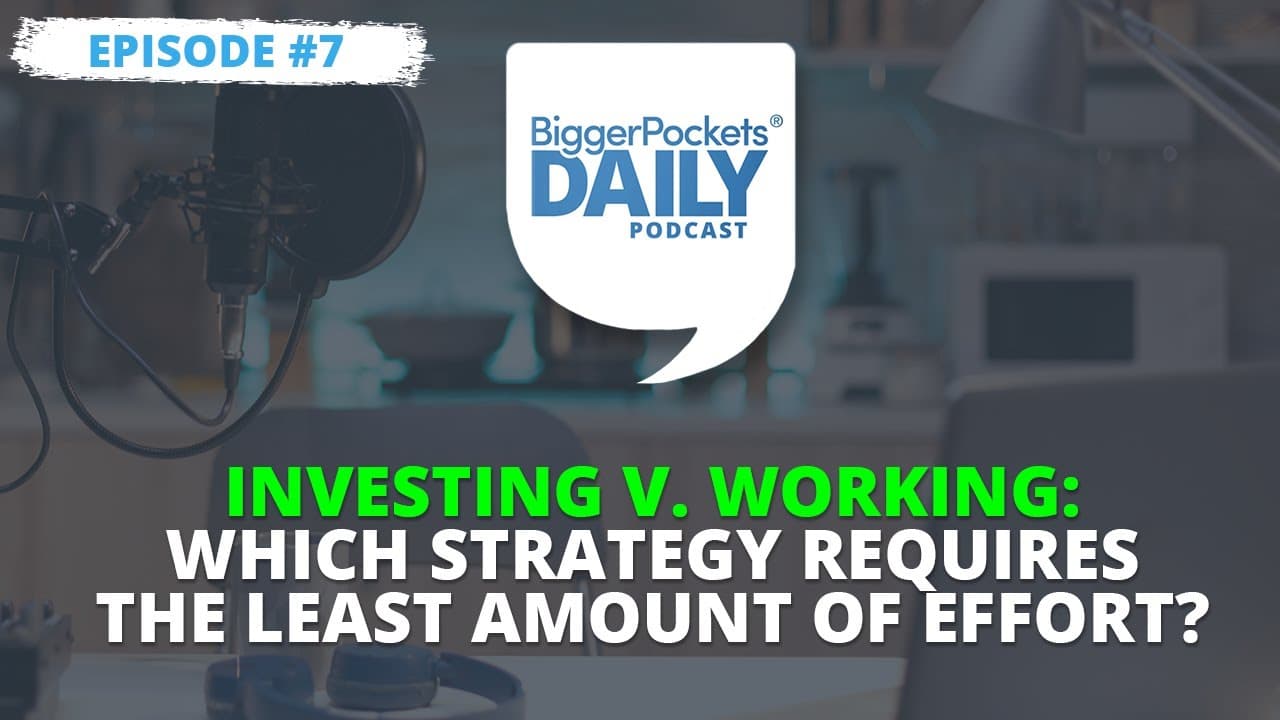
this is bigger pockets daily the audio sidekick to the bigger pockets blog i'm your host tyler and think about it this way each of these episodes is like one short chapter from a giant audio book written by the world's best and brightest real estate investors investing versus working which real estate strategy requires the least amount of effort by... Read More
Key Insights
- Real estate investing offers various strategies, each with different levels of required effort.
- Wholesaling is considered 100% work and is more akin to a job than an investment.
- Flipping properties requires both financial investment and significant effort for rehabilitation.
- Owning rental properties can provide passive income, but still requires some management effort.
- Using a property manager can minimize the workload for rental property owners.
- The IRS categorizes real estate income as either active or passive, affecting tax implications.
- Strategic outsourcing of tasks can transform active investment roles into passive income streams.
- Choosing a real estate strategy should align with personal lifestyle goals and desired effort levels.
Install to Summarize YouTube Videos and Get Transcripts
Explore YouTube Video Summarizer or Get YouTube Transcript Extractor
Questions & Answers
Q: What is the difference between investing and working in real estate?
Investing in real estate involves putting money into assets to generate returns, ideally with minimal ongoing effort. In contrast, working in real estate requires significant personal effort to achieve profits, such as through wholesaling or flipping. Understanding this distinction helps in choosing strategies that align with personal goals and desired workload.
Q: How does wholesaling differ from other real estate strategies?
Wholesaling is primarily a job that involves finding deals and selling them to other investors. Unlike other real estate strategies that can generate passive income, wholesaling requires continuous effort and engagement to earn profits. It is often used to build capital for further investments but is not considered a passive investment method.
Q: What are the benefits of using a property manager for rental properties?
Hiring a property manager can significantly reduce the workload involved in managing rental properties. They handle tasks such as finding tenants, collecting rent, and addressing maintenance issues. This allows property owners to enjoy more passive income, though it involves a management fee and requires finding a reliable manager.
Q: How is flipping a property different from buying rental properties?
Flipping involves purchasing a property, renovating it, and selling it for a profit. It requires both financial investment and significant effort. In contrast, buying rental properties focuses on generating ongoing rental income, potentially offering a more passive investment if managed well, particularly with the help of a property manager.
Q: Why is it important to understand the tax implications of real estate strategies?
Understanding tax implications is crucial because different real estate strategies are taxed differently, affecting net returns. Active income from wholesaling and flipping is taxed similarly to wages, while rental income is considered passive and benefits from favorable tax treatment. This knowledge helps investors optimize their strategies for better financial outcomes.
Q: What role does outsourcing play in real estate investing?
Outsourcing tasks in real estate investing, such as hiring contractors for flipping or property managers for rentals, can transform active roles into more passive income streams. This strategy frees up time for investors, allowing them to focus on other ventures while still generating income, aligning with lifestyle goals of minimizing direct work.
Q: How can real estate investment strategies align with personal goals?
Real estate investment strategies should be chosen based on personal lifestyle goals and the desired level of involvement. Those seeking passive income might prefer rental properties with management, while those willing to engage in active work may opt for wholesaling or flipping. Aligning strategies with goals ensures satisfaction and effective time use.
Q: What is considered passive income in real estate?
Passive income in real estate typically comes from rental properties where the owner earns income without actively managing the property daily. This can be achieved by employing a property manager to handle operations. Passive income is favored for its tax benefits and aligns with goals of earning without significant ongoing effort.
Summary & Key Takeaways
-
Real estate investing encompasses a range of strategies from wholesaling to flipping and renting. The level of effort varies, with wholesaling being entirely work-based and rental properties potentially offering passive income, especially when managed by professionals. Understanding these dynamics helps investors align their strategies with personal goals.
-
Wholesaling is often mistaken as an investment but is actually a job requiring full effort. Flipping involves both financial and labor input for profitability. Rental properties, when managed by a property manager, offer a more passive income stream, though some oversight is still needed.
-
Tax implications differ between active and passive income in real estate. Active income from wholesaling and flipping is taxed like regular employment, while rental income enjoys tax benefits. Aligning investment strategies with lifestyle goals is crucial for maximizing satisfaction and financial returns.
Read in Other Languages (beta)
Share This Summary 📚
Summarize YouTube Videos and Get Video Transcripts with 1-Click
Try YouTube Summary with ChatGPT & Claude or YouTube Transcript Generator
Explore More Summaries from BiggerPockets 📚
Summarize YouTube Videos and Get Video Transcripts with 1-Click
Try YouTube Summary with ChatGPT & Claude or YouTube Transcript Generator