How do The Persians Teach Alexander the Great and When in History Did He First Become Great?
TL;DR
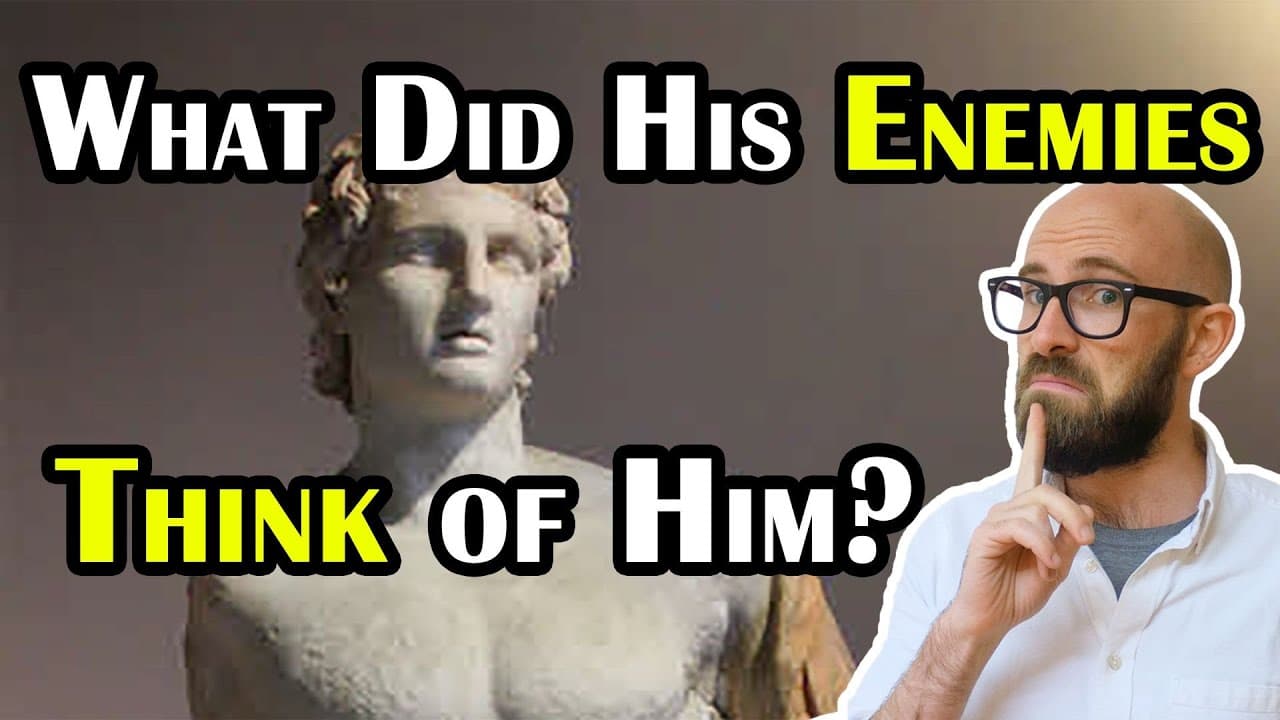
Alexander the Great's conquests and actions had a significant impact on both Greek and Persian cultures, with varying perspectives on his greatness.
Transcript
did alexander the great grow a lot of facial hair well maybe he did and if he did he would have loved to have utilized some of the products from today's awesome sponsor dollar shave club dollar shave club covers all of your grooming needs shower oral care deodorant and of course shaving that makes sense now i don't shave my beard obviously but i do... Read More
Key Insights
- 🌍 Alexander's military conquests united the Greek nations and expanded the boundaries of the known world, leaving a lasting legacy.
- 🫵 The conquered Persians viewed Alexander as a destroyer, while the Romans revered him as "Alexander the Great."
- 🌍 Alexander's conquests and the subsequent Hellenistic world spread Greek culture and merged it with local traditions.
- 🙈 The Sassanids saw themselves as the guardians of ancient knowledge destroyed by Alexander, which prompted the translation and preservation of works in the Middle East.
- ❓ Alexander's mythic status influenced later literature and legends, inspiring countless imitators who sought to mimic his achievements.
- ⌛ The perception of Alexander varied across different cultures and time periods, reflecting the complex nature of his legacy.
- 🌍 Modern Iran acknowledges Alexander's conquests but prioritizes other aspects of their history and national identity.
Install to Summarize YouTube Videos and Get Transcripts
Explore YouTube Video Summarizer or Get YouTube Transcript Extractor
Questions & Answers
Q: How did Alexander the Great establish his reputation as a formidable leader?
Alexander led his men into battle, emulating his hero Achilles, and demonstrated exceptional bravery and boldness. His soldiers loved him, and he was known for his excellent leadership skills.
Q: Why did the Persians view Alexander as a destroyer?
The Persians saw Alexander as an intruder who ravaged their ancient empire and burned sacred sites, including Persepolis. They perceived his conquest as sacrilegious and destructive.
Q: How did Alexander's conquests contribute to the formation of the Hellenistic world?
The Hellenistic world encompassed territories in the Eastern Mediterranean, including Israel and Syria. Alexander's conquests spread Greek customs, language, and ideas, merging them with local cultures.
Q: How did later empires, like the Sassanids, view Alexander?
The Sassanids saw Alexander as a villain, responsible for the destruction of their empire's valuable centers of religion and the loss of their sacred scripture. They considered his conquests to be sacrilege.
Summary & Key Takeaways
-
Alexander the Great was a legendary king who ruled from 336 to 323 BC and achieved unprecedented military conquests, uniting the Greek nations and expanding eastward.
-
The conquered Persian people viewed Alexander as a great destroyer, with his burning of Persepolis and the destruction of their religious texts seen as calamitous acts.
-
The Romans, who came after Alexander, revered him as "Alexander the Great," imitating his hairdo and admiring his military achievements and leadership.
Read in Other Languages (beta)
Share This Summary 📚
Summarize YouTube Videos and Get Video Transcripts with 1-Click
Try YouTube Summary with ChatGPT & Claude or YouTube Transcript Generator
Explore More Summaries from Today I Found Out 📚






Summarize YouTube Videos and Get Video Transcripts with 1-Click
Try YouTube Summary with ChatGPT & Claude or YouTube Transcript Generator