Cytotoxic T cells and MHC I complexes
TL;DR
The immune system uses MHC one complexes and cytotoxic T cells to identify and kill cells that produce unusual or harmful proteins.
Transcript
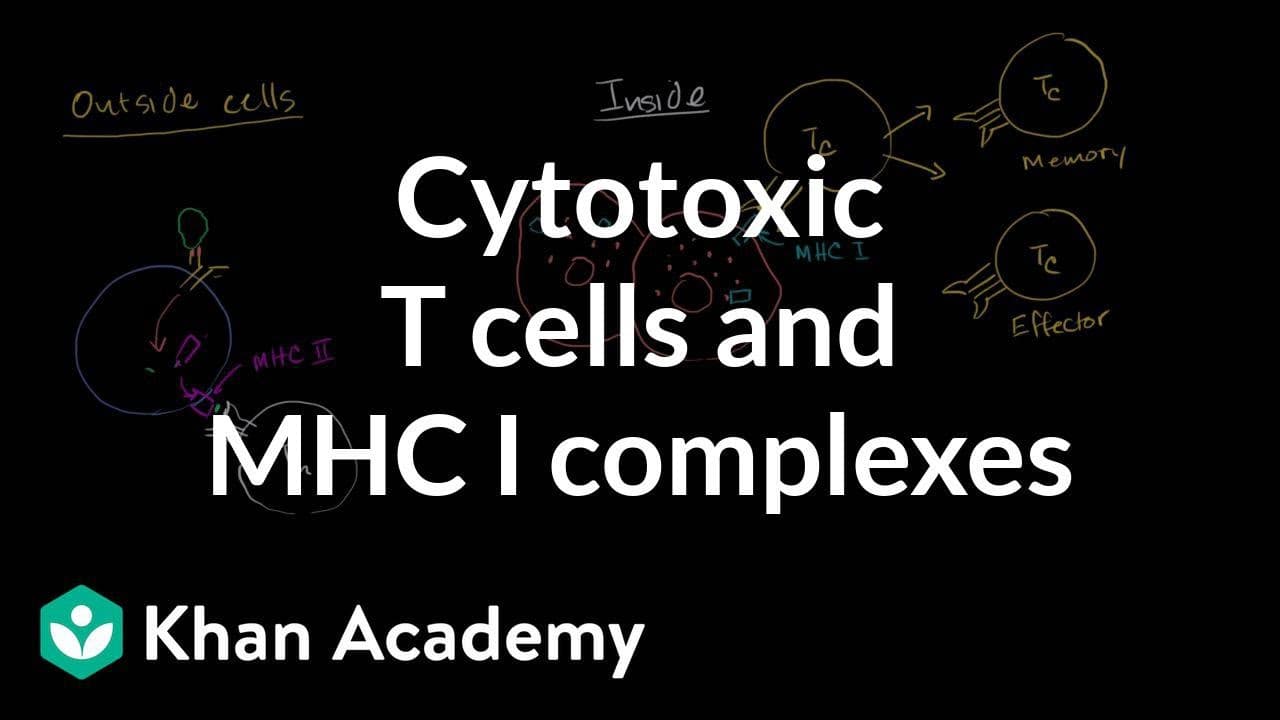
Voiceover: Everything we've discussed so far involved recognizing and tagging or engulfing shady things that were found outside of cells. We've seen things like a B cell. A B cell has its membrane bound antibodies. Maybe one of these might recognize something shady out in the outside of the cell and of course this part over here as we know they all... Read More
Key Insights
- 🎁 B cells recognize and engulf shady things outside of cells, while MHC two complexes present antigens on the cell surface.
- 🦖 Cytotoxic T cells have specific receptors that bind to antigens presented on MHC one complexes, initiating the killing process of target cells.
- 🎯 Cancer cells, virus-infected cells, and cells producing unusual proteins are targeted for destruction by the immune system.
- 😃 The recognition and destruction of shady things inside cells involve the activation and replication of immune cells like B cells and cytotoxic T cells.
- 🖐️ The immuno synapse formed between cytotoxic T cells and target cells plays a crucial role in the killing process.
- 🎁 MHC one complexes are present in all cells with a nucleus and are responsible for presenting antigens produced inside the cell.
- 🛄 The immune response aims to kill cells that produce harmful or unusual proteins, preventing further damage or spread of diseases.
Install to Summarize YouTube Videos and Get Transcripts
Explore YouTube Video Summarizer or Get YouTube Transcript Extractor
Questions & Answers
Q: How do B cells and helper T cells contribute to the immune response?
B cells recognize and engulf shady things outside of cells, presenting them on MHC two complexes. Helper T cells, with specific receptors, recognize these antigens and activate B cell replication or activation.
Q: What is the role of MHC one complexes in the immune response?
MHC one complexes bind to shady things produced inside cells and present them on the cell surface. This allows cytotoxic T cells to recognize and kill cells that produce unusual or harmful proteins.
Q: Can the immune response target cancer cells?
Yes, cancer cells with mutations produce strange proteins that are presented on MHC one complexes. Cytotoxic T cells recognize these antigens and initiate the death of cancer cells.
Q: How does the immune system respond to virus-infected cells?
Virus-infected cells present pieces of the virus on MHC one complexes. Cytotoxic T cells recognize these antigens and induce the infected cells to undergo programmed cell death.
Summary & Key Takeaways
-
Cells with mutations, such as cancer cells, produce strange proteins that are presented on MHC one complexes on the cell surface.
-
Cytotoxic T cells, with specific receptors, recognize the antigens presented on MHC one complexes and initiate the killing process.
-
The effector cytotoxic T cells form an immuno synapse with the target cell and release molecules like perforins and granzymes to induce the death of the target cell.
Read in Other Languages (beta)
Share This Summary 📚
Summarize YouTube Videos and Get Video Transcripts with 1-Click
Try YouTube Summary with ChatGPT & Claude or YouTube Transcript Generator
Explore More Summaries from Khan Academy 📚



Summarize YouTube Videos and Get Video Transcripts with 1-Click
Try YouTube Summary with ChatGPT & Claude or YouTube Transcript Generator