Wood-eating Clams: The Real Kraken?
TL;DR
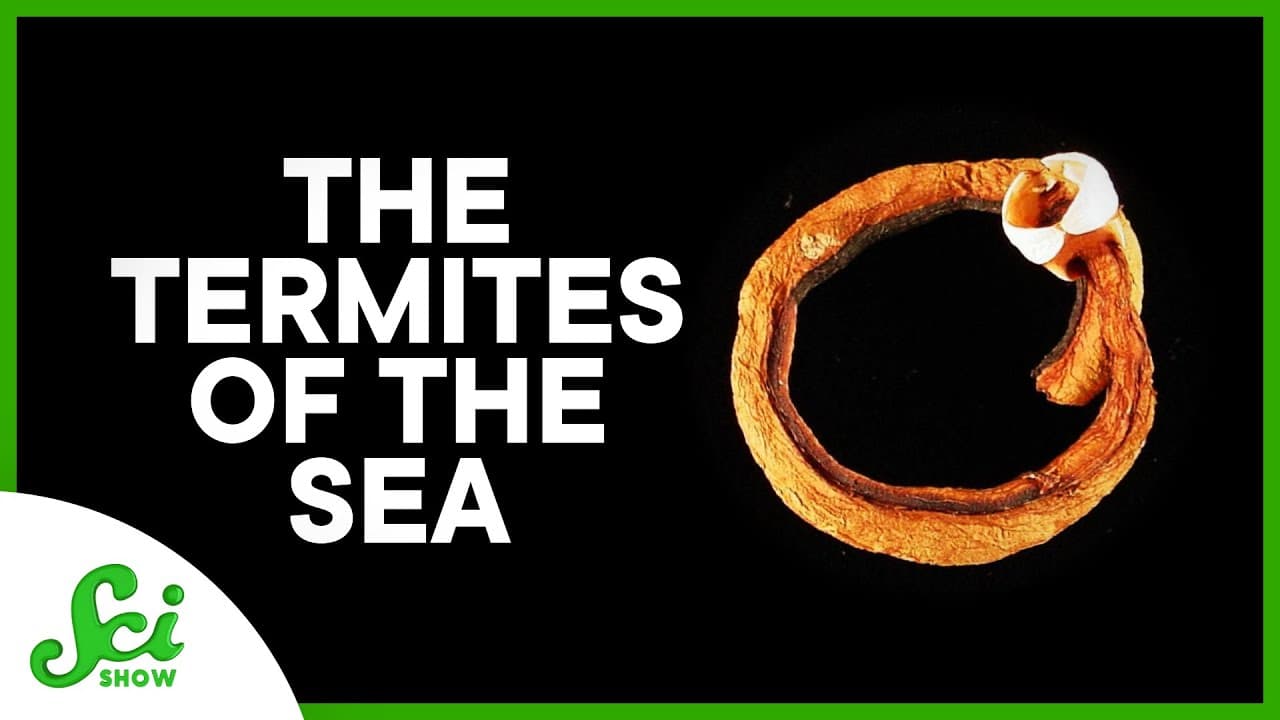
Shipworms are destructive clam-like creatures that bore into wood, causing damage to ships and structures. They have evolved a partnership with bacteria to digest wood and some species can survive on chemicals found in rotting wood.
Transcript
[♪ INTRO] For thousands of years, a sea creature has plagued sailors by attacking and devouring their ships. It is so destructive that reportedly it swiss-cheesed the hulls of Christopher Columbus’s ships, sinking at least two of them. This creature, nicknamed termite of the sea is known as a shipworm and it has an insatiable appetite for wood… eve... Read More
Key Insights
- 🌲 Shipworms are destructive creatures that bore into wood, causing damage to ships and structures.
- 🌲 They have evolved a symbiotic relationship with bacteria to break down wood for digestion.
- 🦜 Some shipworm species have adapted to survive on the chemicals found in rotting wood through chemosynthesis.
- 🌲 Coastal trees and fallen trees in rivers provide a constant supply of wood for shipworms.
- ⚓ Shipworms have historically caused significant damage to wooden structures, including sinking ships.
- 🤢 The study of shipworms can provide insights into the evolution of other deep-sea organisms.
- 💦 Researchers are working towards giving shipworms a more positive reputation, recognizing their ecological role in recycling carbon.
Install to Summarize YouTube Videos and Get Transcripts
Explore YouTube Video Summarizer or Get YouTube Transcript Extractor
Questions & Answers
Q: How do shipworms obtain wood in the ocean?
Shipworms rely on wood that is washed into the ocean from coastal trees and fallen trees in rivers during storms.
Q: How do shipworms break down wood for digestion?
Shipworms have bacteria living in specialized cells on their gills that produce enzymes, which help the clam digest the wood.
Q: How do giant shipworms differ from other shipworms?
Giant shipworms have evolved a unique partnership with bacteria, using chemosynthesis to survive on the chemicals found in rotting wood, rather than directly consuming wood.
Q: What can the study of shipworms teach us?
Understanding the evolutionary process of shipworms and their partnership with bacteria can provide insights into how other deep-sea organisms have adapted to extreme environments.
Summary & Key Takeaways
-
Shipworms, also known as the termites of the sea, are saltwater clams that bore into wood, using it as food and shelter.
-
Wood from coastal trees and fallen trees in rivers makes its way into the ocean, providing a food source for shipworms.
-
Shipworms have evolved a symbiotic relationship with bacteria to break down wood, with some species using chemosynthesis to survive.
Read in Other Languages (beta)
Share This Summary 📚
Summarize YouTube Videos and Get Video Transcripts with 1-Click
Try YouTube Summary with ChatGPT & Claude or YouTube Transcript Generator
Explore More Summaries from SciShow 📚






Summarize YouTube Videos and Get Video Transcripts with 1-Click
Try YouTube Summary with ChatGPT & Claude or YouTube Transcript Generator