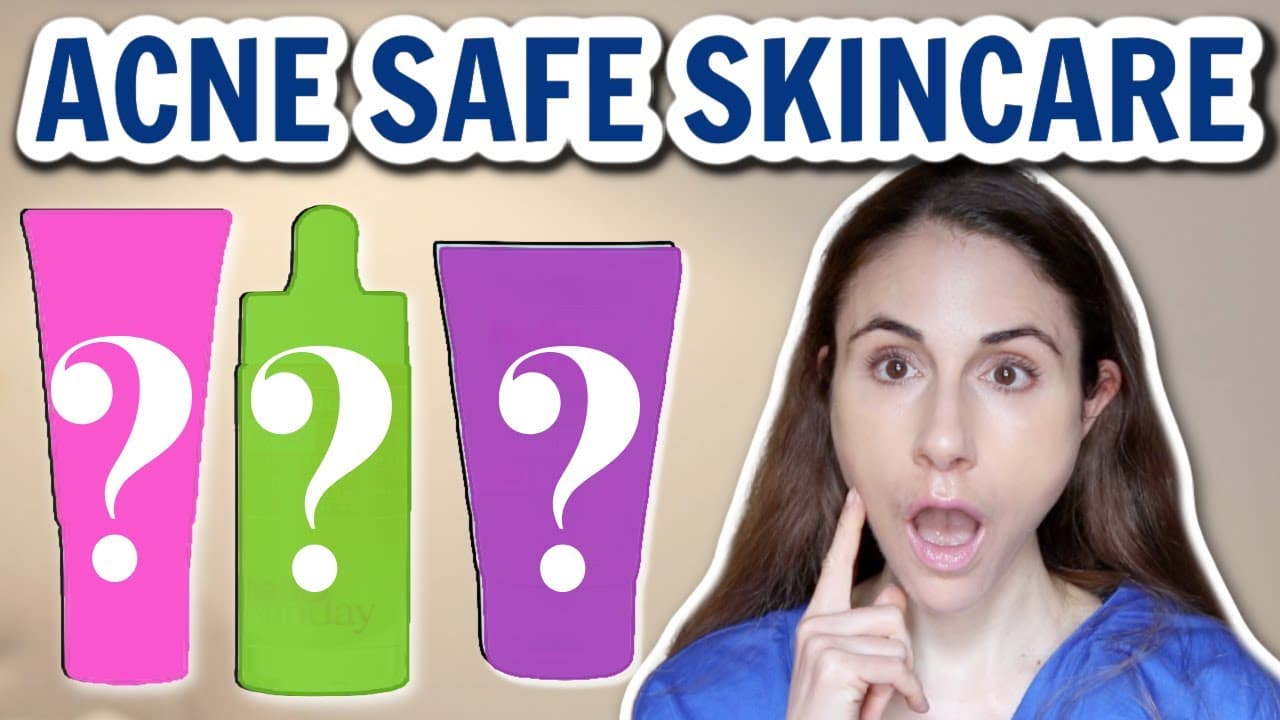
ACNE SAFE SKINCARE PRODUCTS THAT WON'T CAUSE BREAKOUTS? 😮DERMATOLOGIST @DrDrayzday
TL;DR
Unraveling the myth of non-comedogenic skincare products and the challenges in finding acne-safe products.
Transcript
well hey guys in this video we're going to be talking all about the ever so burdensome task of finding skin care products that will not break you out i know a lot of you all deal with this we're going to be covering things to look for what to avoid and i'm going to be breaking down what the heck it means for a product to be non-comedogenic if you a... Read More
Key Insights
- 💁♀️ Acne cosmetica is a milder form of acne, affecting more women, typically resolving faster without scarring.
- 🖤 The term "non-comedogenic" lacks standardized testing, making it unreliable in predicting pore-clogging effects.
- 🖐️ Ingredient lists alone cannot predict comedogenicity as formulation and concentration play a vital role.
- 🌍 Skin tests for comedogenicity have limitations, as they do not replicate real-world usage or consider formulation specifics.
- ⌛ Choosing skincare for acne-prone skin involves avoiding irritants, maintaining skin hydration, and being mindful of contact time.
- ❓ Sunscreens with antioxidants or certain ingredients may contribute to skin irritation, affecting acne cosmetica.
- 🖐️ Individualized outcomes and product formulations play a crucial role in determining acne-safe skincare products.
Install to Summarize YouTube Videos and Get Transcripts
Explore YouTube Video Summarizer or Get YouTube Transcript Extractor
Questions & Answers
Q: What is acne cosmetica, and how does it differ from regular acne?
Acne cosmetica is a condition that results in tiny eruptions on the skin, mostly affecting women and differs from regular acne by being less severe and scarless.
Q: What does the term "non-comedogenic" imply in skincare products?
"Non-comedogenic" is a marketing term indicating that a product won't clog pores, but there is no standardized testing to validate this claim.
Q: Can ingredient lists accurately predict if a product is comedogenic?
Ingredient lists alone cannot determine if a product will clog pores as comedogenicity relies on the formulation and concentration of ingredients.
Q: What factors should individuals consider when choosing skincare products for acne-prone skin?
Factors include avoiding irritating ingredients, not drying out the skin, considering contact time, minimizing product layers, and being mindful of sunscreens with antioxidants.
Summary & Key Takeaways
-
Acne cosmetica, a condition described in the 70s, leads to tiny eruptions on the skin, more common in women.
-
The term "non-comedogenic" lacks regulation, as there is no standardized test to determine if a product clogs pores.
-
Testing methods for comedogenicity have limitations, making it challenging to predict if an ingredient will cause acne cosmetica.
Read in Other Languages (beta)
Share This Summary 📚
Summarize YouTube Videos and Get Video Transcripts with 1-Click
Try YouTube Summary with ChatGPT & Claude or YouTube Transcript Generator
Explore More Summaries from Dr Dray 📚

Summarize YouTube Videos and Get Video Transcripts with 1-Click
Try YouTube Summary with ChatGPT & Claude or YouTube Transcript Generator