How To Calculate The Voltage Drop Across a Resistor - Electronics
TL;DR
Learn how to calculate the voltage drop across a resistor using Ohm's Law and the current flowing through the circuit.
Transcript
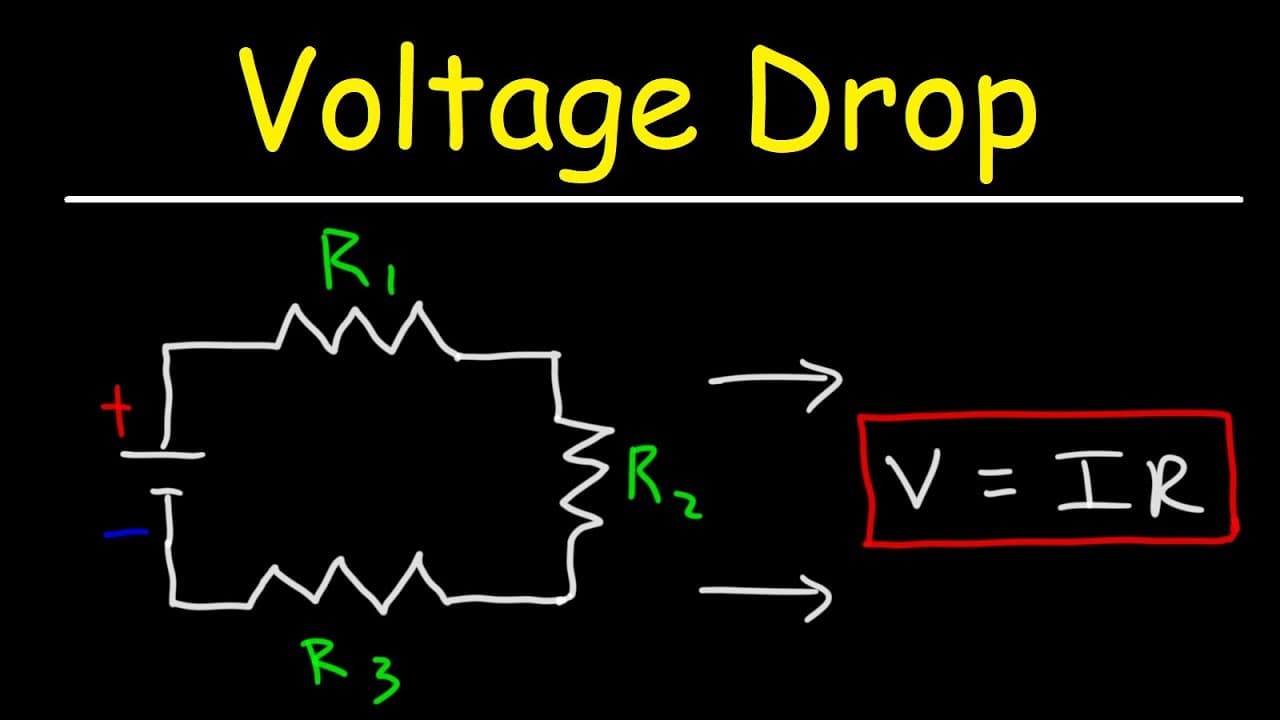
in this video we're going to talk about how to calculate the voltage drop across a resistor so let's draw a circuit so this is the electrical symbol for battery and that is for a resistor now this is the positive terminal of the battery and here we have the negative terminal of the battery now we're going to use a 20 volt battery this is going to b... Read More
Key Insights
- ⚡ The voltage drop across a resistor can be calculated using Ohm's Law (V = IR), where V is voltage, I is current, and R is resistance.
- 🍹 In a series circuit, the total resistance is the sum of all the resistors in the circuit.
- 🌂 Kirchhoff's voltage law states that the sum of the voltages around a closed loop in a circuit must add up to zero.
- 💦 The voltage drop across each resistor in a series circuit can be found by multiplying the current and resistance values for each individual resistor.
- ⚡ The voltage drops in a series circuit add up to the voltage of the battery or power source.
- 👻 Parallel circuits allow the current to flow in multiple paths, while series circuits have only one path for the current.
- 💐 Electrons flow from the negative terminal of the battery to the positive terminal, while conventional current flows in the opposite direction.
Install to Summarize YouTube Videos and Get Transcripts
Explore YouTube Video Summarizer or Get YouTube Transcript Extractor
Questions & Answers
Q: How can you calculate the voltage drop across a resistor in a circuit?
To calculate the voltage drop, you need to know the resistance and the current flowing through the resistor. Use Ohm's Law (V = IR) to multiply the current and resistance values together.
Q: What is the difference between a series circuit and a parallel circuit?
In a series circuit, the current has only one path to flow through the resistors, while a parallel circuit allows the current to flow in multiple directions through different paths.
Q: How do you calculate the total resistance in a series circuit?
To calculate the total resistance in a series circuit, simply add up the resistances of all the resistors in the circuit.
Q: What does Kirchhoff's voltage law state?
Kirchhoff's voltage law states that the sum of the voltages around a closed loop in a circuit must add up to zero.
Summary & Key Takeaways
-
The video explains how to calculate the voltage drop across a resistor in a series circuit using Ohm's Law.
-
It demonstrates the calculation process using two examples with different resistors and voltage sources.
-
The video also illustrates how to find the potential difference between two points in a circuit.
Read in Other Languages (beta)
Share This Summary 📚
Summarize YouTube Videos and Get Video Transcripts with 1-Click
Try YouTube Summary with ChatGPT & Claude or YouTube Transcript Generator
Explore More Summaries from The Organic Chemistry Tutor 📚





Summarize YouTube Videos and Get Video Transcripts with 1-Click
Try YouTube Summary with ChatGPT & Claude or YouTube Transcript Generator