A partnership to defeat Pancreatic Cancer - CSHL & The Lustgarten Foundation
TL;DR
Cold Spring Harbor and Lustgarten Foundation collaborate to tackle pancreatic cancer.
Transcript
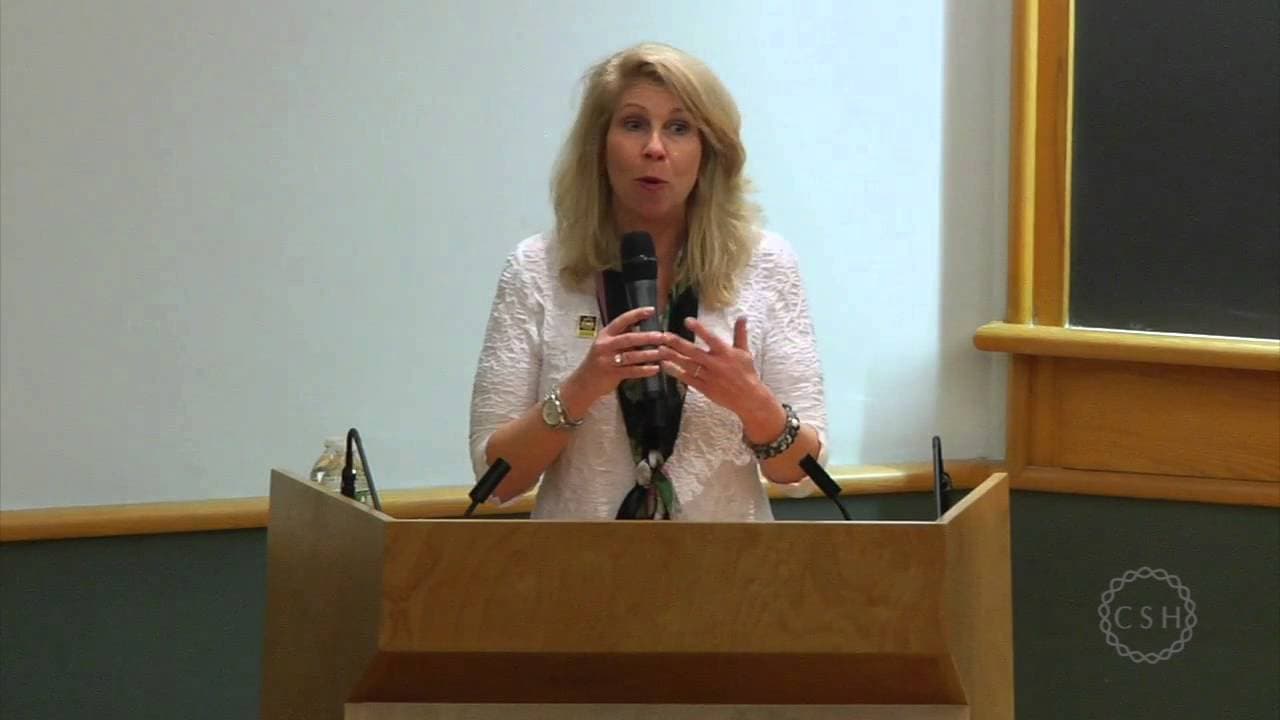
Okay I want to welcome everybody here this afternoon for one of our 125th anniversary lectures this pancreas cancer as you all know this is a serious disease that has mystified society and physicians for eternity and we have decided to take a scientific approach to this problem over the last five to ten years here at Cold Spring Harbor with the est... Read More
Key Insights
- Cold Spring Harbor Laboratory has established a dedicated lab to focus on pancreatic cancer research, leveraging its expertise in fundamental biology.
- The Lustgarten Foundation, a major funder of pancreatic cancer research, collaborates closely with Cold Spring Harbor to advance scientific discoveries.
- Pancreatic cancer is a complex disease with a high mortality rate, necessitating innovative research approaches and early detection methods.
- The partnership emphasizes the importance of clinical trials and translational research to bridge the gap between laboratory discoveries and patient care.
- New model systems, such as organoids, are being developed to study pancreatic cancer's progression and identify potential therapeutic targets.
- Efforts are being made to improve early detection of pancreatic cancer through novel biomarkers and imaging techniques.
- The research aims to identify 'black hearts' or critical vulnerabilities in cancer cells that can be targeted with new therapies.
- Collaboration with healthcare systems like North Shore LIJ aims to translate research findings into clinical practice, offering new hope for patients.
Install to Summarize YouTube Videos and Get Transcripts
Explore YouTube Video Summarizer or Get YouTube Transcript Extractor
Questions & Answers
Q: What is the main focus of Cold Spring Harbor Laboratory's pancreatic cancer research?
The main focus of Cold Spring Harbor Laboratory's pancreatic cancer research is to leverage its expertise in fundamental biology to develop innovative approaches for early detection and treatment of the disease. The lab aims to identify critical vulnerabilities in cancer cells, known as 'black hearts,' that can be targeted with new therapies.
Q: How does the Lustgarten Foundation support pancreatic cancer research?
The Lustgarten Foundation supports pancreatic cancer research by providing significant funding and collaborating with Cold Spring Harbor Laboratory. The foundation focuses on innovative approaches to early detection and treatment, mobilizing research teams nationwide and globally to tackle the disease and improve patient outcomes.
Q: What are organoids, and how are they used in pancreatic cancer research?
Organoids are miniature, simplified versions of organs created in the lab from stem cells. In pancreatic cancer research, organoids are used to study the disease's progression and identify potential therapeutic targets. They allow researchers to test drugs and understand the tumor's biology, offering insights into personalized medicine for patients.
Q: Why is early detection important in pancreatic cancer?
Early detection is crucial in pancreatic cancer because it significantly increases the chances of successful treatment. If the disease is caught early, it can be surgically removed, offering the best chance for patient survival. Current research efforts focus on developing novel biomarkers and imaging techniques to improve early detection rates.
Q: What challenges do researchers face in developing new therapies for pancreatic cancer?
Researchers face several challenges in developing new therapies for pancreatic cancer, including the disease's complexity and high mortality rate. Cancer cells have numerous mutations and can adapt easily, making them difficult to target. Additionally, the tumor's microenvironment creates barriers to drug delivery, necessitating innovative research approaches to overcome these obstacles.
Q: How does the partnership with North Shore LIJ contribute to pancreatic cancer research?
The partnership with North Shore LIJ contributes to pancreatic cancer research by facilitating the translation of laboratory discoveries into clinical practice. This collaboration aims to develop an experimental therapeutic unit where physicians and researchers work together to design and conduct clinical trials, offering new treatment options and hope for patients.
Q: What role do clinical trials play in pancreatic cancer research?
Clinical trials play a critical role in pancreatic cancer research by testing new therapies and approaches in patients. They provide valuable data on the efficacy and safety of treatments, helping to bridge the gap between laboratory discoveries and real-world patient care. Increasing patient enrollment in trials is essential for advancing research and improving outcomes.
Q: What future directions are being explored in pancreatic cancer research?
Future directions in pancreatic cancer research include developing new model systems like organoids, identifying early detection biomarkers, and targeting 'black hearts' or critical vulnerabilities in cancer cells. Researchers are also exploring novel therapeutic approaches, such as immunotherapy and targeted treatments, to improve patient outcomes and ultimately find a cure for the disease.
Summary & Key Takeaways
-
Cold Spring Harbor Laboratory has partnered with the Lustgarten Foundation to establish a dedicated pancreatic cancer research lab. The collaboration aims to leverage Cold Spring Harbor's expertise in fundamental biology to tackle this complex disease.
-
The Lustgarten Foundation, a leading funder of pancreatic cancer research, supports innovative approaches to early detection and treatment. The partnership emphasizes the importance of clinical trials and translational research to improve patient outcomes.
-
New model systems, such as organoids, are being developed to better understand pancreatic cancer's progression. The research focuses on identifying critical vulnerabilities in cancer cells, known as 'black hearts,' to develop targeted therapies.
Read in Other Languages (beta)
Share This Summary 📚
Summarize YouTube Videos and Get Video Transcripts with 1-Click
Try YouTube Summary with ChatGPT & Claude or YouTube Transcript Generator
Explore More Summaries from Cold Spring Harbor Laboratory 📚

Summarize YouTube Videos and Get Video Transcripts with 1-Click
Try YouTube Summary with ChatGPT & Claude or YouTube Transcript Generator